
Reviewed · CITY TOURS
Small Group Hambantota City Tour
Hambantota is more than a port stop. In three hours, you move from working salt pans to a tsunami-affected community, then on to a British coastal fort, a local museum, and a fishing harbour. I like the mix of everyday life and serious history, especially the chance to see industries that still shape the town.
I also like the air-conditioned transport, bottled water, and guide-led explanations, which matter in Sri Lanka’s heat. The main drawback is the pace: six stops in about three hours gives you roughly 30 minutes at each, and a group of up to 33 people may feel less personal than the small-group name suggests.
Key points at a glance
- Salt production in action: See the large salt pans and learn how salt is made using traditional and modern methods.
- A direct look at tsunami recovery: Visit affected areas and memorial sites connected with the 2004 disaster.
- A rare coastal fort stop: Martello Tower adds military history and sea views to the day.
- Local culture in one short visit: The Heritage Museum covers artifacts, crafts, traditions, and regional history.
- Working harbour atmosphere: Watch fishing activity and learn about local practices at Hambantota Fisheries Harbour.
- Useful port transport: The tour begins and ends at Hambantota Port, with an air-conditioned vehicle, WiFi, water, and parking included.
Seeing Hambantota beyond the port
This tour works best as a quick introduction to a town that can be hard to understand from a port transfer alone. You get a look at Hambantota as a place where modern development, fishing, salt production, colonial defense, and disaster recovery all meet.
The route does not focus on one grand attraction. Instead, it gives you several short windows into local life. That makes the tour broad rather than deep, but it also means you leave with a better sense of how the town functions.
The scheduled length is about three hours. Each of the six stops is planned for around 30 minutes, so you should expect a guided overview rather than long museum visits or unhurried wandering. The vehicle helps keep the day comfortable, and the return to the same port meeting point makes the timing easier to manage.
The group can include as many as 33 people. That is worth noting if you are expecting a private-feeling outing. You will likely get the efficiency of an organized shore excursion, but questions and conversation may be easier in a smaller group.
Other ways to see the whole city in Hambantota:
- Hambantota city Tour with Local Food Tasting
★ 4.2 · 5 reviews - Colombo: Private Tuk-Tuk City Tour with All Entry Fees
★ 4.9 · 2,154 reviews - Kandy Private Guided City Tour by Tuk Tuk
★ 4.9 · 1,307 reviews
Starting in Hambantota city
The first stop gives you a general look at Hambantota. You can expect an introduction to the town’s main sights, local markets, and ordinary daily routines, with about 30 minutes for the visit.
That short opening is useful because it puts the other stops in context. The salt works, harbour, and museum are not isolated attractions. They are parts of a town shaped by trade, the sea, local work, and public rebuilding.
I would use this time to listen closely to the guide and get your bearings. The city stop is not described as a formal attraction with an entrance charge, so its value depends on the explanation and the sights included on the route. If you want a long market visit or time for shopping, this tour probably will not provide it.
The guide and driver are an important part of the experience here. Past feedback specifically praised the guide and driver for explaining Sri Lanka and Hambantota, as well as for offering insight into local life. No guide names are provided, so you should not book this expecting a particular named guide.
Salt pans and the Hambantota Salt Factory
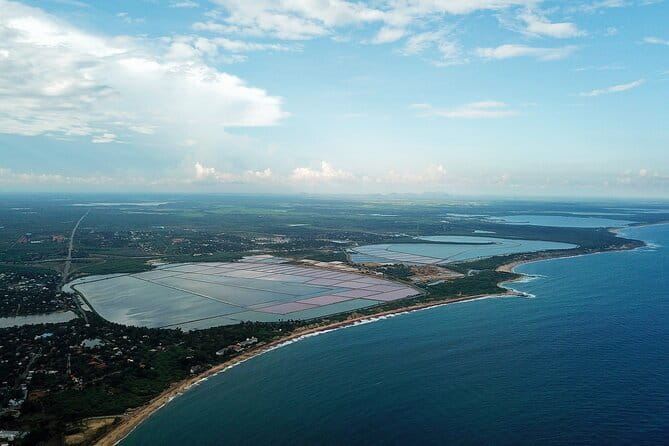
The salt factory is one of the most distinctive stops. Hambantota is known for large-scale salt production, and the visit lets you see broad salt pans spread across the area rather than simply hearing about the industry in a museum.
Your guide is expected to explain both older and newer production methods. You can also learn why salt matters to the local economy and how the process works from the pans through production.
For me, this is the stop that gives the tour its strongest sense of place. A historic building can be moved into a museum, but working salt pans show you an industry tied to Hambantota itself. The sight is also likely to be more memorable than a standard city drive because the production area changes the look and feel of the surroundings.
You get about 30 minutes here. That should be enough for an introduction and a look at the operation, but not an extended technical tour. If salt production is your main interest, ask questions while you have the guide’s attention.
There is no admission charge listed for this stop. The practical gain is that transport and explanation are handled for you, so you do not have to work out how to reach the factory independently. The exact level of access inside the production area is not specified, so expect a guided visit rather than unrestricted movement.
Remembering the 2004 tsunami

The tsunami-affected area is the most serious part of the route. The visit covers the 2004 disaster, local survival stories, community rebuilding, and memorial sites connected with the event.
This is not a light sightseeing stop. I would approach it with respect and allow the guide to set the tone. The value comes from connecting a major event in Sri Lanka’s recent past with one specific community, rather than treating the tsunami as a distant headline.
The stop lasts about 30 minutes. That gives you time for a historical explanation and a quiet look at memorial or affected areas, but it does not allow for a long visit at several separate sites. The exact memorial locations are not specified, so the experience may depend on the day’s route and the guide’s presentation.
This part may be especially meaningful if you want more than beaches and scenery. It also gives the tour emotional weight, balancing the lighter city and harbour stops. Families should decide in advance if children are ready for a discussion of loss and recovery, since the subject is difficult even when presented with care.
Same base, a completely different day:
- Yala National Park Safari Tours : Half Day & Full Day
★ 4.9 · 161 reviews - Yala National Park Safari Tour From Hambantota port
★ 4.5 · 102 reviews - Udawalawe Safari Adventure
★ 5.0 · 76 reviews - Yala Safari Tour from Hambantota Port by Ajith Safaris
★ 5.0 · 67 reviews
Martello Tower and the coastal view
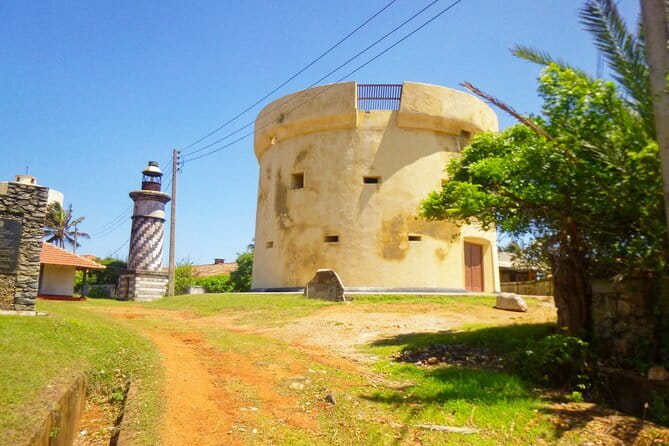
Martello Tower brings a different layer of history. Built by the British in the early 19th century, this coastal defense structure reflects Hambantota’s strategic position and the military concerns of the colonial period.
You can expect a guided look at the tower, historical displays, and views toward the coast. The scenery offers a welcome change after the more reflective tsunami stop and the practical focus of salt production.
Thirty minutes is a sensible amount of time for a compact fortification. You can hear the main story, inspect the exhibits, and take in the view without spending half a day on a site that may be fairly small.
The tower is also a good example of how this tour avoids concentrating only on one period. Hambantota’s story here includes local work, modern disaster recovery, and British military planning. I would not choose this tour solely for the tower, since the time inside is limited, but it adds useful variety.
The listing states that admission is free. It does not provide details about stairs, uneven ground, or interior access, so anyone with mobility concerns should ask the provider before booking. The general participation note says most people can take part, but that is not the same as a detailed accessibility guarantee.
Hambantota Heritage Museum in 30 minutes

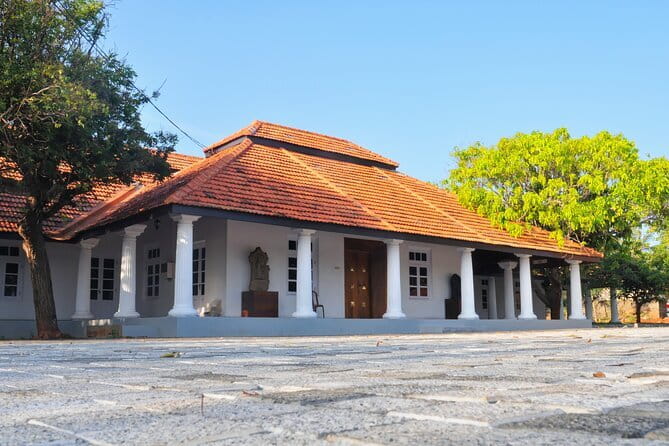
The Heritage Museum is the best stop for local culture. Its collection includes artifacts, traditional crafts, and displays about the area’s past, with interactive and educational material intended to make the exhibits easier to understand.
I like having a museum stop after the outdoor sites. The salt factory shows how people work, the tsunami area explains what the community endured, and the museum helps connect those subjects to local customs and older traditions.
You have about 30 minutes here, so plan on a selected look rather than a full museum visit. If you enjoy reading every label, you may find the schedule tight. If you prefer a clear overview with a guide pointing out key objects, the timing should be more useful.
There is one important scheduling issue: the museum is closed on Sundays. Check your tour date carefully, especially if the trip is tied to a port call. The supplied information does not say whether the route changes when the museum is unavailable, so ask the provider what happens on a Sunday before paying.
Fishing boats and daily work at the harbour
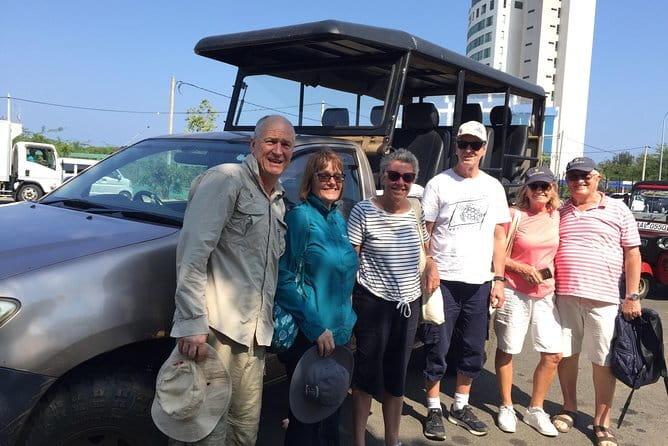
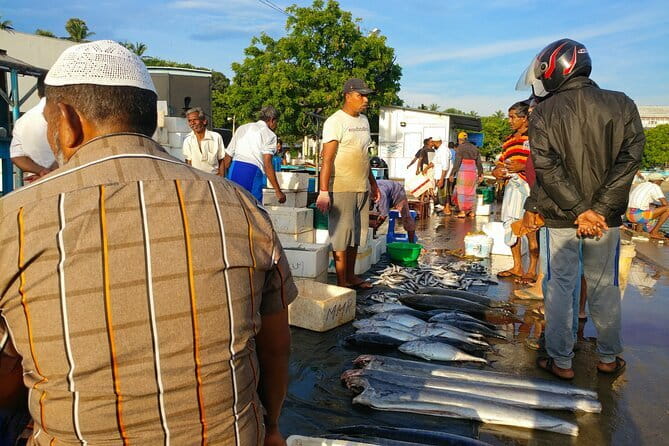
The final stop is Hambantota Fisheries Harbour. Here, the focus shifts to the local fishing community, fishing methods, the day’s catch, and the practical work that supports the town’s coastal economy.
This is the kind of stop that can feel more immediate than a formal attraction. You are looking at a working harbour, not a display built for sightseeing. The tour description allows for interaction with fishermen, but the amount of conversation or access can vary with harbour activity and the day’s conditions.
The fresh sea air and working setting provide a natural finish. After the museum and tower, the harbour returns you to present-day Hambantota and its connection to the sea.
The visit lasts about 30 minutes. That is enough for an introduction and a look at the activity, though you should not expect a full fishing trip or a long meal centered on seafood. Admission is listed as free, and the guide is expected to explain local fishing practices.
What the $55 price gets you

At $55 per person, this is not the cheapest way to take a short drive around town. The value depends on how much you want the explanations and the connected route.
The price includes an air-conditioned vehicle, onboard WiFi, bottled water, parking fees, and a licensed guide. Those inclusions matter in Hambantota’s heat, especially when you are moving between outdoor stops and do not want to arrange several separate rides.
You are also paying for a planned sequence that would be awkward to organize independently in only three hours. The route links the salt factory, tsunami sites, tower, museum, and harbour without leaving you to find each location or judge the timing yourself.
The value is weaker if you want long stops, private guiding, or a specialist focus on one subject. With a maximum group size of 33, the price buys organized transport and broad coverage, not the intimacy of a private tour.
Two positive points deserve emphasis. The transport has been described as comfortable, and the guide and driver have been praised for giving useful insight into Sri Lanka and life in Hambantota. Those human details can make a short city tour work much better than a simple ride past attractions.
Timing, comfort, and practical details
The tour starts at Hambantota Port, at the listed meeting point, and ends back there. That return is convenient if you are visiting on a cruise or have arranged your day around the port, though you should still allow your own safety margin because the tour lasts approximately three hours rather than promising an exact end time.
Confirmation is provided when you book. Free cancellation is available if you cancel at least 24 hours before the local start time. Cancellations or changes made within 24 hours are not accepted for a refund.
The mobile ticket is handy for a port day. WiFi onboard may help with basic communication, while bottled water removes one small task from a hot morning or afternoon. Parking fees are covered, so there should be fewer small transport charges along the way.
Most people can participate according to the supplied information. Since detailed accessibility information is not given, ask about the tower, museum access, harbour surfaces, and vehicle arrangements if those details are important to you.
Who should choose this Hambantota tour
I would recommend this outing if you have only a few hours and want a broad introduction to the town. It suits people interested in local industry, recent history, colonial sites, museums, and working communities more than people looking for a relaxed beach day.
It is also a good match for first-time visitors who prefer a guide to explain what they are seeing. The route gives you several subjects to compare, and the guide can add context that is difficult to get from a quick drive.
You may want another option if your priority is photography at one site, a private experience, or a slow cultural visit. Six stops in three hours is an efficient plan, but efficiency means frequent transitions and limited time at each place.
Sunday visitors should pay particular attention to the museum closure. Ask whether the route changes, since the provided details do not specify a replacement stop.
Should you book it?
Book this tour if you want to make practical use of a short Hambantota visit and value local explanation over free time. The salt factory, tsunami-affected area, and fisheries harbour give you a more grounded view of the town than a standard sightseeing loop, while Martello Tower and the museum add historical and cultural context.
I would hesitate only if you expect a truly small group or a deep visit at each attraction. The possible group size is 33, and the 30-minute stop pattern keeps the day moving.
For $55, the strongest value comes from the air-conditioned transport, licensed guide, return to the port, and unusual mix of working sites and local history. If that combination fits your interests, this is a useful, serious introduction to Hambantota.
FAQ
How long does the Hambantota City Tour last?
The tour lasts approximately three hours.
Where does the tour start?
It starts at Hambantota Port, at the listed meeting point in Hambantota, Sri Lanka.
Where does the tour finish?
The activity ends back at the meeting point at Hambantota Port.
How much does the tour cost?
The price is $55 per person.
What is included in the tour?
The price includes an air-conditioned vehicle, WiFi onboard, bottled water, parking fees, and a licensed tour guide.
Is the tour ticket mobile?
Yes. The tour provides a mobile ticket.
How many people can join the tour?
The tour can have a maximum of 33 participants.
Is the Hambantota Heritage Museum open every day?
No. The museum is closed on Sundays.
Are admission tickets included at the stops?
Admission is listed as free for the city, salt factory, tsunami-affected area, Martello Tower, Heritage Museum, and fisheries harbour stops.
What is the cancellation policy?
You can cancel at least 24 hours before the local start time for a full refund. Cancellations or changes made less than 24 hours before the start time are not accepted for a refund.
Just added around Hambantota
- Yala Safari : 7 hour & 12 hour Tours★ 3.8 · 6 reviews
- Yala National Park: Morning or Afternoon Safari ( 5 h )★ 4.3 · 24 reviews
- Yala National Park Safari Tour from Hambantota Port★ 5.0 · 7 reviews
- Yala National Park: Morning or Afternoon Safari Tour (5 h)★ 5.0 · 3 reviews
- Yala National Park Jeep Safari: Leopards, Elephants & Wild★ 4.4 · 4 reviews
- Yala National Park: Leopard Safari Half/Full-Day Safari★ 5.0 · 3 reviews
- YALA National Park – HALF DAY or FULL DAY TOUR★ 5.0 · 4 reviews
- Yala National Park: Half Day or Full Day Leopard Safari Tour★ 3.8 · 3 reviews
City Tours, compared.
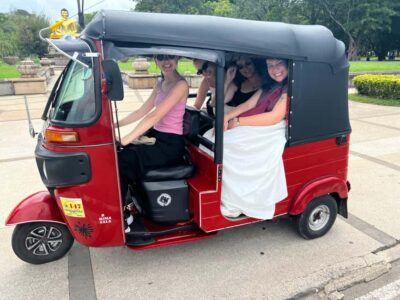
Private Tuk-Tuk City Tour with All Entry Fees
Read our review →
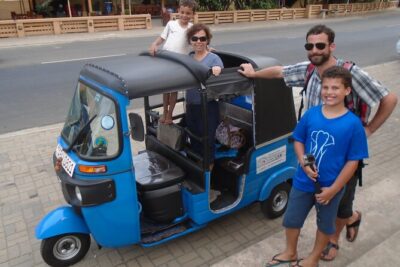
Colombo Tuk Tuk City Tour -Sightseeing Entry Fees & Food Included
Read our review →
Private Tuk-Tuk City Tour with Guide & All Tickets
Read our review →


Negombo city tour by Tuk Tuk Hotel Pickup & Guide
Read our review →Browse the lists this tour appears in