
Reviewed · ANCIENT CITIES & TEMPLES
Explore & Ride the history of anuradhapura with Vogel Tours
Anuradhapura is too spread out to understand well by simply wandering between ruins. This private tour with Ajee Vogel links the city’s sacred trees, enormous stupas, monastic buildings, ponds, and carved stones into one clear story about Buddhism and ancient Sri Lankan life. You can cover a lot in a few hours without spending your day puzzling over maps.
I like the personal format, especially if you want to ask questions about Buddhism, architecture, or local customs. I also like the small practical touches: local snacks and tea or coffee are included, and private transport can be arranged for up to three people. The main caution is the pace. Twelve stops in as little as one to five hours means you may need to choose between seeing everything briefly and giving the most important places proper time.
Key points to know before booking
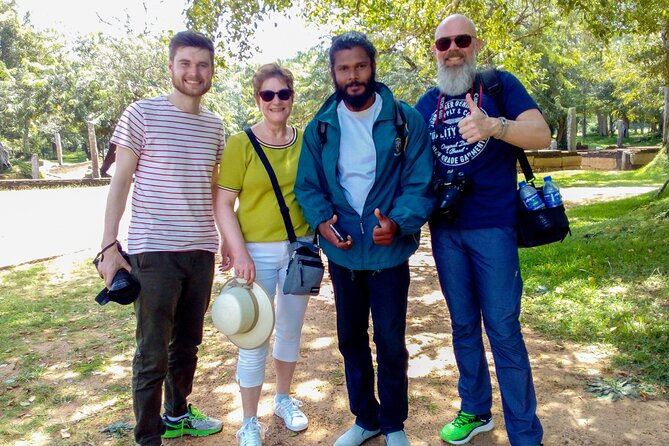
- Ajee Vogel leads the tour personally, giving you one guide for the sacred sites, ruins, and Buddhist traditions.
- The route covers both famous monuments and quieter details, including moonstones, guardstones, bathing ponds, refectories, and museums.
- The advertised price is $40 per group of up to three, but the $30 UNESCO-area entrance fee is extra for each person.
- Snacks and tea or coffee are included, a useful break in a large archaeological zone.
- Private transportation is available for up to three people, while the guide can accommodate a larger group if arranged in advance.
- You must remove your shoes at sacred places, so wear something easy to take off and be ready for warm ground.
Why a guide helps in Anuradhapura
Anuradhapura is not a compact old town where you can walk from one monument to the next in a few minutes. Its sacred area contains large distances, scattered ruins, and buildings that can look similar if you do not know what you are seeing.
A guide gives the stones a human scale. Instead of seeing only a white stupa or a weathered platform, you can ask why a site mattered, how Buddhist practice shaped the buildings, and how Sri Lankan kings supported large monastic communities. Ajee Vogel’s background in explaining Buddhism and local history is the main reason to choose this experience over an unplanned visit.
The tour is private, so your questions do not have to match anyone else’s. That suits you if you want a slower explanation at one temple, a quick answer about a carved symbol, or more context about the relationship between sacred and practical buildings.
The route also helps you see more than the standard postcard sights. Jaya Sri Maha Bodhi and Ruwanweli Maha Seya are the headline stops, but the refectory, moonstone, guardstones, ponds, and monastery museums show how large and organized the ancient city was.
Other ancient cities and temples from Sri Lanka:
- Private City Day Tour in Anuradhapura
★ 5.0 · 383 reviews - Anuradhapura Private Ancient City Day Tour
★ 5.0 · 39 reviews - Anuradhapura Heritage Mountain bike / bicycle Tour
★ 5.0 · 34 reviews
Jaya Sri Maha Bodhi, the spiritual heart of the visit
The tour begins at Jaya Sri Maha Bodhi, the sacred bodhi tree in Mahamewuna Garden. It is identified as a ficus religiosa and is regarded as a historic Buddhist site.
You have about 30 minutes here, which is enough to take in the setting and learn why the tree matters. This is not simply a botanical stop. The site connects religious devotion, royal patronage, and the long continuity of Buddhist practice in Anuradhapura.
Dress and behavior matter here. You will need to remove your shoes at sacred places, and respectful clothing is sensible. Your guide can help explain local customs so you do not have to guess when to pause, where to walk, or how to behave around worshippers.
Lovamahapaya and the scale of ancient Anuradhapura
Lovamahapaya sits between Ruwanweliseya and Sri Mahabodhiya. It is also called the Brazen Palace or Lohaprasadaya. The stop lasts about 15 minutes, so expect an introduction rather than a long archaeological lesson.
What makes this place useful is its position in the wider sacred complex. It helps you picture the city not as a collection of isolated monuments but as a working religious center with halls, residences, ritual areas, and large populations connected to the monasteries.
The short visit may feel rushed if you are especially interested in architecture. Still, with Ajee explaining the site in context, even a brief pause can make the surrounding ruins easier to understand.
Ruwanweli Maha Seya and the great white stupa
Ruwanweli Maha Seya, also called Swarnamali Maha Seya, is one of the central monuments in Anuradhapura. It is a stupa, a large hemispherical structure associated with Buddhist relics.
The planned 30 minutes gives you time to appreciate its scale and religious importance. This is one of the places where a guide adds real value. The form is simple at first glance, but the meaning behind a stupa, the relic tradition, and the role of royal building projects are not always obvious from the outside.
I would give this stop more attention than some of the smaller ruins if your time is limited. It is one of the clearest places to see how faith, architecture, and state power worked together in ancient Sri Lanka.
Same base, a completely different day:
- Colombo: Private Tuk-Tuk City Tour with All Entry Fees
★ 4.9 · 2,154 reviews - Kandy Private Guided City Tour by Tuk Tuk
★ 4.9 · 1,307 reviews - Whales and Dolphins Watching-Luxury Super Grade Cruiser(Hotel Pick up offered)
★ 5.0 · 1,268 reviews - From Colombo: Sigiriya and Dambulla Day Trip with Safari
★ 4.7 · 842 reviews
Kuttam Pokuna and the practical side of monastic life
The Twin Baths, or Kuttam Pokuna, are two well-preserved bathing tanks. You have about 15 minutes here.
These pools are a useful change of pace after the large sacred monuments. They show the practical systems that supported monastic communities. Ancient religious centers needed water, food, sanitation, and organized daily routines, not only prayer halls and stupas.
The admission note lists this and several other stops as not included in the tour price. Since the overall UNESCO-area fee is charged separately, keep that extra cost in mind before booking.
Samadhi Statue and the meaning of Buddhist posture
The Samadhi Buddha is a famous meditation statue in Mahamevnawa Park. It is about 7 feet 3 inches high and depicts the seated posture associated with the Buddha’s first enlightenment.
The stop is planned for 15 minutes. That is enough to look closely at the posture and hear an explanation, though you may want longer if Buddhist art interests you.
This is another place where questions are welcome. You can ask Ajee about the meaning of the pose, how the statue fits into the wider Buddhist tradition, and why the image remains important within Anuradhapura’s sacred setting.
Abhayagiri Dagaba and a wider Buddhist story
Abhayagiri Dagaba was part of the Abhayagiri Vihara, a major monastic center connected with Theravada, Mahayana, and Vajrayana Buddhism. The tour allows about 15 minutes at the dagaba.
The importance of this stop lies in its wider setting. Anuradhapura was not built around one monument or one narrow religious tradition. Its monasteries developed over time, and Abhayagiri helps show the range of Buddhist thought and practice that once existed here.
Fifteen minutes is brief for such a major site. If the guide offers flexibility, this is a sensible place to request more time, especially if you prefer explanations to rapid sightseeing.
The Abhayagiri refectory and the city’s daily routines
The Main Refectory of Abhayagiri Monastery is planned as a 10-minute stop. It was an alms-giving place near Uttara Mula and is described as a square building measuring about 42.7 meters on one side.
This is one of the most revealing stops for understanding how the monastery functioned. A huge religious center needed to feed its residents, receive offerings, and organize daily work. The refectory brings that less glamorous but essential side of ancient life into view.
The short timing reflects the nature of the stop. You are likely looking at a substantial ruin and listening to a focused explanation, not touring a fully reconstructed building.
Moonstones and guardstones, the details worth slowing down for
The Sandakada Pahana, or moonstone, is a semicircular carved stone usually placed at the bottom of a staircase. It is a distinctive feature of ancient Sri Lankan architecture.
This is the kind of detail you can easily miss when moving from one huge stupa to another. Look closely at the carving and ask Ajee to explain how the moonstone fits into the entrance design. The planned 15 minutes should give you enough time to notice its pattern and purpose.
The route also includes Rathna Prasadaya and its guardstone, described as one of Sri Lanka’s finest ancient examples. The visit lasts about 10 minutes. Guardstones are easy to dismiss as decorative fragments, but they help explain how entrances were marked and protected in sacred architecture.
Eth Pokuna, a huge pond built for a working city
Eth Pokuna, or Elephant Pond, is a large rectangular man-made pond near Lankaramaya. Its stated dimensions are about 159 meters long, 52.7 meters wide, and 9.5 meters deep.
The scale is the point. After seeing temples and statues, this stop reminds you that Anuradhapura also depended on major water systems and large public works. A pond of this size makes the ancient city’s organization easier to picture.
You have only 10 minutes here. That is enough for a look and a short explanation, but it is not a leisurely walk around the entire pond.
Jetavanaramaya and the museum’s archaeological record
Jetavanaramaya is another major monastic complex, built by King Mahasena in the fourth century. The tour gives the site about 30 minutes, making it one of the longer stops.
Its size and history provide a strong final monument visit. After seeing the sacred tree, stupas, baths, and monastery buildings, you can better appreciate how Jetavanaramaya belonged to a much larger religious and civic system.
The nearby Jetavanaramaya Museum occupies a 1937 British colonial building. It displays treasures found at the site and provides a more contained way to finish the archaeological portion of the tour. You have about 30 minutes here, and admission is listed as free.
The museum is especially useful if you want to see smaller objects after spending hours looking at enormous structures. It gives you a chance to connect the objects with the ruins and ask Ajee about what has been found and preserved.
What the $40 price really includes
The advertised price is $40 per group of up to three people, not $40 per person. That can be good value for a couple or small family, particularly if you use the private format and arrange transport.
Snacks and coffee or tea are included. Private transportation is available for up to three people if requested, which can make the spread-out route much easier. The tour description also says the guide can accommodate up to 10 people, but the listed group price and private transport provision cover up to three, so larger groups should confirm the arrangement before paying.
The important extra cost is the UNESCO-area entrance ticket, listed at $30 per person. For two people, that adds $60. For three, it adds $90. The entrance charge can therefore cost more than the guiding fee, so include it in your budget from the start.
The value depends on how you use the tour. If you only want photographs of the main stupas, you may find the total cost harder to justify. If you want clear explanations, private transport, and a route that includes smaller archaeological features, the fee makes more sense.
Timing, comfort, and practical details
The advertised duration is approximately one to five hours. Since the route includes 12 stops, the shorter version will be quick. A five-hour visit is more realistic if you want to hear explanations, pause at the main stupas, and take a refreshment break.
The tour requires good weather. If poor weather cancels the experience, you are offered another date or a full refund. You can cancel for a full refund up to 24 hours before the start time, but changes or cancellations made within 24 hours are not accepted.
Most people can participate, and the location is near public transportation. Pickup is offered. You should still confirm the pickup point and transport request when booking, especially if you need private transportation for your group.
Wear shoes that come off easily. You will need to remove them at sacred places, and the ground may be warm. Modest clothing and a respectful manner will make visits to active religious sites more comfortable for everyone.
Who will get the most from this tour
I would choose this experience if you want a guide who can explain Buddhist traditions rather than simply drive you between monuments. The private setup is also a good match for families, couples, and small groups that prefer to ask questions without keeping pace with strangers.
It suits first-time visitors who want to get their bearings quickly. It also suits anyone interested in the link between religion and everyday systems, since the route includes water tanks, a refectory, guardstones, and museum objects as well as major temples.
You may want something else if you prefer a slow, quiet day at only two or three sites. Twelve stops can feel like too much, especially at the one-hour end of the stated duration. Ask about timing before you start and identify the places you most want to see.
Should you book Vogel Tours?
Book it if you want personal guidance through a large and confusing ancient city, especially if Buddhism, Sri Lankan architecture, and monastery life interest you. Ajee Vogel’s friendly English explanations, private format, snacks, and optional transport add useful comfort to a demanding sightseeing area.
Before booking, budget the separate $30 entrance fee per person and clarify the final duration, pickup, and group size. If you can allow several hours and give the main sites enough time, this is a strong way to connect Anuradhapura’s most famous monuments with the smaller details that make the city understandable.
FAQ
How much does the tour cost?
The advertised price is $40 per group of up to three people. The UNESCO-area entrance fee is extra at $30 per person.
Is private transportation included?
Private transportation can be supplied for up to three people if you request it. Pickup is offered.
How long does the experience last?
The approximate duration is listed as one to five hours. The final pace matters because the route includes 12 stops.
Which major sites are included?
The route includes Jaya Sri Maha Bodhi, Lovamahapaya, Ruwanweli Maha Seya, Kuttam Pokuna, the Samadhi Statue, Abhayagiri Dagaba, Jetavanaramaya, and the Jetavanaramaya Museum.
Are food and drinks included?
Snacks and coffee or tea are included.
What happens if the weather is poor?
The experience requires good weather. If it is canceled because of poor weather, you will be offered a different date or a full refund.
Just added around Sri Lanka
- Bentota: Yala National Park Safari Jeep Tour in a 4×4★ 4.6 · 7 reviews
- Bentota/Kalutara/Hikkaduwa/Galle/Mirissa: Day Trip to Ella★ 4.7 · 14 reviews
- Budget Yala Safari with Accomadation & Meals Included★ 4.8 · 16 reviews
- Bundala National Park Safari (PRIVATE TOURS)★ 4.8 · 26 reviews
- Bentota River Safari -Ahungalla/Bentota/Aluthgama/Kosgoda★ 4.0 · 3 reviews
- Bentota River Safari: Discover Wildlife & Mangroves by Boat★ 4.9 · 41 reviews
- Bentota: River Safari with Hotel Pickup and Drop-Off★ 4.8 · 22 reviews
- Authentic Sri Lankan Cooking Class in Kandy by Local Family★ 4.9 · 15 reviews
Ancient Cities & Temples, compared.
Kandy to Sigiriya Day Tour and Dambulla cave temple with private vehicle
Read our review →
Sigiriya Rock Fortress and Cave Temples Day Trip
Read our review →
Paradise Blow Hole, Big Buddha, Rock Temple Tours
Read our review →
5 Day Sri Lanka Tour : Including Temple of Tooth & Sigiriya Trip
Read our review →
Browse the lists this tour appears in