
Reviewed · MINNERIYA & KAUDULLA SAFARIS
From Trincomalee: Village Tour & Minneriya Elephant Safari
The best part of this day is the change of pace. You leave Trincomalee’s beaches behind and spend the morning in a working Sri Lankan village, helping with a clay-stove cooking demonstration before heading into the national park to look for wild elephants. It is a clever pairing: daily village life in the morning, open-country wildlife in the afternoon.
I like the bullock cart and canoe rides because they are simple, slow, and tied to local transport rather than added as flashy entertainment. I also like the home-cooked lunch, prepared during the visit and served with a local herbal drink. The main drawback is the length: twelve hours is a big day, and park entrance fees are extra.
- A real village setting: Expect a humble rural home and ordinary village life, not a polished cultural show.
- Several local transport experiences: Ride by bullock cart, canoe, tuk-tuk, or hand tractor.
- Cooking with lunch included: Watch Sri Lankan food being prepared on a clay stove, then eat the meal.
- Wildlife park flexibility: The safari may use Minneriya, Kaudulla, or Hurulu Eco Park according to elephant movements.
- A private 4×4 safari: You get a three-hour game drive with an experienced wildlife driver.
- Useful coastal pickup: Collection and return are available from Trincomalee, Nilaveli, Uppuveli, and Kuchchaveli.
From Trincomalee beaches to rural Pelwehera
Your day begins with hotel pickup in an air-conditioned vehicle. The service covers Trincomalee, Uppuveli, Nilaveli, and Kuchchaveli, with return to the same general area. If your hotel sits down a narrow lane, the driver may arrange a nearby meeting point, so wait at the lobby or main entrance about ten minutes before pickup.
The road inland is part of the experience. You pass paddy fields, reservoirs, and small settlements as the coast gives way to rural Sri Lanka. This is not a quick excursion squeezed between two beach activities. The drive takes you toward Pelwehera, where the village visit lasts about two hours.
I see the transport arrangement as a real benefit for anyone staying around Trincomalee. You do not have to arrange a separate driver, find a park jeep, or work out how to connect a village visit with a national park. The tradeoff is obvious: you spend much of the day on the road, so this works best when you want one substantial inland outing rather than a lazy beach day.
Bullock carts, canoes, and everyday village routes
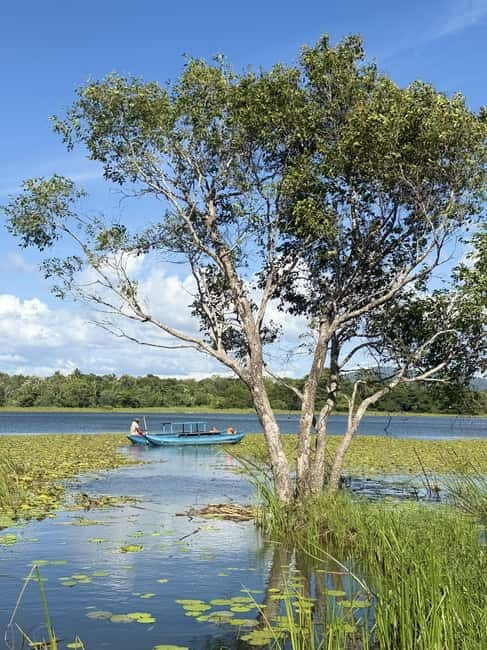
The village portion begins with a bullock cart ride along quiet paths. It is a slow, old-fashioned way to see the area, and that slower pace matters. You have time to notice fields, homes, water, and the rhythm of the countryside instead of looking at everything through a car window.
You then cross a calm village reservoir by canoe. This is one of the more peaceful parts of the morning, but it is also worth keeping expectations in check. The canoe ride is a short local activity, not a full water expedition. It gives you a different view of village life and the surrounding farmland.
Further movement through the village is by tuk-tuk or hand tractor. That detail helps make the visit feel connected to how people get around locally. You are not simply walking through a set built for visitors. The experience is presented as a genuine, modest village setting, and you should expect exactly that: basic surroundings, a family home, and normal rural life rather than a museum-style display.
That distinction is important. If you want polished buildings, formal performances, or a tightly scripted cultural presentation, this is not the right choice. If you want to see how cooking, farming, transport, and hospitality fit together in an ordinary village, the rough edges are part of the value.
Other elephant-gathering safaris from Trincomalee:
- From Sigiriya: Minneriya National Park Private Jeep Safari
★ 4.9 · 415 reviews - From Sigiriya: Minneriya National Park Elephant Safari
★ 4.8 · 365 reviews - Private Jeep Safari at Minneriya National Park to Visit Elephants
★ 5.0 · 338 reviews
Cooking over a clay stove, followed by lunch
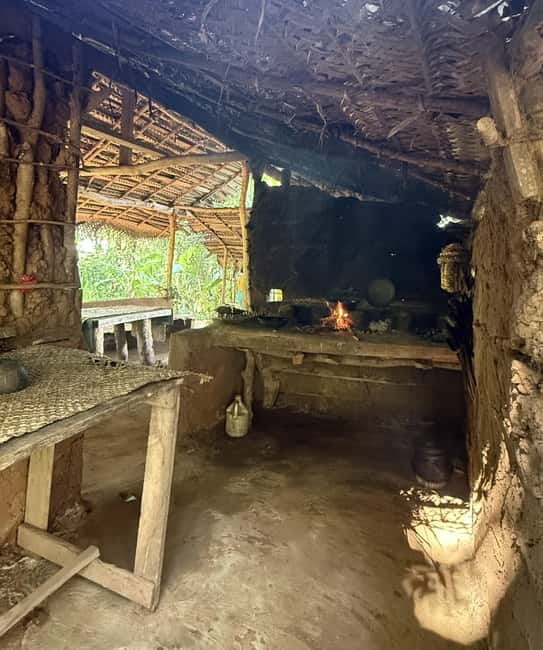
At a local home, you watch and take part in a traditional cooking demonstration. The meal is prepared with local ingredients on a clay stove, using familiar Sri Lankan methods. The point is not just to watch someone cook. You get a look at the work behind a rice-and-curry meal and the everyday techniques that are easy to miss in a restaurant.
The included lunch is home-cooked Sri Lankan food, served with a local herbal drink. Exact dishes are not specified, so you should not book this expecting a particular menu. The useful thing is that the meal is tied to the cooking session and served in the village, rather than added as a standard restaurant stop.
I especially like this part for people who want food to explain place. You learn more from seeing a meal prepared over a clay stove than from simply ordering a curry at a hotel. The meal also gives the morning a natural pause before the safari.
The setting may be simple, and some people will find the pace or facilities less comfortable than those at a restaurant. Wear light clothing, bring water, and keep your expectations practical. This is a local home visit, not a cooking school with a professional kitchen.
Optional workshops after lunch
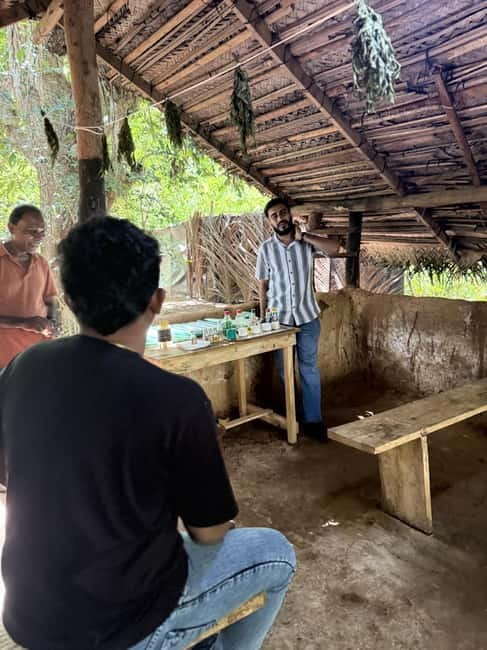
Between lunch and the safari, you may have time for one or more optional stops. The choices include a gem and jewelry workshop, an Ayurvedic herbal garden, and a silk workshop. You can visit one, all, or none, depending on your interests and the day’s timing.
These visits are described as relaxed and non-commercial. That makes them more useful for someone curious about Sri Lankan crafts, herbal products, or silk work, rather than someone looking to fill every minute with sightseeing. One possible stop is a jewelry workshop, where you can learn about local stones and jewelry making. Another is an Ayurvedic garden, with a look at herbs and traditional remedies. A silk workshop offers a chance to see the material and, according to the tour information, possibly try on a saree.
You should treat these stops as optional add-ons, not the heart of the day. The strongest parts are the village visit and the safari. If you are tired after lunch, relaxing may be the better choice. If you enjoy craft demonstrations, these stops add context without changing the basic character of the tour.
Choosing the right elephant park for the season
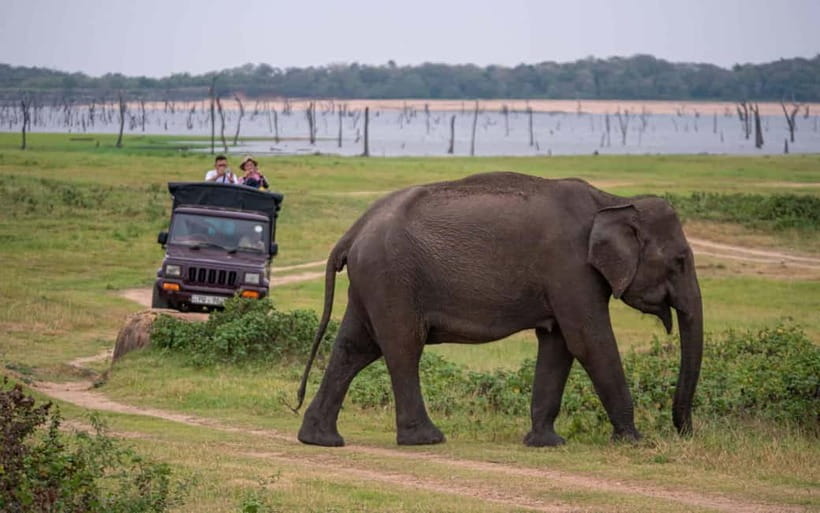
The afternoon safari is planned around elephant movement. Minneriya National Park is the main choice, but the vehicle may go to Kaudulla National Park or Hurulu Eco Park instead. That flexibility is sensible because wild animals do not follow a fixed sightseeing schedule.
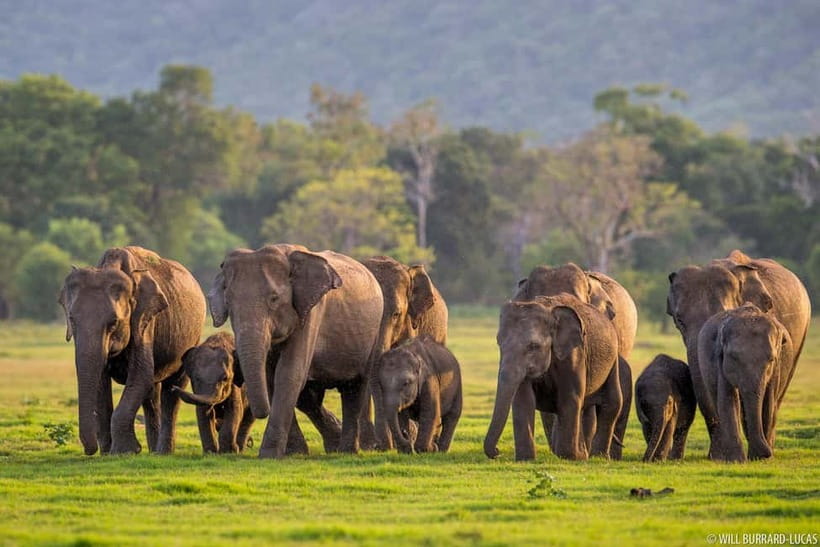
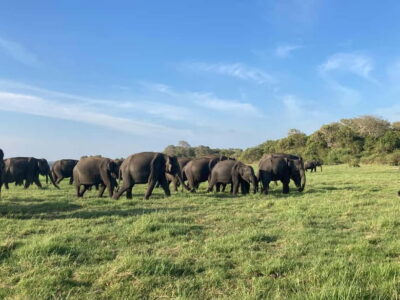
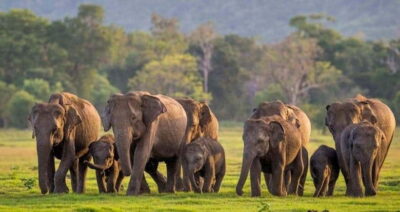
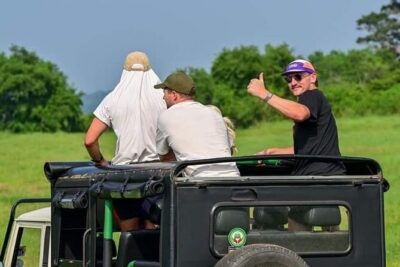
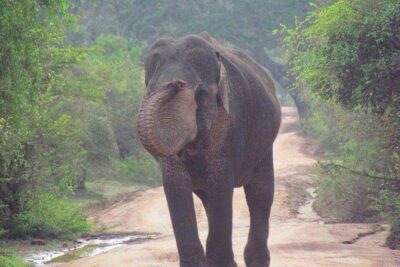
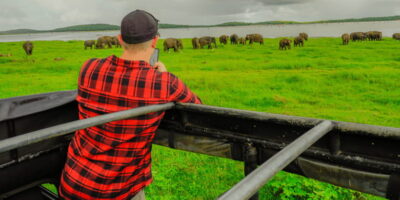
The three-hour safari takes place in a private 4×4 jeep with an experienced wildlife driver. You may see wild elephants, sometimes in large herds, along with peacocks, spotted deer, langur monkeys, crocodiles, and many kinds of birds. None of these sightings is guaranteed, of course, but the park selection is intended to give you a better chance of finding elephants on the day.
This is an important difference from an elephant attraction. The animals are wild and free in their natural setting. You are looking for them from a jeep, not watching a captive performance. That also means the quality of the safari depends on weather, season, animal movement, and the patience of the driver.
Minneriya is especially associated with elephant sightings, but the option to use Kaudulla or Hurulu is a practical advantage. You should not become fixed on one park name. The better question is where the elephants are likely to be when you visit.
Bottled water is provided during the safari. Bring sunglasses, a hat, sunscreen, and a camera. Comfortable walking shoes and light clothing are sensible for the full day, even though much of the afternoon is spent in the vehicle.
Other safari days out of Trincomalee:
- Trincomalee: Whale & Dolphin Safari Tour with Expert Guides
★ 4.2 · 53 reviews - Nilaveli: Lagoon Boat Safari with Mangrove Exploration
★ 3.8 · 5 reviews - Pasikuda to Trincomalee: Whale & Dolphin Safari + Transport
★ 4.5 · 4 reviews - From Colombo: Sigiriya and Dambulla Day Trip with Safari
★ 4.7 · 842 reviews
What the private format changes
This is a private group experience, which gives the day more flexibility than a large shared coach tour. You can spend more time at the village, ask questions during the cooking demonstration, or choose which optional workshop interests you. The safari is also in a private jeep rather than a general group vehicle.
Private does not mean the schedule is completely open. The tour still has to cover the inland drive, the two-hour village visit, lunch, the optional stops if chosen, and the three-hour safari before returning to the coast. Still, a private setup is valuable on a twelve-hour day because pickup, drop-off, and pacing are handled around your group.
Guiding is available in English, German, and French. No individual guide names are provided, but the tour includes a local guide or host as well as the wildlife driver. If you have questions about food, farming, village life, or animals, this is the kind of outing where a good guide can add much more than directions.
Is $118 good value?
At $118 per person, the price is not a budget beach excursion. It combines private round-trip transport, the village activities, bullock cart ride, canoe ride, tuk-tuk or tractor transfer, cooking demonstration, lunch, a local drink, and a private three-hour safari. If you had to arrange those parts separately, the day would be harder to coordinate and might not cost less.
The price is strongest for couples, families, or small groups who value convenience and want several major experiences in one day. You are paying for the long transport day as well as the activities. The private vehicle and private jeep are meaningful advantages, especially if you dislike waiting for a large group.
Remember that national park entrance fees are not included. You should budget for that extra cost before booking. Food and drinks beyond the included lunch, herbal drink, and safari water are also your responsibility.
For a solo visitor, $118 may feel steep once the park fee is added. For a small private group, the same price can make more sense because it replaces several separate arrangements. The tour also offers free cancellation up to 24 hours before departure and a reserve-now, pay-later option, which helps if your Sri Lanka route is still changing.
Who will enjoy this day most?
I would recommend this tour to you if you want more than beaches and hotel restaurants. It suits people who enjoy local food, quiet countryside, simple transport, and wildlife in a natural setting. Families may like the variety, since the day shifts between a cart ride, canoe, cooking, and a jeep safari.
It is also a good fit if you are staying in Trincomalee, Nilaveli, Uppuveli, or Kuchchaveli and do not want to move hotels just to reach the inland cultural sites. An optional drop-off in Sigiriya, Dambulla, or nearby hotels may be possible if arranged in advance, which could help if your route continues south or inland.
The tour is less suitable if you want a short outing, dislike early starts and long road days, or need wheelchair access. The rural paths, canoe, bullock cart, and vehicle changes make it unsuitable for wheelchair users. Anyone who needs a highly predictable itinerary should also remember that the park may change according to elephant movement.
Practical tips for a smoother day
Keep your hotel pickup details clear and be ready at the main entrance. A narrow hotel lane may require a short walk to a larger road.
Wear breathable clothes and sturdy, comfortable shoes. Bring a hat, sunglasses, sunscreen, and a camera. The sun can be strong during both the village visit and the safari.
Carry some money for park entrance fees and personal purchases. The optional workshops are not required, and you can skip them if you prefer more rest or extra time for the main activities.
Do not expect a staged village performance. The home, cooking area, transport, and surroundings are intentionally simple. That is precisely why the visit can feel more personal, but it also means you should be comfortable with rural conditions.
Keep your wildlife expectations realistic. The safari is designed to find elephants, and the park choice responds to seasonal movement, but nature does not promise a particular herd or animal. The experience is better when you value the search, the birds, and the setting as well as the elephant sightings.
Should you book this Trincomalee day trip?
Book it if you want one full day that connects Sri Lankan food, rural life, and wildlife without arranging several separate tours. The strongest combination is the home-cooked lunch and village visit, followed by the chance to see elephants living freely in a national park. The private transport and flexible park choice add real practical value.
Skip it if you want a relaxed twelve-hour schedule, a formal cultural show, or a trip with no extra entrance costs. But if you are based on the Trincomalee coast and want to see more of Sri Lanka than sand and sea, this is a well-balanced choice. It gives you a genuine rural setting in the morning and a serious wildlife outing in the afternoon, all with hotel pickup and return.
FAQ
How long does the tour last?
The full experience lasts about 12 hours. The village visit at Pelwehera takes about two hours, and the elephant safari lasts about three hours, with driving time between Trincomalee and the inland sites.
Where is hotel pickup available?
Pickup and drop-off are available in Trincomalee, Uppuveli, Nilaveli, and Kuchchaveli. If your hotel is on a narrow or inaccessible lane, the provider will arrange the nearest practical meeting point.
Which national park will the safari visit?
Minneriya National Park is the main option, but the safari may use Kaudulla National Park or Hurulu Eco Park depending on seasonal elephant movement.
Are national park entrance fees included?
No. National park entrance fees must be paid separately. Personal expenses and additional food or drinks are also not included.
What languages are available for the guide?
Guiding is available in English, German, and French.
Is the tour suitable for wheelchair users?
No. The tour is not suitable for wheelchair users because it includes rural paths, a bullock cart, a canoe, and several types of transport.
Just added around Trincomalee
- Trincomalee : Whale & dolphin watching +pigeon island tour★ 4.5 · 3 reviews
- Trincomalee: Tuk-Tuk city tour with a guide★ 5.0 · 4 reviews
- Trincomalee : pigeon island tour + snorkeling★ 3.5 · 4 reviews
- Trincomalee: Guided scooter City Tour★ 5.0 · 3 reviews
- Trincomalee: City Tour with Koneswarm and Crocodile lake★ 4.5 · 13 reviews
- Snorkeling in Trincomalee★ 5.0 · 4 reviews
- Snorkeling Trip To Angel Rock★ 5.0 · 4 reviews
- Sail Lanka Charter – Whale Watching Cruise In Mirissa★ 3.8 · 4 reviews
Minneriya & Kaudulla Safaris, compared.
Kaudulla National Park Half Day Sri Lanka Jeep Safari
Read our review →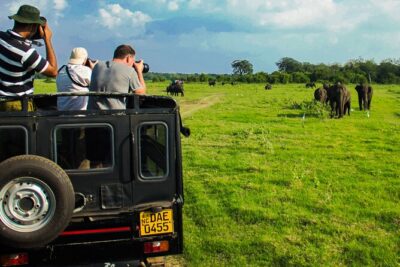
Day tour to Minneriya National Park,Sigiriya & Dambulla from Kandy
Read our review →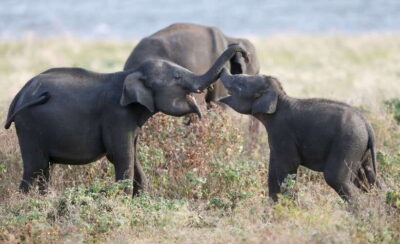
Colombo/Negombo: Sigiriya, Dambulla, and Minneriya Safari
Read our review →
Sigiriya Hike & Minneriya Safari Private Full Day Tour
Read our review →Browse the lists this tour appears in