Reviewed · TOURS IN COLOMBO
Three Ancient Kingdoms Tour | from Colombo
Sri Lanka’s best-known ancient sites can draw the crowds, but this private tour from Colombo takes you toward three quieter former capitals. You’ll see palace ruins, a rock fortress, old Buddhist monuments, and an irrigation reservoir, all in one long day.
I like the route for two reasons: it reaches places that many first-time visitors skip, and the private vehicle lets your own group set the pace within a fixed schedule. The main drawback is the day itself. Ten hours in a car, with an early start and several rough or uphill sections, will suit you best if you have moderate fitness and a real interest in archaeology.
Key points
- Three medieval and ancient capitals in one day: Visit Dambadeniya, Yapahuwa, and Panduwasnuwara, with Yapahuwa given extra time for its fortress and royal story.
- A 6:00 am Colombo pickup: The early departure helps fit distant sites into one day, but you should bring a packed breakfast.
- A private air-conditioned vehicle: Only your group takes part, with an English-speaking chauffeur guide and hotel pickup and drop-off.
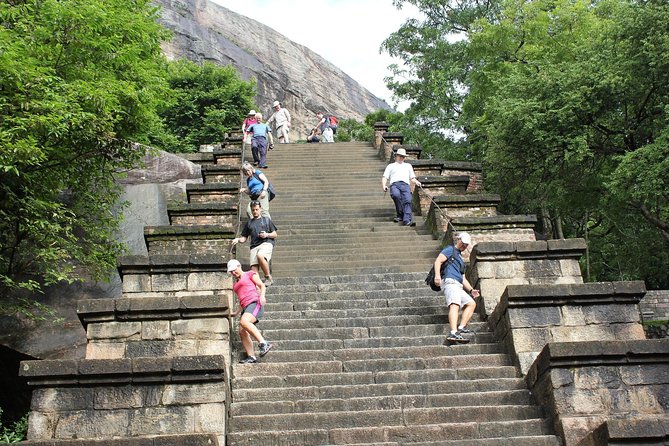
- Yapahuwa’s carved stone stairway: The fortress offers wide steps, detailed carvings, and a climb to ruins near the rock summit.
- Two thousand years of remains at Panduwasnuwara: The site combines early and medieval ruins, including palace remains, temples, and Panda Wewa.
- A good value for history-minded visitors: At $85 per person, transport, guide service, and water are included, but entrance fees and food are extra.
Why these three former capitals matter
Sri Lanka’s ancient story is not limited to the famous cities of Anuradhapura, Polonnaruwa, and Kandy. Dambadeniya, Yapahuwa, and Panduwasnuwara reveal a less familiar period, when kings moved capitals in response to invasions, political pressure, and the need to protect the Sacred Tooth Relic.
That gives this route a clear theme. You are not simply ticking off unrelated ruins. You are following the movement of royal power across northwestern Sri Lanka, from Dambadeniya to Yapahuwa, while also visiting Panduwasnuwara, a much older settlement with later medieval use.
The sites are not all preserved in the same way. Some offer dramatic architecture, while others are more atmospheric and archaeological. You’ll need to use your imagination at Dambadeniya and Panduwasnuwara, but Yapahuwa provides the strongest visual centerpiece.
The current rating is 4.9 from 18 published ratings, with a 100 percent recommendation rate. That is a small sample, but it fits the appeal of the tour: the guide service, private arrangement, and chance to see lesser-known historical sites are its strongest points.
Other days travellers book out of Colombo:
- Colombo: Private Tuk-Tuk City Tour with All Entry Fees
★ 4.9 · 2,154 reviews - Sri Lanka Personal Tour Driver in private vehicle
★ 5.0 · 747 reviews - Colombo Tuk Tuk City Tour -Sightseeing Entry Fees & Food Included
★ 5.0 · 678 reviews
Leaving Colombo at 6:00 am
Your hotel pickup begins at 6:00 am. From Colombo, the drive to Dambadeniya takes about two hours, so a packed breakfast is a sensible idea. Food and drinks are not included, and the schedule gives you little reason to expect a leisurely breakfast stop.
The early start is not just a formality. These sites are spread across the Northwestern Province, and fitting them into a single day requires a serious amount of road time. You will spend several hours in the air-conditioned vehicle, so wear comfortable clothes and keep your water close.
Transport, hotel pickup, and drop-off are included. You also receive a one-liter bottle of water per person. The tour is private, so your group does not have to share the vehicle or adapt to strangers’ interests. That matters at archaeological sites, where one person may want a quick look and another may want to study every carved stone.
An English-speaking chauffeur guide accompanies you. No individual guide name is provided in the tour details, but the guide’s role is important here. These sites have fewer instantly recognizable landmarks than Sigiriya or the Temple of the Tooth in Kandy, so explanation helps connect scattered walls and foundations to the larger story.
Dambadeniya and the remains of a royal court
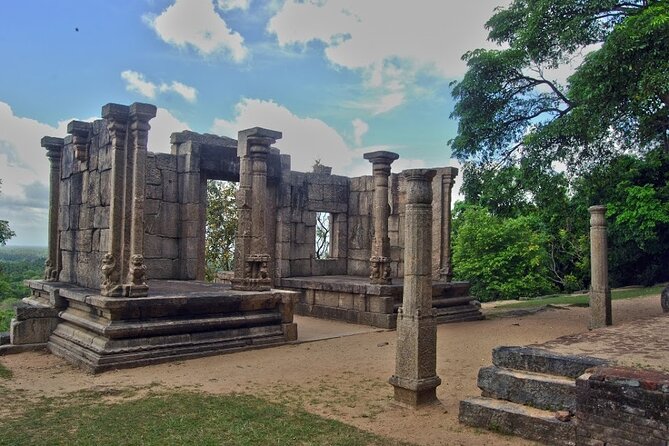
Dambadeniya is the first stop, reached after roughly two hours on the road. You spend about an hour here, and admission is listed as free.
The kingdom reached its height in the mid-thirteenth century under King Parakramabahu II. He is remembered as a peaceful ruler and as a patron of Sinhalese literature. His works, Kavisilumina and Visuddi Marga Sannasa, are tied to a period when writing and court culture reached a high point.
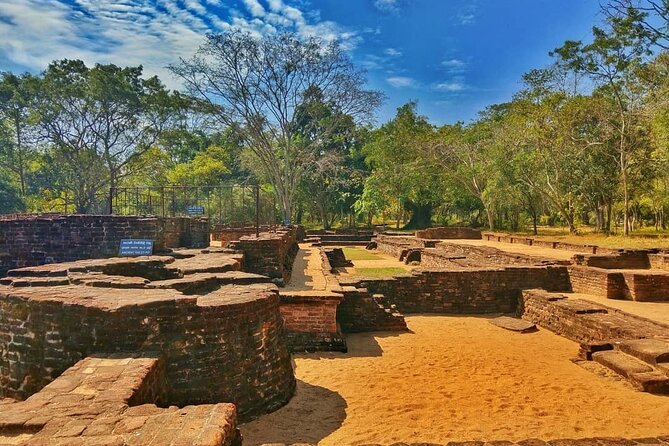
The most important physical remains include the old Temple of the Tooth, where the Sacred Tooth Relic was once kept. You’ll also see the remains of the royal palace complex, including traces of gardens, walls, and moats.
Do not arrive expecting a complete palace or a grand standing monument. Dambadeniya works better as an introduction to the tour’s historical theme. The excavated foundations help you picture a royal center that once held political and religious power, while the open setting gives the place a calm, unpolished feel.
I like starting here because it shows how much Sri Lankan history survives in fragments. The site may be less visually dramatic than Yapahuwa, but it gives your guide room to explain why the capital mattered and why the Sacred Tooth Relic was so central to royal authority.
Yapahuwa’s steep climb and carved gateway
The drive from Dambadeniya to Yapahuwa takes about an hour and a half, with arrival scheduled around 10:30 am. You spend about two hours at the rock fortress, making this the longest stop on the route.
Yapahuwa became the capital after Dambadeniya, during a period of invasion from South India. King Bhuvenakabahu moved the capital here in 1272 and brought the Sacred Tooth Relic with him. The choice of location was practical: the citadel rises on a huge granite rock, almost 100 meters above the surrounding lowlands.
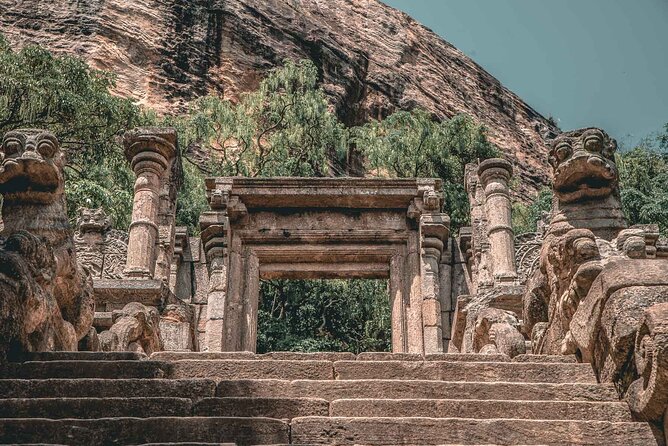
The approach is the visual high point of the day. Yapahuwa is sometimes compared with Sigiriya because both use a large rock as a fortress site, but the architectural treatment is different. Here, the broad stairway and its stone decoration are central to the experience.
You’ll see carved pillars, stone sculptures, and detailed work around the stairs. The climb is not simply a walk to a viewpoint. The steps themselves are part of the monument, and they give you a sense of how the fortress controlled access to the upper area.
A moderate level of fitness is required. The route includes an uphill climb, and the tour does not suggest that the entire visit is accessible without effort. Take your time, especially if the heat is strong. The private format helps because you can move at a pace that works for your group, although the overall schedule still needs to keep moving.
At the top are ruins of a stupa, along with statues and imagery associated with the Kandyan era. The fortress later became a monastery used by Buddhist monks, so the site shifted from royal defense and residence to religious use.
Entrance fees are not included, so keep some money available for Yapahuwa. The exact fee is not stated in the tour details. That uncertainty is minor, but it is worth remembering when comparing the $85 price with a tour that claims to include all admissions.
Same base, a completely different day:
- Udawalawe National Park: Elephant Safari with Expert Guide
★ 4.9 · 641 reviews - Colombo Private Tuk-Tuk City Tour with All Entry Fees Included
★ 5.0 · 524 reviews - Colombo: Private Tuk-Tuk City Tour with Guide & All Tickets
★ 4.9 · 471 reviews - 08 Nights in Magical Sri Lanka
★ 5.0 · 443 reviews
Why Yapahuwa appears twice in the route
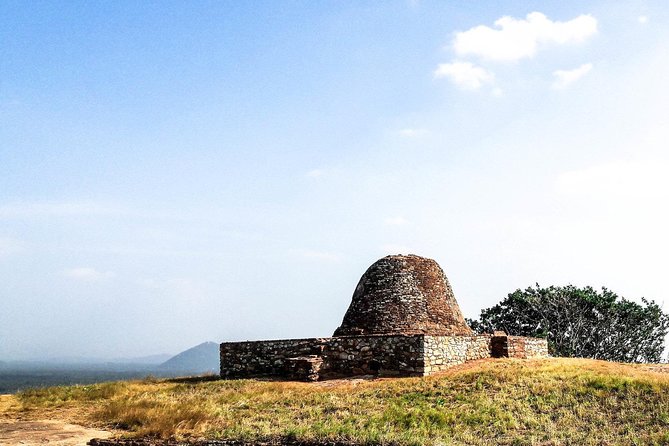
The schedule lists Yapahuwa in two parts. The first is the main two-hour visit to the rock fortress, including the climb and the upper ruins. The later 30-minute entry gives more historical context about Yapahuwa as a medieval capital.
That second stop is not a different kingdom. It is a shorter continuation of the Yapahuwa visit and its story. The purpose is to explain what happened after King Bhuvenakabahu’s death in 1284, when the Pandyans of South India captured the Sacred Tooth Relic.
After that loss, Yapahuwa was largely abandoned as a royal capital and became a place used by Buddhist monks and religious ascetics. Knowing this changes the way you see the ruins. The rock is not only a fortress with attractive carvings. It also records a brief political chapter and the consequences of losing the relic that helped validate Sri Lankan kingship.
For some people, this extra explanation will be useful. If you prefer a fast-moving sightseeing day, the repeated Yapahuwa entry may feel like a little schedule confusion. In practical terms, plan on one substantial Yapahuwa visit, followed by a short additional look or discussion.
Panduwasnuwara and two millennia of ruins
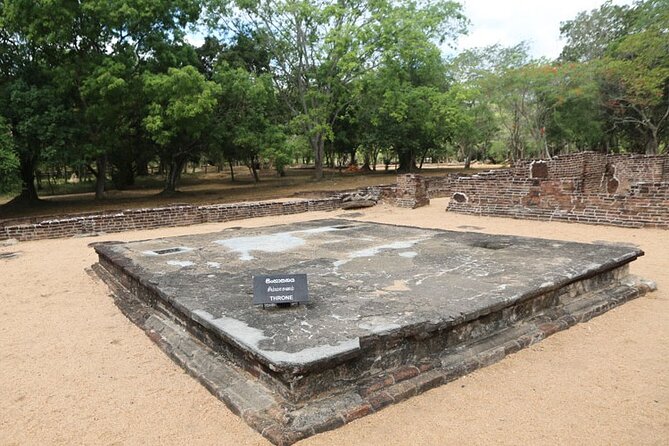
From Yapahuwa, the drive to Panduwasnuwara takes up to an hour and a half. You spend about an hour exploring the ancient kingdom, with another admission fee not included.
Panduwasnuwara is older than the two medieval capitals. It served as a capital as early as the fifth century BC, then saw renewed use in the twelfth century. That long timeline is what makes the site unusual. Rather than presenting one neat period, it brings together remains from very different stages of Sri Lankan history.
The ruins cover nearly 12 hectares, so this is an open archaeological area rather than a compact monument. The main sights include a recently restored two-storied structure identified as a former Temple of the Tooth, remains of the royal palace, and the artificial reservoir called Panda Wewa.
Panda Wewa is especially important. It is considered one of the earliest irrigation systems made by humans, and it reminds you that ancient kingdoms depended on water management as much as on palaces and temples. Sri Lanka’s old capitals were not isolated ceremonial centers. Their survival depended on engineering, farming, storage, and control of water.
You’ll also visit the Panduwasnuwara museum. That helps give names and meaning to the scattered remains, especially when the site itself does not provide a dramatic, intact building at every turn.
Panduwasnuwara may be the least immediately spectacular stop, but I would not treat it as filler. It is the place that best shows the long span of Sri Lankan settlement and the way a single area could be reused centuries apart. The open ruins also make this a stop where sun, heat, and walking distance matter. Bring the supplied water, and consider a hat and practical shoes.
What the $85 price really covers
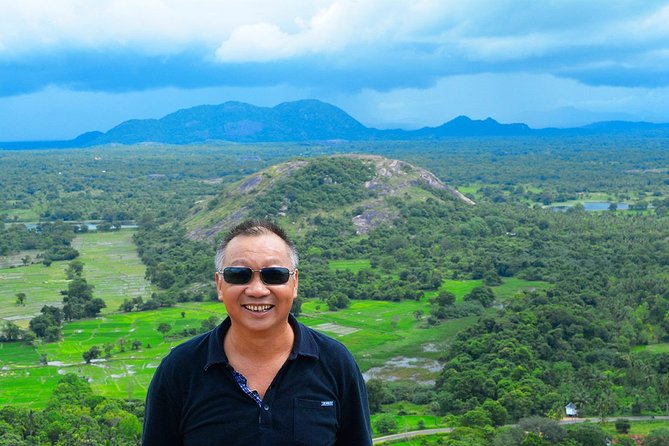
At $85 per person, the tour is not simply an admission package. You are paying for a private vehicle from Colombo, a full day of driving, hotel pickup and drop-off, an English-speaking chauffeur guide, and a bottle of water.
That can be fair value if you are staying in Colombo and want to reach all three sites without arranging separate transport. The distances make a self-organized day more complicated, and the private format gives you direct access to a guide throughout the route.
The value is less clear if you are mainly looking for famous, fully restored monuments. These sites are quieter and more fragmentary. You are paying for access to a connected historical route, not for a string of polished attractions.
Group discounts may be available, although the amount is not specified. Since the activity is private, the per-person price may work better for couples, families, or small groups than for a solo visitor. Entrance fees and food are extra, so include those costs in your budget.
Who will enjoy this long day
This tour fits you well if you want to go beyond Sri Lanka’s most famous ancient sites and are willing to trade comfort for breadth. It is particularly useful for history-minded visitors who want to understand how capitals shifted and how the Sacred Tooth Relic influenced royal decisions.
It also suits a private group with mixed interests. One person can focus on the carvings, another on Buddhist monuments, and another on the political story, without the rigid rhythm of a large coach group.
You should think twice if you dislike early starts, long drives, or uphill walking. The tour lasts about 10 hours, and the road time is a major part of the day. The physical requirement is described as moderate, but Yapahuwa’s climb is the clearest test.
The experience requires good weather. If poor weather forces cancellation, you can be offered another date or a full refund. For a planned holiday, the free cancellation policy also allows a full refund when you cancel at least 24 hours before the start time. Changes or cancellations inside that window are not accepted.
Should you book the Three Ancient Kingdoms Tour?
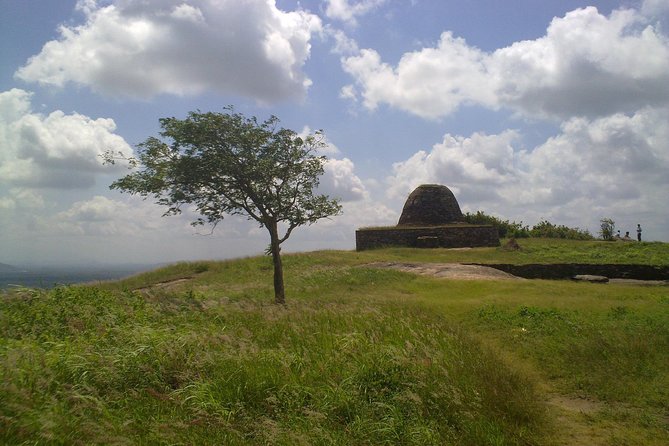
Book it if you want a private, history-heavy day that reaches three less familiar sites from Colombo. Yapahuwa is the main visual reward, with its rock setting and carved staircase, while Dambadeniya and Panduwasnuwara supply the wider political and engineering story.
I would choose this tour for a small group with moderate fitness, a flexible attitude toward ruins, and enough curiosity to appreciate foundations, old reservoirs, and reconstructed monuments. I would skip it if your priority is an easy day, a late start, or famous buildings that require little explanation.
Bring a packed breakfast, comfortable shoes, water-friendly patience, and room in your schedule for a long ride home. At $85 per person, the tour offers solid value when you want private transport and a guide to make sense of three scattered sites, but the experience rewards interest in history more than a search for nonstop spectacle.
FAQ
What time does the tour start?
Hotel pickup begins at 6:00 am from Colombo hotels.
How long does the tour last?
The tour lasts approximately 10 hours.
Is the tour private?
Yes. Only your group participates in the activity.
What is included in the price?
The price includes hotel pickup and drop-off from Colombo hotels, transport in an air-conditioned vehicle, an English-speaking chauffeur guide, and one one-liter bottle of water per person.
Are meals and entrance fees included?
No. Food, drinks, and entrance fees for the sites are not included. A packed breakfast is recommended because the first drive begins early.
How much physical fitness do I need?
A moderate level of physical fitness is recommended. The Yapahuwa visit includes a climb to the fortress and the ruins near the summit.
Just added around Colombo
- Yala Safari All-Inclusive Package with Convenient Pick Up★ 4.4 · 3 reviews
- Wilpattu: Private Safari Day Trip with Lunch & Entry Fees★ 4.6 · 9 reviews
- Visit sri Lanka 7 Days Round Trip★ 5.0 · 18 reviews
- Tuk Tuk Tales of Colombo From Cruies★ 4.6 · 4 reviews
- Tuk Trip is Very Cheap in Colombo (All-inclusive ) city tour★ 3.4 · 5 reviews
- Udawalawa National Park: All-Inclusive Private Day Tour★ 4.8 · 36 reviews
- Tuk Trip is Very Cheap in Colombo (All-inclusive ) city tour★ 4.5 · 5 reviews
- Colombo Shore Excursion from Cruise Port – Private Small Group★ 5.0 · 6 reviews
Tours in Colombo, compared.
Private Tuk-Tuk City Tour with All Entry Fees
Read our review →
Colombo Tuk Tuk City Tour -Sightseeing Entry Fees & Food Included
Read our review →
Udawalawe National Park: Elephant Safari with Expert Guide
Read our review →
Private Tuk-Tuk City Tour with Guide & All Tickets
Read our review →
Colombo Local Food Tour by Tuk Tuk – All Inclusive
Read our review →