
Reviewed · SIGIRIYA ROCK FORTRESS
Cooking Class: Sajee’s Place Cooking Class sigiriya
The best part of Sajee’s Place Cooking Class is that you do not simply watch a demonstration. You prepare the meal yourself, working through Sri Lankan rice, curries, vegetables, spices, and coconut sambol with Sajee and his wife, Suzy. By the end, you sit down to eat what you made.
I especially like the range of dishes packed into three hours and the useful follow-up recipes sent as PDFs. Sajee also explains how to adjust ingredients for vegetables, meat, fish, and different spice levels. One thing to consider: the class produces a large meal, so it is a better choice for people who enjoy plenty of food and active participation than for anyone wanting a quick cooking demonstration.
Key points to know before you book
- Seven or more Sri Lankan dishes: Expect rice, dhal, chicken or fish curry, three vegetable curries, a stir-fried or tempered dish, coconut sambol, and papadams.
- A real hands-on class: You chop, mix, season, and cook rather than simply taking notes.
- Hosted by Sajee and Suzy: The husband-and-wife team teaches in English and keeps the mood warm, patient, and informal.
- Useful for home cooks: Recipes, spice lists, and cooking tips are sent as PDF files after the class.
- Small group setting: A maximum of 10 people allows room for questions and individual help.
- Good value at $36: Three hours of instruction, a full meal, unlimited bottled water, and take-home recipes make this more than a standard meal out.
What makes Sajee’s class different
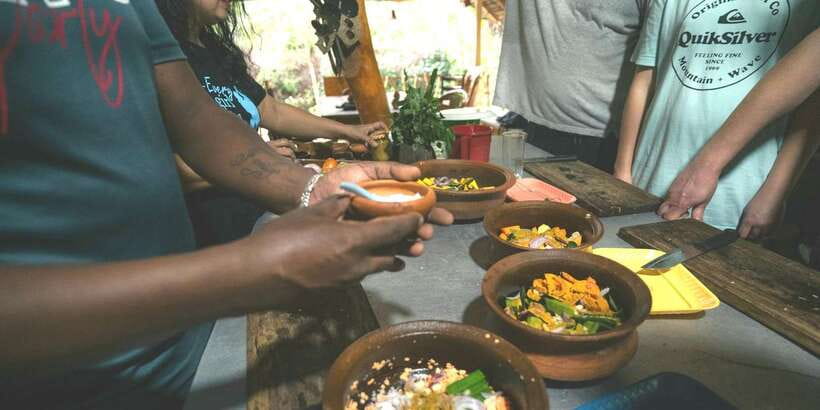
Sri Lankan cooking can look simple on a restaurant menu, but the flavor comes from small choices: when to add spices, how long to cook onions, how much coconut to use, and how to balance heat with salt and sourness. Sajee’s class gives you time to see those choices in action.
You work through a traditional rice and curry meal rather than one signature dish. That matters because rice and curry is not one fixed recipe. It is a plate built from several smaller preparations, each with a different texture and seasoning.
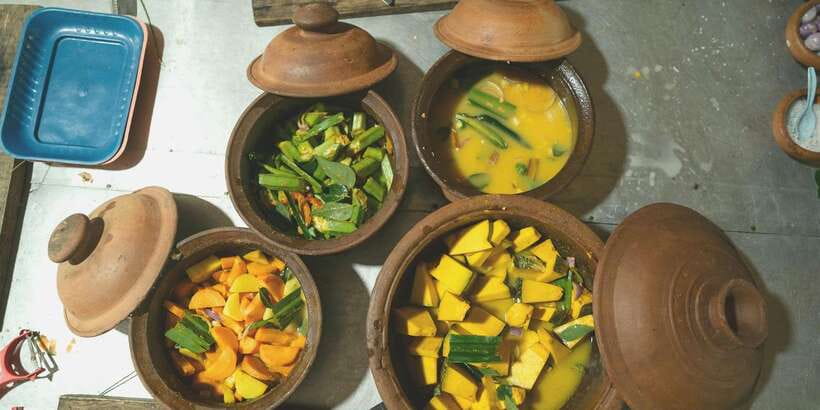
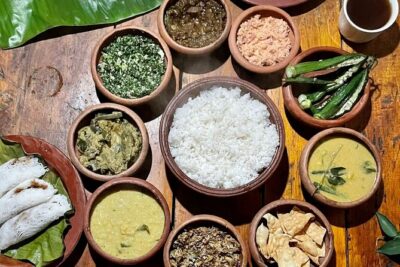
The class usually includes dhal curry, a chicken or fish curry, three seasonal vegetable curries, one stir-fried or tempered dish, coconut sambol, rice, and papadams. The exact vegetables can vary, which is useful. You learn a method that can work with what you find at home, not just a recipe tied to one hard-to-find ingredient.
Several cooking sessions have produced six, seven, eight, or even ten dishes, depending on the menu and the group. You should expect a generous spread, with much of the meal prepared from scratch.
Other cooking classes around Sigiriya:
- Organic cooking class sigiriya (kumara & family)
★ 5.0 · 650 reviews - Sajee’s Place Cooking Class
★ 5.0 · 237 reviews - Organic Cooking Class sigiriya home Kitchen(Kumara & family)
★ 5.0 · 116 reviews
Meeting Sajee and Suzy near Sigiriya
Sajee and Suzy teach the class as a team. Sajee generally leads the explanations, covering spices, herbs, ingredients, cooking methods, and the role of food in Sri Lankan daily life. Suzy helps guide the practical work and keeps everyone moving through the recipes.
That husband-and-wife setup gives the class a relaxed feel. One person can explain a technique while the other helps you with preparation. You are not left waiting for a single instructor to finish with another participant.
The class is limited to 10 people. A smaller group may give you more time to ask questions, and if the session has only a few bookings, the experience becomes even more personal. You can ask about substituting ingredients, making the food less spicy, or adapting a dish for a vegetarian kitchen.
The class is taught in English. The central subject is food, but Sajee also shares background about Sri Lankan food customs and common ingredients. You come away with a better idea of how to read a Sri Lankan menu, including the difference between a curry, a tempered dish, and a coconut-based accompaniment.
The ingredient lesson: spices, vegetables, and coconut
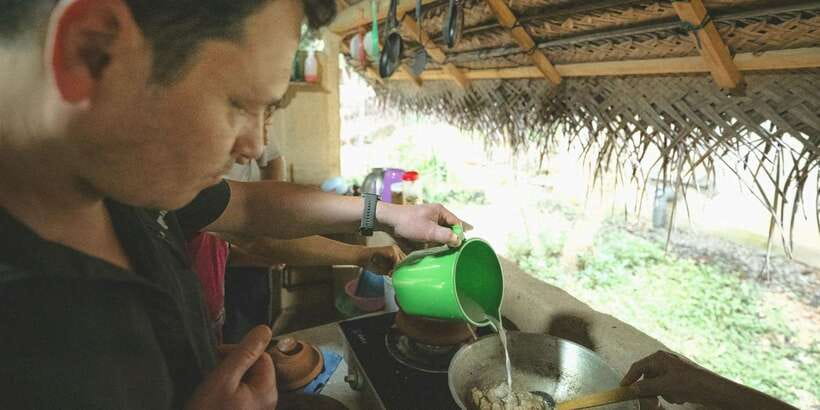
Before you start cooking, Sajee explains the ingredients and how they are used. This is one of the most useful parts of the experience, because Sri Lankan cooking often uses familiar spices in unfamiliar combinations.
You learn that not every spice is treated the same way. Some are used in curries, while others are better suited to particular vegetable dishes or fried preparations. Sajee explains how flavors combine and how cooking time changes the final result.
Fresh ingredients are central to the class. Seasonal vegetables form part of the meal, and the menu can change according to what is available. That makes the class more practical than a rigid cooking lesson, especially if you plan to recreate the dishes outside Sri Lanka.
Coconut also gets its proper attention. The coconut sambol is prepared with freshly grated coconut in some sessions, giving you a clear sense of its texture and freshness. Sambol is not just a garnish. It adds heat, moisture, and a sharp contrast to the rice and curries.
You can also ask about spice tolerance. The seasoning is adjusted during the class, so you do not need to be an expert with chili to take part. If you prefer mild food, tell the hosts early and they can guide the seasoning accordingly.
Preparing rice and the curry spread
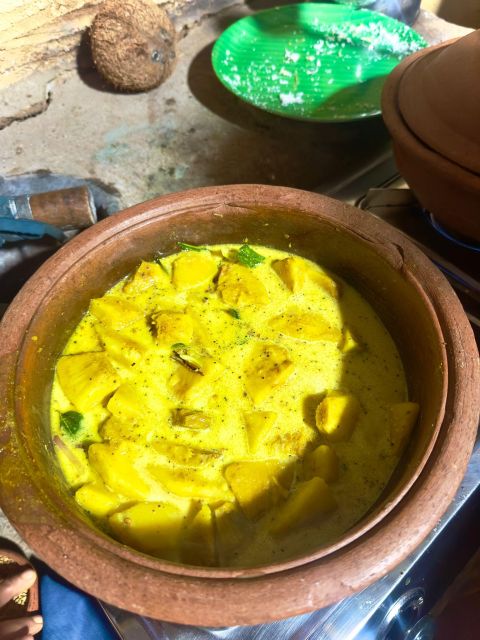
The meal begins to take shape through several separate cooking tasks. You may help prepare rice, dhal, a meat or fish curry, vegetable curries, and a final stir-fried or tempered dish.
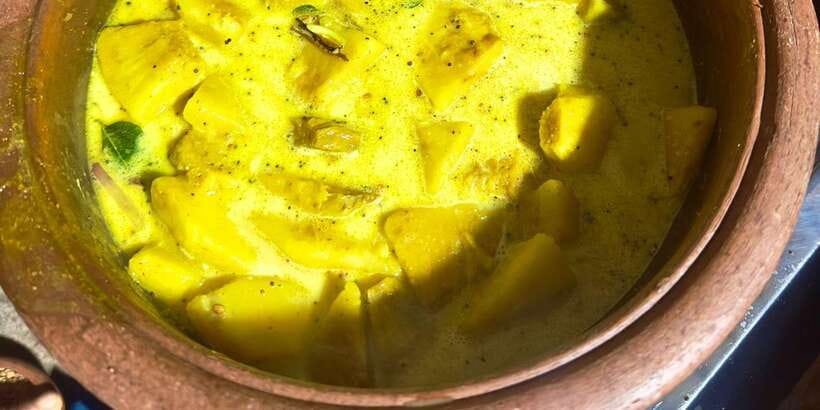
Dhal curry is a good introduction to the balance of Sri Lankan food. Lentils provide a mild base, while spices and coconut bring depth and fragrance. It is also a dish you can easily make at home with basic ingredients.
The chicken or fish curry gives you a chance to see how the same general approach changes with different proteins. The class can explain how recipes adapt to meat, fish, or vegetables, which is helpful if your diet or local shopping options differ from the original menu.
The three vegetable curries are particularly valuable. Instead of treating vegetables as one side dish, Sri Lankan cooking gives each one its own seasoning and preparation. You get to compare different textures and cooking times across the plate.
The stir-fried or tempered dish adds another style of cooking. Tempering usually refers to cooking spices and other ingredients in hot oil before adding them to a dish or serving them over it. The result can be more fragrant and crisp than a slow-cooked curry.
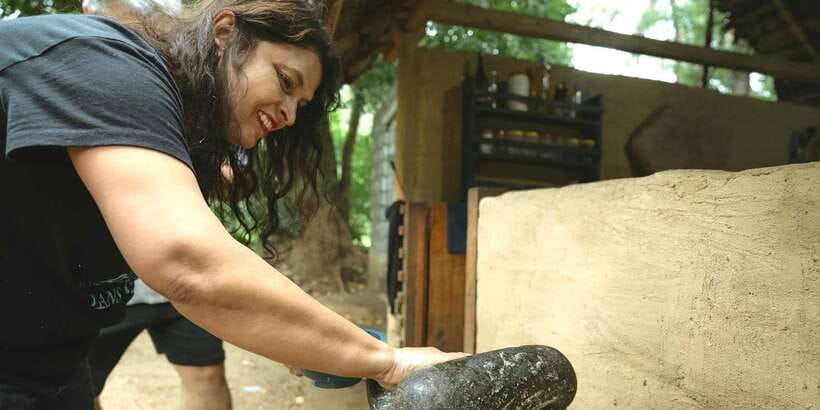
You do not just watch these steps. You take part in the preparation, with Sajee and Suzy explaining what to do and correcting you when needed. Beginners are welcome, and the teaching is paced so you can follow along without feeling rushed.
Other trips to the rock from Sigiriya:
- From Colombo: Sigiriya and Dambulla Day Trip with Safari
★ 4.7 · 842 reviews - From Sigiriya: Minneriya National Park Private Jeep Safari
★ 4.9 · 415 reviews - From Sigiriya: Minneriya National Park Elephant Safari
★ 4.8 · 365 reviews - Sunrise or Sunset Hike Pidurangala Rock with Scenic Views
★ 4.6 · 125 reviews
Sitting down to eat what you prepared
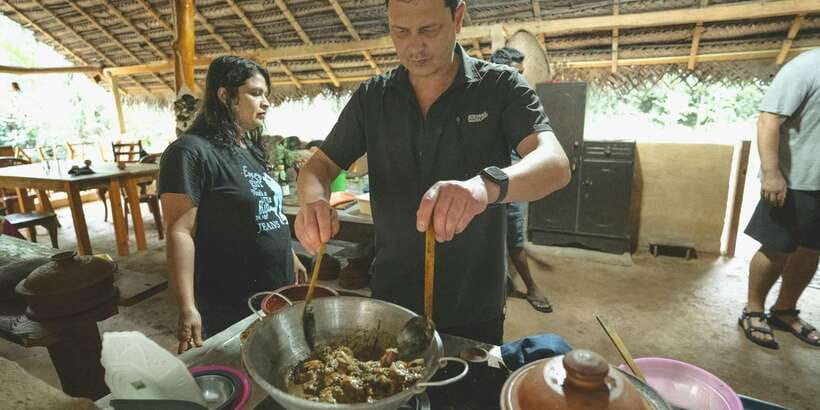
At the end, the cooking becomes lunch or dinner. You sit down together with the rice, curries, sambol, and papadams, tasting how the separate dishes work as one meal.
This is where the class earns its value. You can immediately see whether the rice is fluffy, whether a curry needs more salt, and how the sambol changes the bite of a vegetable dish. Eating the food soon after cooking also makes the techniques easier to remember.
Portions are generous. If you enjoy trying many dishes, you will appreciate the variety. If you are not a large eater, you may find the final spread excessive, but that is part of the rice and curry tradition. You are sampling a complete table of dishes rather than ordering one main course.
The food is prepared with a focus on authentic Sri Lankan recipes, but the instruction is not precious or intimidating. Sajee explains how to adjust dishes for different vegetables, meat, fish, and home kitchens. That practical approach makes the meal useful beyond the day itself.
Unlimited bottled water is included. A welcome drink is not specifically listed, so do not book expecting one.
The recipe PDFs are a real advantage
Many cooking classes end when the meal is finished. Sajee sends recipes and cooking tips afterward, and some sessions also include spice lists. This is one of the strongest reasons to choose this class over a simple food tour.
Sri Lankan recipes can involve several dishes at once, and it is easy to forget which spice went into which pot. Having the recipes in PDF form gives you a chance to recreate the meal at home while the techniques are still fresh.
The recipes also help with substitutions. You can ask during class how to replace a local vegetable or adjust a dish for ingredients available in your own country. The aim is not just to feed you once. It is to give you a workable set of recipes for later.
That said, you should still take notes if a particular technique matters to you. A PDF can list ingredients and steps, but it cannot always capture the visual signs of doneness or the exact texture Sajee demonstrates.
Value, timing, and practical details
The class costs $36 per person and lasts about three hours. That price includes instruction, the cooked meal, the listed dishes, unlimited bottled water, and the recipe material sent afterward.
I consider that strong value, especially because the class covers several curries rather than one dish. A restaurant meal may cost less in some parts of Sri Lanka, but it will not teach you how the food was prepared or give you recipes to use later.
The three-hour length is well suited to the menu. You have time to discuss ingredients, prepare several dishes, cook them, and sit down to eat. Do not schedule a rushed activity immediately afterward, particularly if you enjoy asking questions.
Starting times depend on availability. You should check the schedule when booking, since the available session time is not fixed in the information provided.
Cancellation is flexible, with a full refund available when you cancel at least 24 hours ahead. You can also reserve and pay later, which helps if your Sigiriya plans may change.
The class is wheelchair accessible, according to the activity information. If you have specific mobility needs, it is still sensible to confirm arrangements directly before arriving.
Who will enjoy this cooking class most
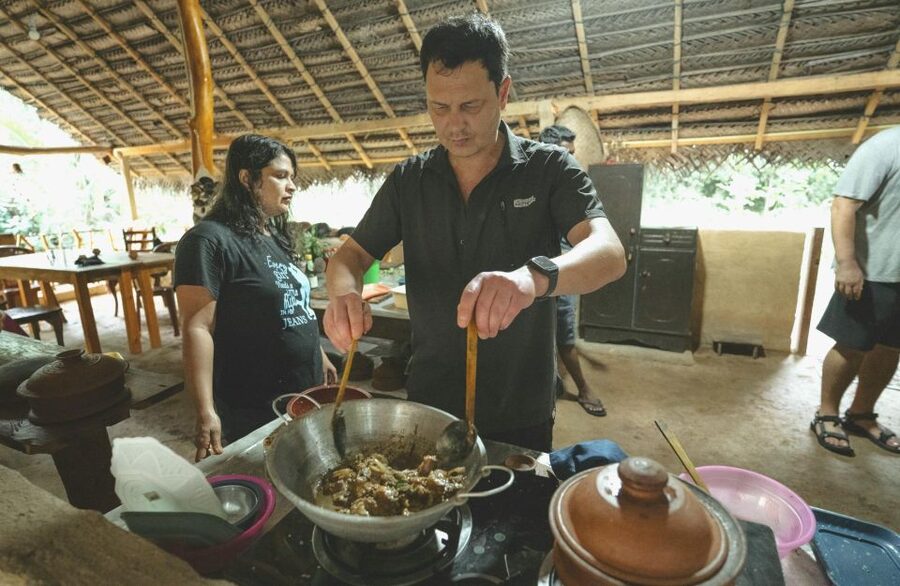
This is a strong choice for anyone who wants to understand Sri Lankan food beyond ordering curry at a restaurant. You get practical cooking experience, cultural context, and a substantial meal in one session.
It suits complete beginners. The teaching is patient, and you are guided through each step. It also works for experienced home cooks who want to compare techniques and ask detailed questions about spice balance or substitutions.
Vegetarians should find plenty to eat. The meal includes three vegetable curries, dhal, coconut sambol, rice, papadams, and a stir-fried or tempered dish. You should confirm the exact menu if you need the entire class to be vegetarian, since chicken or fish curry is part of the standard offering.
Families and older children can also enjoy it. Teenagers have taken part successfully, and the hands-on format gives them a clear role. It is less suitable for someone who dislikes group participation or wants a short demonstration with no cooking work.
The class is also a good rainy-day or rest-day activity around Sigiriya. You do not need another major sightseeing stop to make it worthwhile. Food gives you a different way to understand the area and local life.
How Sajee’s Place compares with a normal restaurant meal
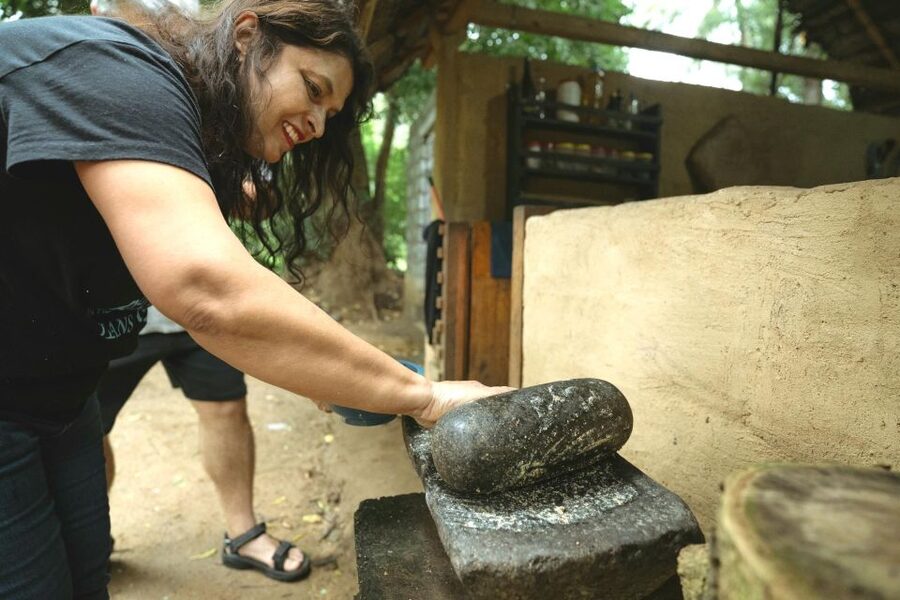
A restaurant lets you sample finished food. Sajee’s class shows you why the dishes taste the way they do.
You learn the difference between the gentle flavor of dhal, the heat of sambol, the deeper seasoning of chicken or fish curry, and the lighter treatment given to vegetables. You also see how a Sri Lankan meal depends on contrast rather than one dominant dish.
The class takes more time than lunch, and it requires more effort. You will be chopping, preparing, stirring, and paying attention. That is the point, but it is worth knowing before booking.
If your main goal is to eat quickly between visits to Sigiriya Rock and other sights, a restaurant is easier. If you want to take a piece of Sri Lankan food culture home with you, the class gives you far more.
My recommendation for booking
I would book Sajee’s Place Cooking Class if you have three spare hours in Sigiriya and any real interest in food. The strongest reasons are the number of dishes, the patient husband-and-wife instruction, the flexible spice guidance, and the recipe PDFs you receive afterward.
Book it especially if you like hands-on activities, want a meal that is not simply served to you, or are traveling with teenagers and want a shared activity. At $36, the combination of instruction and a full rice and curry feast is convincing value.
Think twice only if you dislike spicy food, do not want to cook, or prefer a quick meal. For everyone else, this is a useful and enjoyable way to understand Sri Lankan cuisine from the inside.
FAQ
How long is Sajee’s Place Cooking Class?
The class lasts three hours.
How much does the cooking class cost?
The listed price is $36 per person.
Who teaches the cooking class?
Sajee and his wife, Suzy, teach the class together.
What language is used during the class?
The instructor language is English.
How many people can join?
The class is a small group experience limited to 10 participants.
What dishes are included?
The meal includes rice, dhal curry, chicken or fish curry, three vegetable curries, one stir-fried or tempered dish, coconut sambol, and papadams.
Will I cook the food myself?
Yes. The class is hands-on, and participants help prepare the dishes rather than only watching a demonstration.
Are recipes provided afterward?
Yes. Sajee sends PDF recipes and cooking tips after the class, and spice lists may also be included.
Is bottled water included?
Yes. Unlimited bottled water is provided for everyone.
Can I cancel or pay later?
You can cancel up to 24 hours in advance for a full refund. Reserve-now, pay-later booking is also available.
More cooking classes in Sigiriya
- Organic Cooking Class with Garden Visit by Sinhagiri
★ 5.0 · 65 reviews - Ella: Traditional Sri Lankan Cooking Class
★ 4.9 · 788 reviews - Kandy Village Cooking Class
★ 5.0 · 536 reviews - Sea waves sri lankan cooking class
★ 5.0 · 467 reviews
Just added around Sigiriya
- A Hidden Gem in Sigiriya: Magical Boat Journey.★ 4.5 · 12 reviews
- Kandy: City Highlights and Ramboda Waterfall Trip★ 5.0 · 4 reviews
- Day tour sigiriya to anuradhapura★ 4.5 · 45 reviews
- Private Polonnaruwa Ruins & Minneriya Safari Tour from Sigiriya★ 5.0 · 18 reviews
- Private Polonnaruwa Sightseeing Day Tour from Sigiriya★ 5.0 · 31 reviews
- Polonnaruwa Sight Seeing Tour and Minneriya Elephant Safari★ 4.8 · 18 reviews
- Sigiriya: Rock Fortress Private Guided Walking Tour★ 4.8 · 34 reviews
- Private Jeep Safari at Minneriya National Park – Half Day Tour★ 5.0 · 50 reviews
Sigiriya Rock Fortress, compared.

Organic cooking class sigiriya (kumara & family)
Read our review →



Kandy to Sigiriya Day Tour and Dambulla cave temple with private vehicle
Read our review →
Private Day Trip to Sigiriya & Dambulla from Kandy – Aaliya Tours
Read our review →Browse the lists this tour appears in