
Reviewed · SIGIRIYA ROCK FORTRESS
Night Hike to see Elusive & Rare Loris in Sigiriya
The main reason to book this outing is simple: lorises are hard to find by day, but after sunset they begin moving through the trees in search of food. In Pidurangala, a small group and a sharp-eyed guide give you a genuine chance to see one in the wild rather than in a zoo or rescue center.
I like the short wildlife briefing before the walk, and I like that Back of Beyond links the activity to habitat protection. The headlamps are supplied, the price is reasonable for a private booking for two, and several outings have found four or five lorises. The catch is that wildlife never follows a script: rain and bright moonlight can send lorises farther into the jungle, and sightings may be brief.
Key points to know before you go
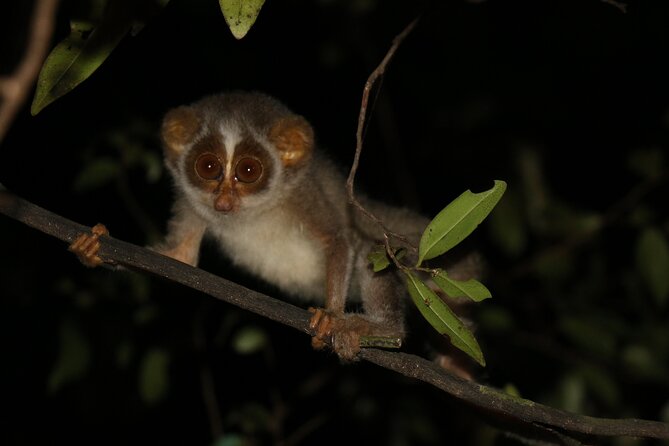
- A strong chance of seeing a loris: The operator advertises a success rate of more than 90 percent, with a money-back guarantee if none is found.
- A real night walk, not a vehicle safari: You walk through the Pidurangala jungle with guides scanning the trees for movement and eye shine.
- Small groups matter: The maximum is eight people, and some departures have only two guests with two guides.
- The conservation angle is genuine: Back of Beyond presents information about lorises and supports protection of their habitat.
- Pack proper clothing: Long trousers, a long-sleeved shirt, and closed-toe shoes are required for the jungle trails.
- Allow closer to two hours: The headline duration is 1.5 hours, while the walking schedule describes about two hours from start to finish.
Why the Pidurangala jungle works after dark
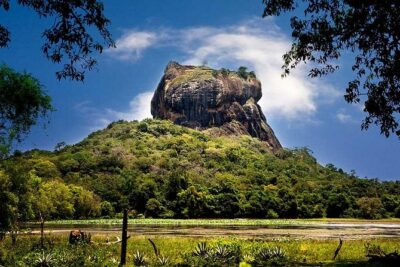
Sigiriya is best known for its massive rock fortress, but the forests around Pidurangala offer a different kind of evening. Once daylight fades, familiar sounds give way to cricket calls, owls, rustling leaves, and the movements of animals hidden in the branches.
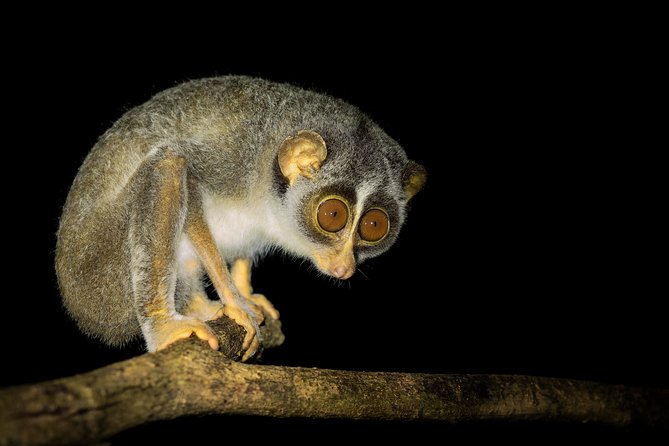
The loris is the star here. This small primate has enormous eyes, slow deliberate movements, and a habit of keeping to the trees. It is not an animal you can count on spotting beside a path. You need someone who knows where to look and who can recognize a tiny movement above your head.
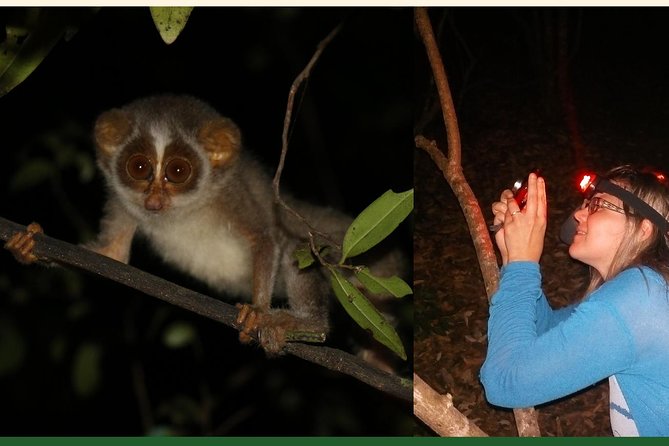
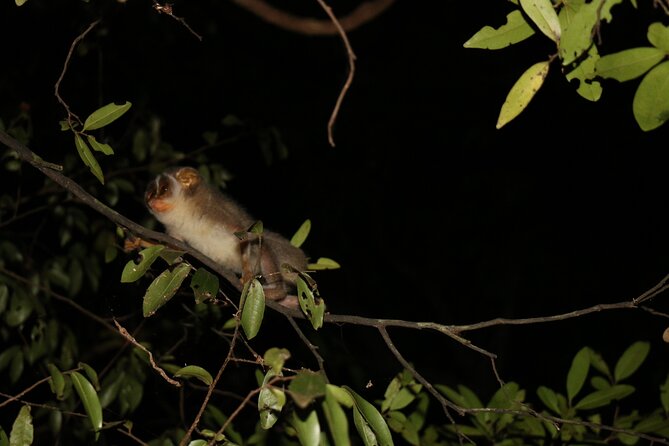
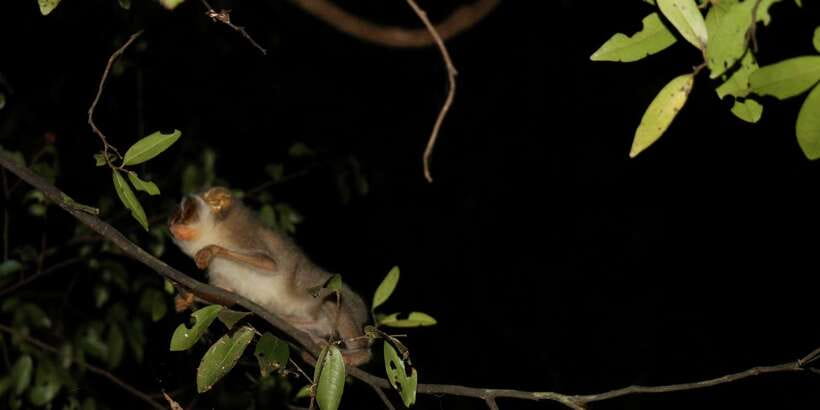
That is where the local guide makes the difference. You may see nothing at first, then hear a quiet instruction to look toward a particular branch. A loris can appear as two bright eyes, a face partly hidden by leaves, or a small body moving slowly through the canopy.
I like this kind of wildlife outing because it rewards patience rather than speed. You are not being driven from one viewing point to the next. You are listening, watching, and learning how the forest changes after sunset.
Other trips to the rock from Sigiriya:
- From Colombo: Sigiriya and Dambulla Day Trip with Safari
★ 4.7 · 842 reviews - Organic cooking class sigiriya (kumara & family)
★ 5.0 · 650 reviews - From Sigiriya: Minneriya National Park Private Jeep Safari
★ 4.9 · 415 reviews
Starting at Rocko’s Vegetarian Cafe
The meeting point is Rocko’s Vegetarian Cafe in Pidurangala. This gives you a clear place to gather before heading into the trees, and the café setting is more relaxed than meeting beside a busy road.
The walk begins with an introduction to lorises and the surrounding ecosystem. Some outings include a drink and a short presentation, and one guide has used a PowerPoint-style briefing to explain the animal’s behavior and the conservation work connected with the area.
Do not treat this talk as filler. It helps you understand what you are looking for. You learn why lorises are active at night, how they move, and why keeping quiet and using light carefully matters. The introduction also gives the experience more purpose than simply collecting a wildlife sighting.
The presentation may feel a little formal for some people, especially if you are eager to get outside. Still, I would rather have a useful briefing than be rushed into the jungle without context. The information is especially helpful for children and first-time wildlife watchers.
What the 1.5 to 2 hour walk is like
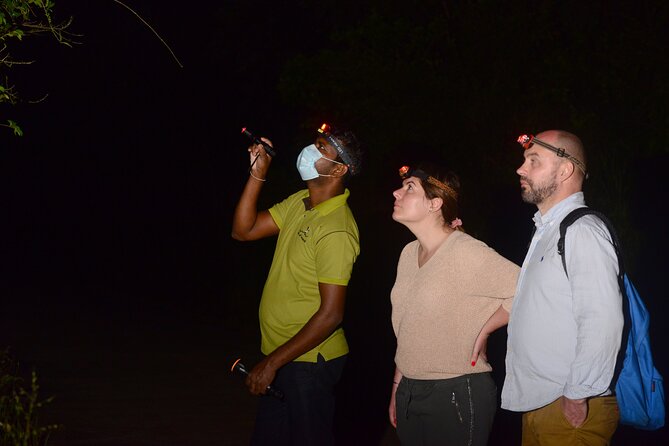
After the briefing, the guides provide headlamps and lead you into nearby jungle. The route is on foot, and the pace is set by the search. You may walk for a while, stop to scan branches, then move on when the guides decide another area looks more promising.
The advertised duration is 1.5 hours, but the itinerary describes a two-hour guided walk. That difference is worth noting when planning your evening. I would leave about two hours free, with extra time if rain interrupts the search or the guides need to wait for conditions to improve.
The trail is not described as a difficult mountain hike, but it is still a jungle walk at night. Roots, uneven ground, low branches, and limited visibility are part of the setting. Closed-toe shoes are essential, and long trousers and sleeves protect you from vegetation and insects.
The headlamps are a useful touch. You do not need to arrive with special equipment, though you should still dress for a warm, outdoor evening. Keep your light pointed where the guide directs it, and follow instructions closely when the group stops to watch an animal.
The experience is more about careful observation than covering distance. You may see sleeping birds, unusual nests, geckos, insects, or other small creatures along the way. One outing also found a kangaroo lizard and mouse deer, including an adult and a young animal. These sightings are extras, not promises, but they show why the walk is worth taking even when a loris is slow to appear.
Finding lorises in the branches
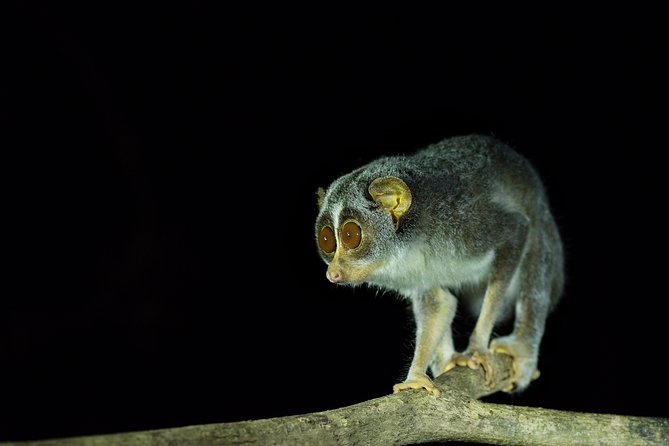
The operator gives the tour a more than 90 percent success rate for spotting a loris. That is a strong promise, and the money-back guarantee adds some reassurance, although you should check the exact terms when booking.
A high success rate does not mean a guaranteed close-up encounter. You might see one animal high in a tree for a few seconds, or several lorises moving from branch to branch. In other cases, a guide may locate one almost directly above the group, making the sighting much easier.
The distance depends on weather, moonlight, and the animal. Rain has a clear effect. Lorises may shelter during a storm, and one outing searched for about an hour before finally finding a single animal once conditions changed. Another group started in rain, tried again after it stopped, and then found five or six.
A full moon can also work against you. Bright light may cause lorises to stay farther inside the jungle, so sightings can be less close. If you have flexible dates, a darker night may offer better viewing, but the tour does not promise a particular moon phase.
The guides use patience and local knowledge to keep searching. This is why I would not judge the experience only by how close your photographs are. A wild loris is not a trained animal waiting beside a feeding station. Even a brief view of one moving naturally through the trees can be the most memorable part of your Sigiriya stay.
Other walks into the hills out of Sigiriya:
- Sunrise or Sunset Hike Pidurangala Rock with Scenic Views
★ 4.6 · 125 reviews - Sigiriya Lion Rock Hike & Minneriya National Park Safari
★ 4.8 · 55 reviews - Ella: Private Ella Rock Sunrise Hike – All Inclusive
★ 4.8 · 56 reviews - Sigiriya Hike & Minneriya Safari Private Full Day Tour
★ 5.0 · 56 reviews
The conservation side of the experience
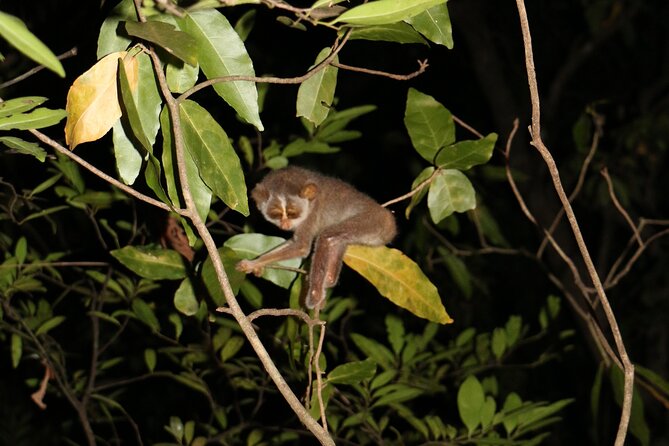
Back of Beyond presents itself as more than a tour company. The activity includes education about lorises and support for habitat protection, and part of the ticket price goes toward maintaining habitat for these animals.
That matters in a place where wildlife encounters can easily become careless. The best part of this outing is not simply finding a rare animal. It is learning why the animal is difficult to see and why its forest home needs protection.
The guides are described as passionate about local wildlife, not just lorises. They may point out birds, reptiles, insects, nests, and small mammals as the walk continues. This makes the evening feel like a lesson in the whole night ecosystem instead of a single-target hunt.
The ethical approach also affects how you should behave. Keep your voice low, stay with the group, and avoid chasing an animal for a better view. Bright lights and noise can disturb nocturnal creatures. The goal is to watch without changing what the animal is doing.
Price, group size, and overall value
The listed price is $64 per group of up to two people. For a couple, two friends, or a parent traveling with one child, that works out to $32 per person. It is a good value if you want a focused wildlife activity rather than another standard sightseeing stop.
The price becomes less attractive if you are traveling alone, since the charge is set by the group rather than by each participant. On the other hand, a small group can make a major difference in a dark forest. With up to eight people, the outing remains far more personal than a large night safari.
Some departures are especially small. One pair had two guides to themselves, while other groups had several participants. A private-feeling walk gives you more chances to ask questions and more room to position yourself when a guide spots a loris.
The tour is also a useful alternative to spending another evening around Sigiriya Rock. It does not replace the famous climb, which offers a very different experience, but it gives you a chance to see the area’s living forest rather than only its archaeological monument.
Who should book this night hike
This outing suits you if you enjoy wildlife, short walks, and the thrill of not knowing exactly what will appear next. It is a good choice for nature lovers, photographers who are comfortable with imperfect conditions, and families with a sense of curiosity.
It also suits people who want a responsible activity near Sigiriya. The conservation briefing and habitat work give the visit more substance than a quick animal-spotting stop.
You should think twice if you dislike walking in darkness, uneven jungle paths, insects, or waiting quietly. This is not a polished stage show. Even with a high sighting rate, you may spend much of the evening looking into branches before the guide finds anything.
Photography requires realistic expectations. A loris may be high overhead, moving slowly but constantly, or partly hidden by leaves. You might get a memorable photograph, but the best reward is often seeing the animal clearly with your own eyes.
Clothing, timing, and practical advice
Wear long trousers, a long-sleeved shirt, and closed-toe shoes. These are not optional fashion suggestions. They are the sensible clothing choice for a night walk through jungle vegetation.
Bring a calm attitude about weather. Rain can hide lorises, but it does not always end the evening. Guides may wait or search again after conditions improve. If your schedule is tight, avoid placing this activity immediately before an important transfer.
The tour is conducted in English. The group limit is eight people, and the meeting point is Rocko’s Vegetarian Cafe in Pidurangala, near Sigiriya. Confirm the exact starting time when booking, since the activity lists availability by departure time rather than giving one fixed hour.
Cancellation is free up to 24 hours before the activity, and you can reserve now and pay later. That helps if your Sigiriya plans depend on weather or road conditions. One booking arrived more than an hour late because of rain and elephants on the road, and the guide arranged another opportunity, but you should not assume every late arrival will receive the same flexibility.
Should you book the loris walk?
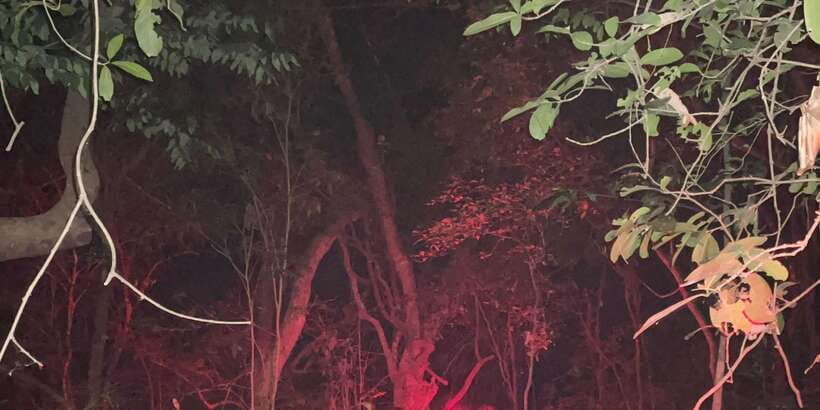
I would book this if you have one evening in Sigiriya and want something more distinctive than another viewpoint. The strongest reasons are the high chance of a sighting, the small-group format, the serious wildlife briefing, and the conservation work behind the activity.
Go with patience, not the expectation of a perfect close-up photograph. Rain, moonlight, and animal behavior can change the evening, and even a successful walk may produce only a short view.
For two people, $64 is a fair price for a guided search with equipment supplied and a stated money-back guarantee. If your main interest is wildlife and you can spare up to two hours after dark, this is one of the better ways to experience Pidurangala’s forest.
FAQ
Where does the loris night hike begin?
The meeting point is Rocko’s Vegetarian Cafe in Pidurangala, near Sigiriya. The group returns to the same café after the walk.
How long does the activity last?
The listed duration is 1.5 hours, while the walking itinerary describes about two hours. Plan for roughly 1.5 to 2 hours.
How likely is it that I will see a loris?
The operator advertises a success rate of more than 90 percent. It also states that a money-back guarantee applies if no loris is spotted.
What should I wear?
Wear long trousers, a long-sleeved shirt, and closed-toe shoes. The route passes through jungle areas after dark.
Is equipment provided?
Yes. Necessary gear is provided, and the walk includes headlamps for the nighttime search.
What language is the tour conducted in?
The live guide speaks English.
How many people can join the group?
The small group is limited to eight participants. The price of $64 covers a group of up to two people.
Just added around Sigiriya
- A Hidden Gem in Sigiriya: Magical Boat Journey.★ 4.5 · 12 reviews
- Kandy: City Highlights and Ramboda Waterfall Trip★ 5.0 · 4 reviews
- Private Polonnaruwa Ruins & Minneriya Safari Tour from Sigiriya★ 5.0 · 18 reviews
- Private Polonnaruwa Sightseeing Day Tour from Sigiriya★ 5.0 · 31 reviews
- Polonnaruwa Sight Seeing Tour and Minneriya Elephant Safari★ 4.8 · 18 reviews
- Sigiriya: Rock Fortress Private Guided Walking Tour★ 4.8 · 34 reviews
- Day tour sigiriya to anuradhapura★ 4.5 · 45 reviews
- Sigiriya Lion Rock Hike & Minneriya National Park Safari★ 4.8 · 55 reviews
Sigiriya Rock Fortress, compared.

Organic cooking class sigiriya (kumara & family)
Read our review →
Kandy to Sigiriya Day Tour and Dambulla cave temple with private vehicle
Read our review →
Private Day Trip to Sigiriya & Dambulla from Kandy – Aaliya Tours
Read our review →Browse the lists this tour appears in