
Reviewed · ANCIENT CITIES & TEMPLES
Anuradhapura Heritage Mountain bike / bicycle Tour
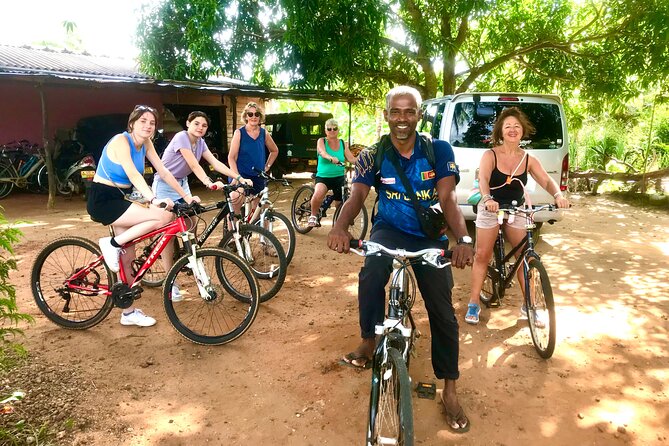
The best part of this Anuradhapura bicycle tour is the way it links major monuments with quiet forest tracks, rice fields, tanks, and local life. Guide Saranga leads a private 10-kilometer loop that takes about four and a half hours, so you see the famous sites without spending the whole day walking between them. I especially like the slow pace and the chance to stop for a vegetarian meal cooked by local people at Hela Bojun.
I also like that the tour uses proper mountain bikes from brands such as Giant, Trek, and Louis Garneau, rather than treating the bicycle as an afterthought. Saranga brings useful insight into Buddhism and local culture, which adds meaning at places such as the Samadhi Statue and Sri Maha Bodhi. The main drawback is cost planning: the $25 tour price does not include the $30 UNESCO entrance fee, and you need moderate fitness for several hours in the saddle.
Key points to know before you book
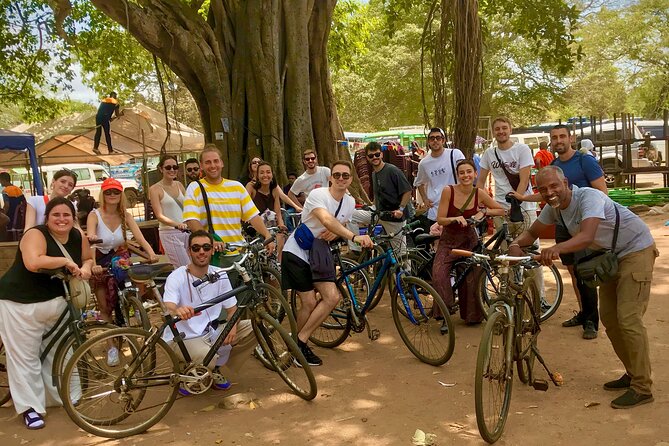
- A 10-kilometer private cycling loop covers Anuradhapura’s major monuments in about 4½ hours.
- Guide Saranga provides English-language explanations about Buddhism, local culture, and the ancient city.
- Quality mountain bikes from Giant, Trek, Louis Garneau, or similar brands are provided.
- Local vegetarian food at Hela Bojun is included, along with bottled water and parking.
- The UNESCO entrance ticket costs extra, $30 per adult and $15 for children under 13.
- Temple clothing matters: bring a wraparound cloth if your knees are not covered.
Why cycling works so well in Anuradhapura
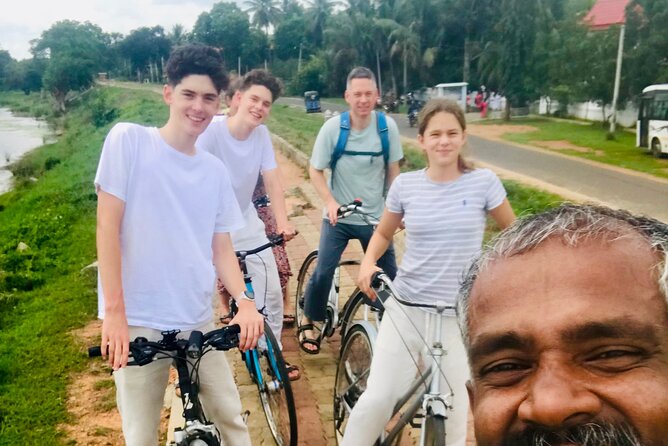
Anuradhapura is spread across a large archaeological area. Its monuments are not packed into one compact square, and moving from a giant stupa to an ancient bathing pond can take time. On foot, you may spend much of your energy simply getting from one place to the next. By bicycle, you cover more ground while still moving slowly enough to notice the trees, tanks, shrines, and village life around you.
This is not a race. The route covers about 10 kilometers over four and a half hours, which gives you time to stop at ten major points. The pace suits you if you want photographs, explanations, and quiet moments rather than a quick checklist of ruins.
The private format is another advantage. Only your group takes part, so you can ask questions, pause for photographs, or spend longer at a place that interests you. That flexibility is useful at religious sites, where a respectful visit often feels better when you are not being hurried along.
You should still be comfortable riding for several hours. The tour description calls for moderate physical fitness, and the combination of heat, sun, uneven paths, and repeated stops may feel tiring. If you rarely cycle, ask about the route and bike fit before setting out.
Other ancient cities and temples from Sri Lanka:
- Private City Day Tour in Anuradhapura
★ 5.0 · 383 reviews - Explore & Ride the history of anuradhapura with Vogel Tours
★ 5.0 · 62 reviews - Anuradhapura Private Ancient City Day Tour
★ 5.0 · 39 reviews
Starting near the old car park
The meeting point is Rides Hubwela Mada Gedara, Garage Waththa, near the old car park at No. 116/1 Watawandana Road in Anuradhapura. The tour ends at the same place, which keeps the day simple if you have arranged your own transport.
The provider offers mountain bicycles, parking, bottled water, and a guide. Bikes are described as quality machines from trusted brands such as Giant, Trek, and Louis Garneau. That matters because a well-fitted mountain bike is more comfortable on mixed surfaces than a basic city bicycle.
Bring clothing suitable for both cycling and temple visits. Your knees should be covered, or you should carry a wraparound cloth. Sri Maha Bodhi and other Buddhist sites are active places of worship, not simply archaeological attractions, so modest clothing and calm behavior are part of the experience.
Jetavanaramaya, the first giant landmark
The ride begins with Jetavanaramaya, one of Anuradhapura’s most striking monuments. When King Mahasena built it between 273 and 301, the stupa reached about 122 meters, or 400 feet. At that time, it was among the tallest structures in the world.
You have about 15 minutes here. That is enough to take in the enormous scale and hear the basic story, though it is not a long guided visit. A bicycle tour gives you a useful first impression of how large the ancient city was. The monuments are not small isolated ruins. They were built for a major religious center with the resources and ambition to create huge brick structures.
The Samadhi Statue and the Buddhist focus
The Samadhi Buddha receives about 20 minutes. The statue shows the Buddha seated in the meditation posture known as Dhyana Mudra, a pose linked with calm and concentration.
This is one of the stops where Saranga’s interest in Buddhism can add real value. You can look at the statue as a work of art, but you can also ask about the meaning of the posture and the place of meditation in Buddhist practice. That personal cultural context is one of the strongest reasons to choose a guided ride rather than rent a bicycle and follow a map alone.
The stop is included in the route, but you should remember that the wider UNESCO site fee is separate. The tour price covers the guide and bicycle service, not the archaeological entry ticket.
Same base, a completely different day:
- Colombo: Private Tuk-Tuk City Tour with All Entry Fees
★ 4.9 · 2,154 reviews - Kandy Private Guided City Tour by Tuk Tuk
★ 4.9 · 1,307 reviews - Whales and Dolphins Watching-Luxury Super Grade Cruiser(Hotel Pick up offered)
★ 5.0 · 1,268 reviews - From Colombo: Sigiriya and Dambulla Day Trip with Safari
★ 4.7 · 842 reviews
Abhayagiri Stupa and a huge monastic center
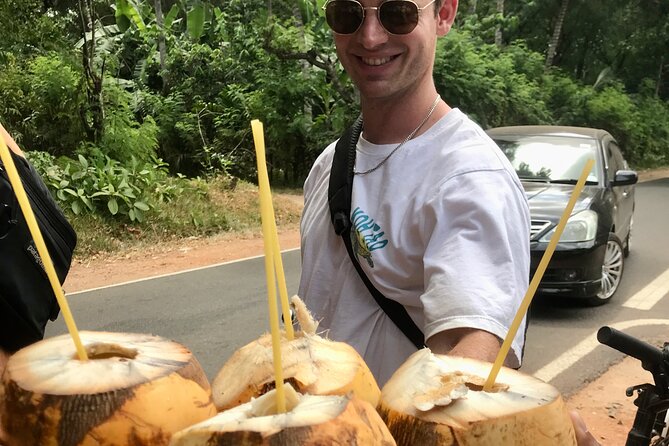
The ride continues to Abhayagiri Stupa, with around 20 minutes to explore. Abhayagiri was once a major monastic center connected with Mahayana, Theravada, and Vajrayana Buddhist traditions. The scale of its ruins helps explain why Anuradhapura was more than a collection of beautiful stupas. It was also a place of study, worship, daily work, and organized community life.
The route also includes the main refectory of Abhayagiri Monastery. You have about 10 minutes there. The refectory served meals to the monks, and the Chinese monk Fa-Hien recorded that as many as 5,000 monks lived at the monastery during his visit in the fifth century.
That short stop gives you a practical way to picture monastic life. The giant stupa is the dramatic landmark, but a dining hall tells you how a large religious community functioned day by day.
Ancient waterworks at Kuttam Pokuna and Eth Pokuna
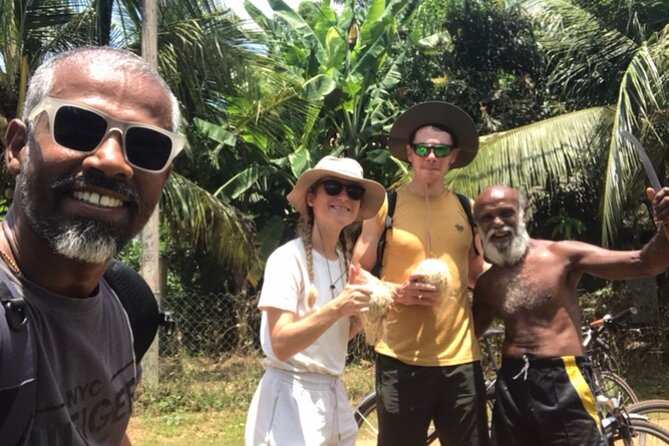
Kuttam Pokuna, known as the Twin Baths, receives about 20 minutes. These two carefully built bathing pools are among the best-preserved examples of ancient water engineering in Anuradhapura.
The details matter here. The ponds are not simply decorative pools. They show the planning, stonework, and water management that supported religious institutions and urban life. Look closely at the steps and the symmetry. This is a stop where a guide can help you notice features you might otherwise pass without understanding.
Eth Pokuna, or the Elephant Pond, also receives about 20 minutes. It is a huge ancient reservoir, approximately 159 meters long and 52 meters wide. The size gives you a sense of the labor and organization behind the old city.
You will also visit Basawkkulama Tank, where the focus turns to Sri Lanka’s wider irrigation tradition. Early irrigation works in Sri Lanka date to about 430 BCE, during the reign of King Pandukabhaya, and water systems continued to develop over many centuries. Cycling beside these tanks connects the famous ruins with the practical systems that made settlement and agriculture possible.
The moonstone, where art meets daily movement
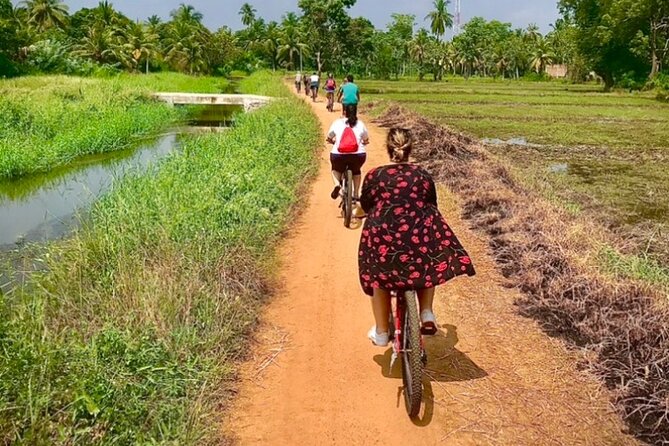
The Sandakada Pahana, or moonstone, is a carved semicircular stone usually placed at the bottom of a staircase or entrance. You have around 25 minutes at this stop.
It is easy to rush past a moonstone because it is part of a doorway rather than a huge monument. Resist that impulse. The carving rewards a close look, and its position at an entrance gives it a role in the movement from ordinary space into a sacred one.
This is also a good place to ask Saranga about Buddhist symbols and architectural details. The tour’s slower pace gives you time to examine the stone instead of taking one quick photograph and moving on.
Ruwanweliseya, one of the great sacred stupas
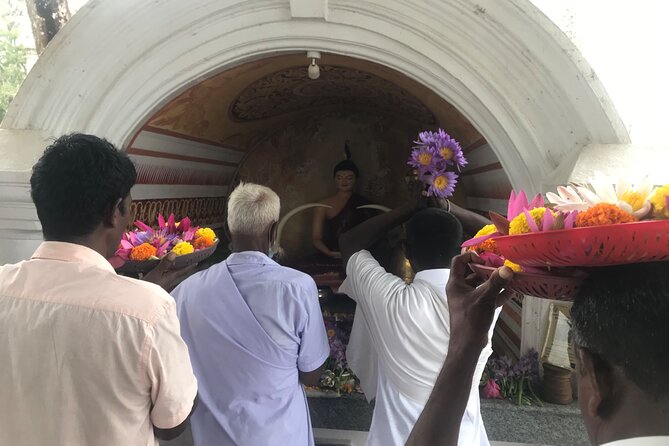
Ruwanweliseya receives the longest individual visit among the major monuments, about 30 minutes. King Dutugamunu began the stupa between 137 and 119 BCE, and it was completed by his younger brother.
The gleaming white stupa is a major religious site, so the atmosphere may feel different from the quieter ruins and tanks. You should dress respectfully, follow local customs, and allow space for people who have come to worship.
Thirty minutes is a useful amount of time here. You can walk around the monument, take in its scale, and listen to Saranga explain its place in Anuradhapura’s Buddhist tradition. If you prefer architecture and photography, this is also one of the stops where you will want time to look carefully rather than simply pass through.
Sri Maha Bodhi and the sacred finish
The final major stop is Sri Maha Bodhi, with about 30 minutes. This sacred fig tree is regarded as the closest living link to Gautama Buddha and grows in the Mahamewna Gardens.
This is an active religious place, so expect the visit to feel more devotional than a visit to a ruined structure. Keep your voice low, dress appropriately, and follow instructions from your guide. Your wraparound cloth is useful here if your clothing does not cover your knees.
Ending at Sri Maha Bodhi gives the tour a strong cultural finish. The route has moved from giant brick stupas and ancient ponds to a living sacred tree. That change helps you see Anuradhapura as a present-day religious center, not only an archaeological zone.
A local vegetarian meal at Hela Bojun
The tour includes a meal of vegetarian food cooked by local people at Hela Bojun. This is one of the details that adds value beyond sightseeing. You get a break from cycling and a chance to eat local food rather than relying only on hotel restaurants or packaged snacks.
The supplied information does not specify the exact dishes or serving time, so do not book this as a food tour. Think of it as a useful local meal built into an active cultural outing. Bottled water is included too, which is welcome during several hours of cycling in Sri Lanka’s heat.
One practical point: if you have allergies or strict dietary needs, explain them before the tour. The meal is vegetarian, but no further dietary details are provided.
What the $25 price really covers
At $25 per person, the tour offers good value if you want a guide, bicycle, parking, water, and a local vegetarian meal in one half-day outing. The private format also matters. You are not joining a large group, and the route can focus on your interests within the planned schedule.
The important extra cost is the UNESCO entry ticket. Adults pay $30, while children under 13 pay $15. That means the total cost for an adult is effectively $55 before any personal spending, not $25. If you are comparing this with a self-guided bicycle rental, include the admission fee in both options.
The tour is most valuable for you if you want interpretation and cultural context. If you only need a bicycle and already know the sites, a self-guided visit could cost less. But you would lose Saranga’s explanations, the planned route, and the included meal.
Who will enjoy this ride most
I would choose this tour if you want to see many of Anuradhapura’s major sites without spending a full day on foot. It suits couples, families with older children, friends, and solo visitors who prefer a private guide.
It is especially useful for you if Buddhism, ancient engineering, and local life interest you. The route is not limited to the most photographed stupas. It includes ponds, tanks, a refectory, a moonstone, forest routes, and rice-field scenery.
You should think twice if you dislike cycling in warm weather, have difficulty riding for several hours, or want a fully relaxed vehicle tour. This is a physical outing, even though the pace is described as slow. The 10-kilometer distance is manageable for a reasonably fit cyclist, but it is not a short ride around one compact ruin.
The timing may also matter. One account of the experience included ceremonies at sunset, but the exact start time is not provided. Ask Saranga whether your departure can line up with sunset if that is important to you.
Booking details and cancellation terms
Confirmation is provided when you book, and the experience is near public transportation. The tour requires good weather. If poor weather causes cancellation, you can receive a different date or a full refund.
You can cancel for a full refund up to 24 hours before the start time. Changes or cancellations made less than 24 hours before the local start time are not accepted, so check the time carefully before committing.
My verdict on the Anuradhapura mountain bike tour
Book this tour if you want a personal introduction to Anuradhapura that mixes major Buddhist monuments with waterworks, quiet routes, local food, and a bit of exercise. Saranga’s cultural and Buddhist perspective appears to be the heart of the experience, while the quality bikes and private format make the long loop easier to enjoy.
Before booking, budget the additional UNESCO fee, bring modest temple clothing, and be honest about your fitness. If those points work for you, this is a smart way to see Anuradhapura at human speed, with enough time to understand what you are looking at rather than simply collecting photographs.
FAQ
How long is the Anuradhapura bicycle tour?
The tour lasts approximately 4 hours and 30 minutes and covers a 10-kilometer loop through the heritage area.
What is included in the tour price?
The $25 price includes a mountain bicycle, guide service, bottled water, parking fees, and a vegetarian meal cooked by local people at Hela Bojun.
Is the UNESCO entrance fee included?
No. The UNESCO entrance ticket costs $30 per person for adults and $15 for children under 13.
Where does the tour begin and end?
The tour begins at Rides Hubwela Mada Gedara, Garage Waththa, near the old car park at No. 116/1 Watawandana Road in Anuradhapura. It ends back at the same meeting point.
What should I wear for the temple visits?
Your knees should be covered when visiting the temples. If they are not, bring a wraparound cloth.
What happens if the weather is poor?
The experience requires good weather. If it is canceled because of poor weather, you will be offered another date or a full refund.
More cycling around Sri Lanka
- Half-Day Lagoon and Village Cycling Tour in Galle
★ 5.0 · 90 reviews - Galle Fort and City Cycling Tour – Choice of E-Bike or Manual
★ 5.0 · 28 reviews - Ella, Sri Lanka Cycle Zone Bike Tour
★ 4.7 · 8 reviews
Just added around Sri Lanka
- Bentota: Yala National Park Safari Jeep Tour in a 4×4★ 4.6 · 7 reviews
- Bentota/Kalutara/Hikkaduwa/Galle/Mirissa: Day Trip to Ella★ 4.7 · 14 reviews
- Budget Yala Safari with Accomadation & Meals Included★ 4.8 · 16 reviews
- Bundala National Park Safari (PRIVATE TOURS)★ 4.8 · 26 reviews
- Bentota River Safari -Ahungalla/Bentota/Aluthgama/Kosgoda★ 4.0 · 3 reviews
- Bentota River Safari: Discover Wildlife & Mangroves by Boat★ 4.9 · 41 reviews
- Bentota: River Safari with Hotel Pickup and Drop-Off★ 4.8 · 22 reviews
- Authentic Sri Lankan Cooking Class in Kandy by Local Family★ 4.9 · 15 reviews
Ancient Cities & Temples, compared.
Kandy to Sigiriya Day Tour and Dambulla cave temple with private vehicle
Read our review →
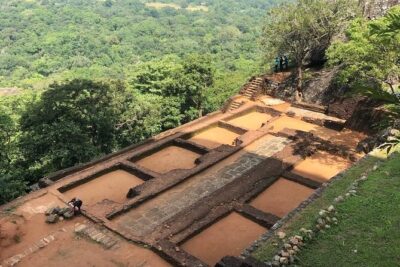
Sigiriya Rock Fortress and Cave Temples Day Trip
Read our review →
Paradise Blow Hole, Big Buddha, Rock Temple Tours
Read our review →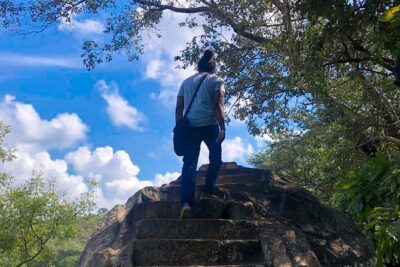
Explore & Ride the history of anuradhapura with Vogel Tours
Read our review →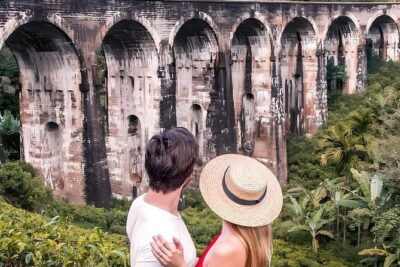
5 Day Sri Lanka Tour : Including Temple of Tooth & Sigiriya Trip
Read our review →Browse the lists this tour appears in