
Reviewed · UDAWALAWE NATIONAL PARK SAFARIS
Udawalawe: Farm to Table Cooking & Authe: Village Experience
The best part of this Udawalawe outing is the move from garden to plate. You pick vegetables, help prepare traditional dishes in a village kitchen, and then eat what you cooked. Along the way, you see cinnamon being peeled and visit an old precious-stone mine, all within a reconstructed Sri Lankan village about 1.2 kilometers from the Elephant Orphanage.
I like the hands-on cooking, especially the grinding of spices and cooking over an open flame. I also like the friendly, personal setting: this is a private group, and local women guide you through the kitchen rather than leaving you to watch from the side.
The main caution is value. At $30 per person, the package can make sense if you use every part of it, but drinks with the meal may cost extra. One visitor was unhappy after being charged far more than shop prices without advance notice, so ask clearly what is included before ordering.
Key points to know before you go
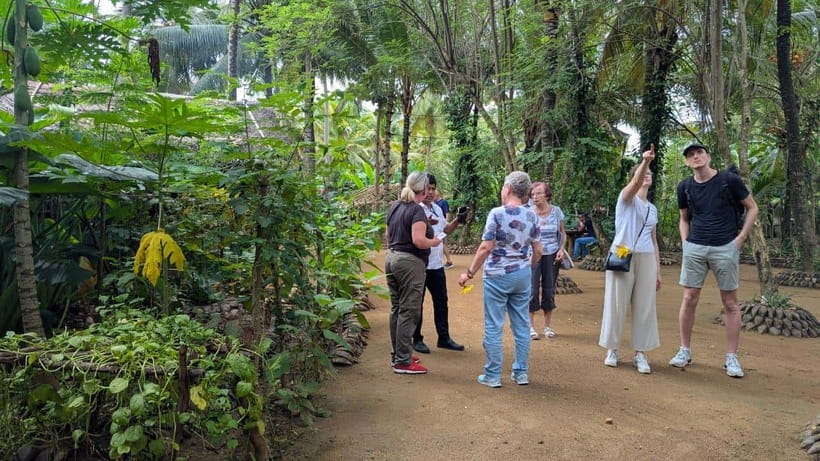
- A reconstructed village near Udawalawe: The setting presents traditional Sri Lankan agricultural life from around 200 years ago.
- Garden-to-table cooking: You pick vegetables, prepare food with local women, and eat the finished dishes.
- Cinnamon and precious stones: The visit includes cinnamon peeling and a guided look at an ancient mine.
- About 90 minutes on foot: The two-hour activity involves walking around the property, so wear comfortable shoes.
- Private group format: You receive direct attention from an English or Sinhala-speaking guide.
- Good, but not cheap: The $30 price includes several activities and a meal, but drinks may be separate and should be checked first.
A village visit built around the kitchen
Many cultural visits give you a quick look at a house, a craft demonstration, and a meal prepared by somebody else. This one works differently. The cooking class is the center of the visit, and the earlier stops help explain where the ingredients and older village skills fit into daily life.
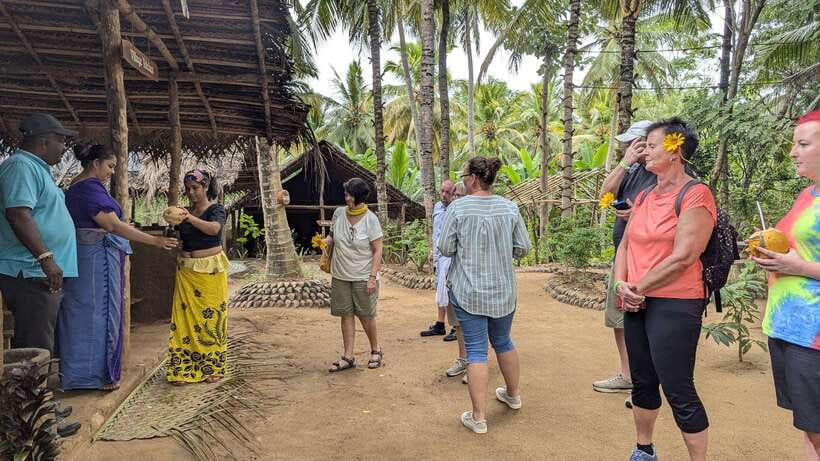
You start with a welcome drink. The information for this activity refers to both cinnamon tea and king coconut, so confirm which one is being served on the day. Either way, it is a small but pleasant opening before the walking begins.
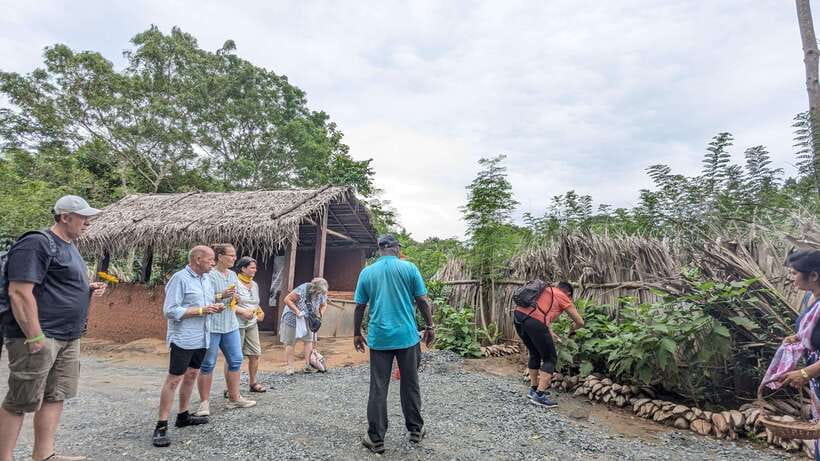
The setting is described as a reconstructed 200-year-old Sri Lankan village. That means you are visiting a created heritage site rather than an untouched village where daily life has remained unchanged for two centuries. Still, the format can be useful. It gathers food, farming, cinnamon work, mining, and local customs in one place, which is especially handy if you have only a short stop in Udawalawe.
The visit is guided in English or Sinhala and runs as a private group. That matters here. Cooking is much easier when you can ask how much spice to use, watch a technique again, or take part without feeling lost in a large crowd.
More jeeps into Udawalawe:
- Udawalawe National Park: Elephant Safari with Expert Guide
★ 4.9 · 641 reviews - Galle/Mirissa/Hiriketiya: Drop to Ella & Udawalawa Safari
★ 4.9 · 186 reviews - Udawalawe: National Park Safari & Elephant Transit Home Tour
★ 4.9 · 183 reviews
The ancient mine and Sri Lanka’s precious stones
The mine visit adds a different side of local life. Sri Lanka is known for precious stones, and this stop introduces you to the work involved in finding them. You can expect a guided explanation of the mining process and a look at techniques associated with earlier miners.
Do not expect a long underground expedition. The activity description presents this as a visit and demonstration, not a full mine adventure. Its value is in giving context to an industry that can otherwise seem disconnected from the food and farming sections of the day.
This is also one reason the experience works well for families and curious first-time visitors. You get several short chapters rather than one long cooking lesson. The mine gives you something to look at and ask about before the pace shifts back to plants, spices, and food.
The available details do not name a particular guide or specify exactly how far you enter the mine. If that detail matters to you, ask before booking. The advertised promise is a guided visit and demonstration of the mining process.
Cinnamon peeling, a practical Sri Lankan craft
The cinnamon demonstration is brief but worthwhile. You see skilled workers peel and prepare cinnamon sticks, gaining a better sense of the labor behind a spice that many people know only from a jar.
Sri Lankan cinnamon has an important place in the country’s food culture and trade. Watching the peeling process helps you understand that a cinnamon stick is not simply cut from a tree and sold. There is careful manual work between the tree and the kitchen.
I like this part because it links directly to the meal later. Cinnamon is not presented only as a souvenir or display item. It belongs to the same food culture you encounter when you cook with local spices.
The demonstration is not described as a full lesson in cinnamon production, so keep your expectations sensible. You will see the technique and hear about its importance, but the cooking class is the part where you do the most yourself.
Picking vegetables in the garden
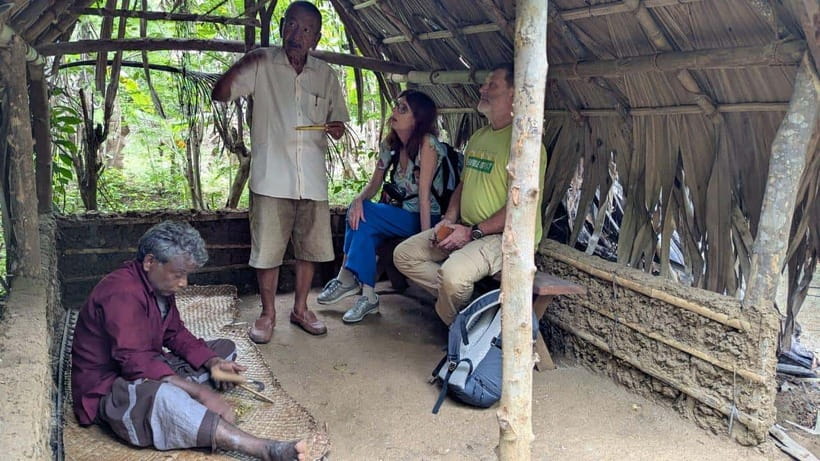
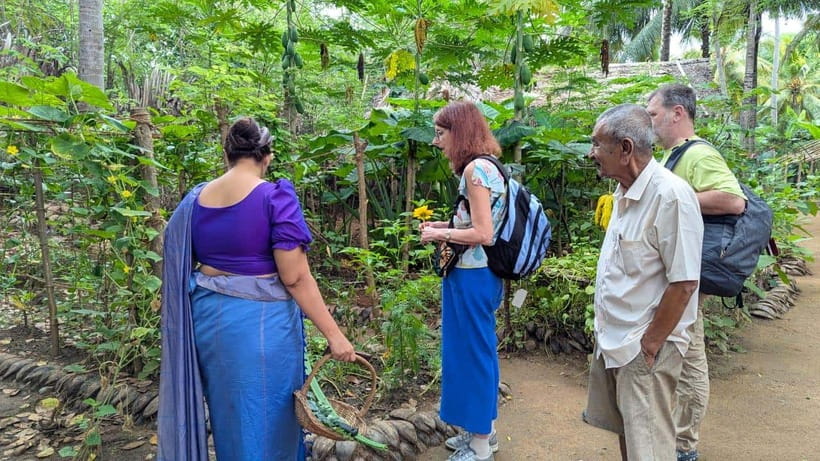
Next, you walk through the garden and select vegetables for the meal. This is a simple activity, but it changes the feel of the cooking class. You are not just arriving at a prepared kitchen with bowls of ingredients already lined up. You take part in the first step.
The garden is one of the most praised parts of the visit. The property is described as beautiful, and the fresh produce gives the experience a clear farm-to-table link. You can see what is growing, choose ingredients, and then recognize some of them when they reach the cooking pot.
I would not treat this as a formal farming lesson. No detailed planting schedule or crop list is provided. Think of it as a guided garden walk with vegetable picking, followed by food preparation.
The walking matters. The full activity lasts two hours, with about 90 minutes spent walking around the site. This is not a sit-down cooking demonstration from start to finish. Wear shoes that are comfortable for paths and garden areas, and plan for a warm outdoor visit in Sri Lanka.
Other cooking classes around Sri Lanka:
- Ella: Traditional Sri Lankan Cooking Class
★ 4.9 · 788 reviews - Organic cooking class sigiriya (kumara & family)
★ 5.0 · 650 reviews - Kandy Village Cooking Class
★ 5.0 · 536 reviews - Sea waves sri lankan cooking class
★ 5.0 · 467 reviews
The village kitchen and the women who teach you
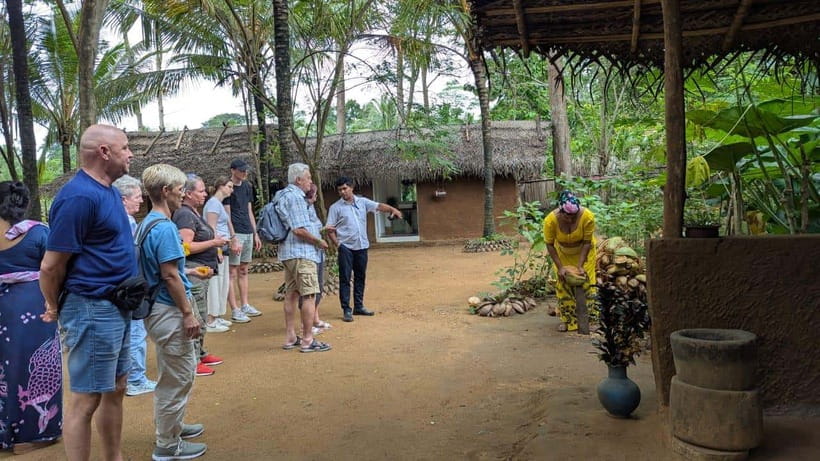
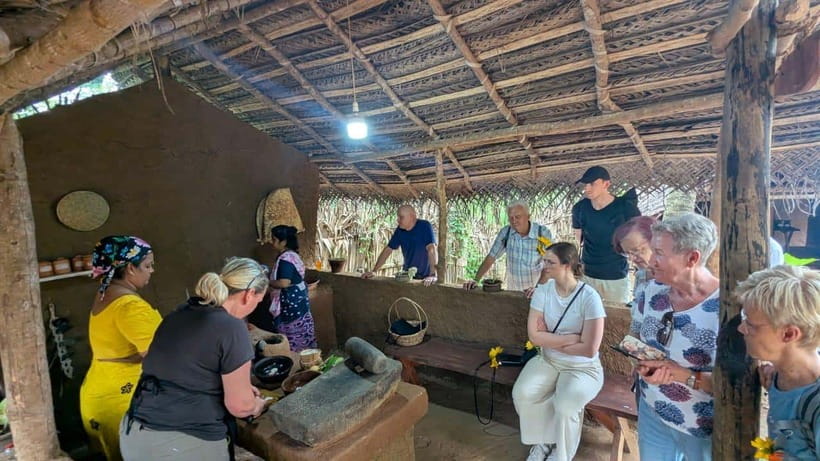
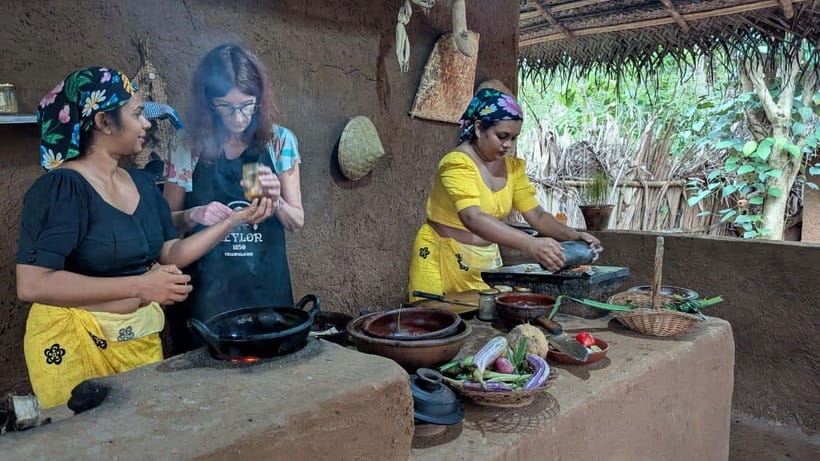
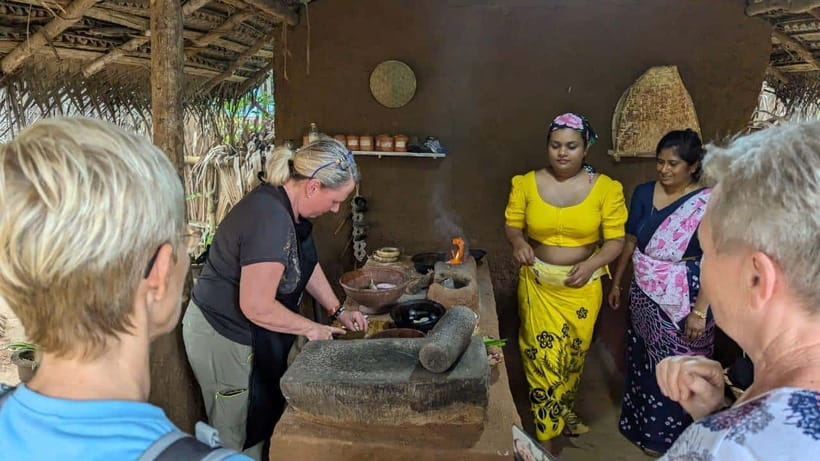
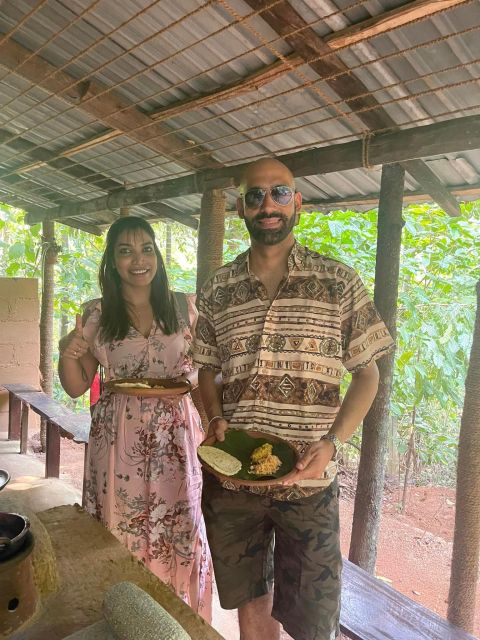
The cooking class is the heart of the experience. You join local women in a traditional village kitchen and help prepare Sri Lankan dishes using older recipes and methods. The work includes grinding spices and cooking over an open flame.
That hands-on approach is a real strength. You get to see how ingredients change as they are ground, mixed, and heated. You also gain a better feel for the balance of spice, coconut, and lentils than you would from simply eating a finished plate.
The food most clearly praised in the available comments was coconut sambal and dahl. Those dishes are especially good choices for a practical lesson because they show two important parts of Sri Lankan cooking: fresh coconut with sharp, lively seasoning, and lentils cooked into a comforting staple.
The cooking class is also a social experience. The women are described as friendly and keen to explain the process. You should expect encouragement to take part, not just a demonstration performed while you stand nearby.
Still, the exact menu can vary. The information does not promise a fixed list of dishes, so do not book expecting a particular recipe beyond the general promise of a local meal. If you have allergies or dietary needs, ask before the class, since no specific dietary arrangements are provided.
Eating the food you helped prepare
After cooking, you sit down for a local meal featuring the dishes made during the class. This is where the earlier stops come together. The vegetables came from the garden, the spices were prepared in the kitchen, and you now get to taste the result.
I like this finish better than a meal served without context. You have seen the effort behind the food, and the shared setting gives the meal a relaxed village feel. The praised coconut sambal and dahl suggest that the food can be a highlight, especially if you enjoy strong seasoning and simple, fresh ingredients.
Pay attention to what the meal includes. The meal itself is listed as part of the activity, but drinks served with it may not be included. One visitor was charged for drinks at prices several times higher than shop prices and had not been told beforehand. That is an avoidable irritation.
Before ordering anything beyond the included food, ask two direct questions: Is this included, and what is the price? This small check protects the value of an otherwise well-rounded visit.
Melas, crafts, and the wider village setting
The final part includes participation in local melas, described as traditional fairs with music, dance, crafts, and local delicacies. This gives the visit a wider cultural finish beyond the kitchen.
The word mela can refer to a fair or community gathering, but the exact format here is not fully detailed. The information promises participation in local melas, yet it does not say whether a fair operates every day or whether activities are arranged for the group. Ask about the schedule if this feature is important to you.
You may find this part more observational than the cooking class. The garden and kitchen put you directly to work, while music, crafts, and food stalls may involve more watching and mingling. That contrast is useful, since it keeps the two-hour program from feeling like one long lesson.
Is $30 per person fair value?
The price is $30 per person. For a private two-hour activity near the Udawalawe Elephant Orphanage, that is not the cheapest way to eat lunch, but the comparison is not really with a restaurant meal.
Your price covers several separate elements: a welcome drink, the mine visit, the mining demonstration, cinnamon peeling, garden picking, a cooking class, the food you prepare, and participation in the village setting. If you take part fully, the package offers more than a standard meal and more personal contact than a large group tour.
The value is strongest for people who want an activity with food at its center. It is less convincing if you mainly want to eat cheaply or see a genuine working village untouched by tourism. The site is reconstructed, and the tour brings several cultural themes together for visitors.
The price becomes less attractive if drinks are added at a high markup. Treat any extra beverage charge as a separate purchase, and confirm it before accepting the drink. That one detail can affect how you feel about the total cost.
A current rating of 4.7 from four verified bookings suggests a strong early response, but the sample is small. I would use that number as a positive sign, not as a guarantee that every part will suit you.
Timing, walking, and who should book
The activity lasts two hours, and about 90 minutes are spent walking around the property. The route includes the garden, mine area, village spaces, and kitchen, so you should be ready to move between stops rather than sit in one place.
The meeting point is about 1.2 kilometers from Udawalawe Elephant Orphanage. That makes it convenient if the orphanage is already part of your day. The supplied information does not describe transport from hotels, so arrange your own way to the meeting point unless the operator confirms otherwise.
This is a good fit for:
- Couples who want a food-centered cultural activity
- Families interested in cooking and traditional crafts
- Visitors stopping near the Elephant Orphanage
- Anyone who prefers a private group to a large scheduled tour
- People who enjoy taking part rather than only watching
It is not suitable for wheelchair users, according to the activity information. The walking and garden areas also make comfortable footwear a sensible choice for everyone.
How this compares with a normal cooking class
A standard cooking class may begin with prepared ingredients and finish with a recipe card. This Udawalawe version gives you more background before the stove. You see a mine, watch cinnamon preparation, pick vegetables, and then cook.
That wider program is its advantage and its limitation. You get a broader picture of village skills, but less time for detailed recipe instruction than you might receive in a dedicated half-day cooking course.
If your priority is mastering several dishes, ask how much time is spent cooking. If your priority is connecting food with farming, craft, and local customs, the wider format is a better match.
The private group setup helps offset the short duration. Direct attention can make a two-hour class feel useful, especially when the instructors encourage you to grind, stir, pick, and taste rather than stand back.
Practical questions to ask before paying
A few details are worth confirming in advance:
- Which welcome drink is provided, cinnamon tea or king coconut?
- Which dishes will be prepared?
- Are drinks with the meal included?
- What do additional drinks cost?
- Is the mela taking place during your visit?
- How much time is planned for cooking compared with walking?
- Where exactly is the meeting point?
These questions are not signs of fussiness. They help you understand what the $30 covers and avoid an unpleasant surprise at the meal.
Should you book the Udawalawe village experience?
Book it if you want a compact, private cultural visit that connects a garden, a kitchen, cinnamon work, and Sri Lanka’s precious-stone industry. The cooking class is the strongest reason to go, particularly if you like coconut sambal, dahl, fresh vegetables, and hands-on instruction.
Skip it if you want a completely untouched village, a long technical cooking course, or a low-cost lunch. Also think twice if extended walking is difficult, since much of the visit is on foot.
For most people with two spare hours near Udawalawe, I see this as a useful add-on to the Elephant Orphanage area. Just confirm the welcome drink and extra beverage prices first. That keeps the focus where it belongs: on the garden, the kitchen, and the meal you helped make.
FAQ
Where is the experience located?
It is in Sabaragamuwa Province, Sri Lanka, about 1.2 kilometers from Udawalawe Elephant Orphanage.
How long does the activity last?
The activity lasts two hours. About 90 minutes are spent walking around the property.
What language is the tour conducted in?
The live guide is available in English or Sinhala.
Is this a private tour?
Yes. The activity is offered for a private group.
Is the meal included?
Yes. A meal featuring the dishes prepared during the cooking class is included.
Is the welcome drink included?
Yes. A welcome drink is included, but the supplied details refer to both cinnamon tea and king coconut. Confirm which drink will be served.
Is the experience suitable for wheelchair users?
No. The activity is listed as unsuitable for wheelchair users.
Just added around Sri Lanka
- Yala Safari: High-Luxury PRIVATE Tours with Entry Tickets★ 4.7 · 15 reviews
- Yala Village Tour: Pottery Class, Lake and Temple Visits★ 5.0 · 5 reviews
- Zip Lining in Ella★ 4.5 · 16 reviews
- Yala Safari : 7 hour & 12 hour Tours★ 3.8 · 6 reviews
- Yala Private Safari: Half-Day or Full-Day with Picnic Lunch★ 4.3 · 8 reviews
- Yala Safari All-Inclusive Package with Convenient Pick Up★ 4.4 · 3 reviews
- Yala National Park Wildlife safari from Mirissa★ 3.3 · 4 reviews
- YALA BLOCK 5 & 6 (Weheragala & Lunugamwehera) Safari Tour★ 4.8 · 30 reviews
Udawalawe National Park Safaris, compared.
Udawalawe National Park: Elephant Safari with Expert Guide
Read our review →
Galle/Mirissa/Hiriketiya: Drop to Ella & Udawalawa Safari
Read our review →
National Park Safari & Elephant Transit Home Tour
Read our review →
Shuttle to Tangalle/Mirissa/Galle w Udawalawe Safari
Read our review →
Udawalawa National Park Safari Tour with Experienced Guides
Read our review →
Udawalawe National Park Entrance Ticket with Private Safari
Read our review →
Hikkaduwa/Galle/Weligama/Mirissa/Tangalle: Udawalawa Safari
Read our review →
From Mirissa/Galle/Hikkaduwa: Udawalawa National Park Safari
Read our review →Browse the lists this tour appears in