
Reviewed · COOKING CLASSES
Kandy Village Cooking Class
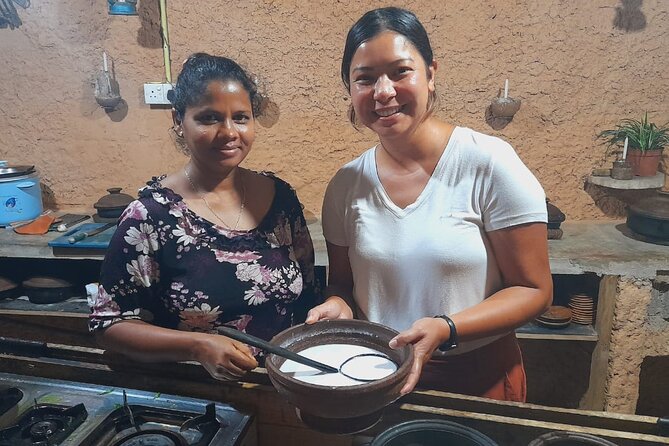
Kandy Village Cooking Class turns a simple meal into a window on daily life. You begin at the Kandy Municipal Central Market, choosing five vegetables, chicken or fish, spices, and other ingredients before heading to a village kitchen. With Shyama and her family guiding you, you prepare a full Sri Lankan meal and eat what you have made.
I like two things here: the shopping is part of the lesson, not just a quick photo stop, and the cooking is genuinely hands-on. You learn about vegetables, spices, coconut milk, and traditional methods, then sit down to a spread that may include eight to eleven dishes, depending on the group and menu.
The main thing to check is the return transport. Pickup is offered, but some arrangements include only the ride to the market or village, leaving you to pay for your way back. The class is also held outside Kandy, so allow more than three hours if transport takes time.
Key points at a glance
- Choose the ingredients yourself: At the market, you select five vegetables and either chicken or fish, with explanations of the spices and produce.
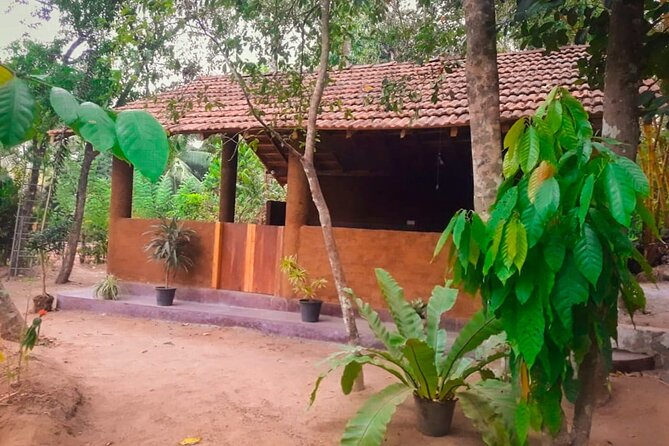
- Cook in a village setting: The lesson takes place in a traditional kitchen near the host family’s home, surrounded by nature.
- Expect a large meal: Past menus have included several curries, sambal, rice, coconut milk, and caramel pancakes.
- Shyama leads a friendly, practical lesson: Her teaching includes clear instructions, answers to questions, and help at every stage.
- Good for mixed groups: Individuals, couples, families, and groups of up to 15 can join.
- Budget-friendly at $25: The price includes a market visit and a substantial cooking experience, but confirm the return ride before booking.
From Kandy market to a family kitchen
The experience starts at Kandy Municipal Central Market, at 144 Central Market in Kandy. This is a useful meeting point because it puts you right among the produce and spices that shape Sri Lankan cooking.
Instead of arriving at a prepared kitchen with ingredients already laid out, you take part in the buying process. You choose five vegetables from the market selection, then select chicken or fish. The point is not simply to gather supplies. You learn how the ingredients look before cooking, how local produce is selected, and which spices and other items are used in the dishes.
That makes the market visit one of the strongest parts of the outing. A recipe on paper can tell you to use eggplant, pumpkin, greens, or another vegetable. A market visit shows you the raw ingredient in its everyday setting and gives you a better sense of how Sri Lankan meals are built around several vegetable dishes rather than one main course.
You should expect the market to be a working food market, not a polished food hall. It may feel busy and practical. Wear comfortable shoes and keep your belongings secure. The activity description says pickup is provided from a designated point for the market visit, but confirm the exact arrangement when you book.
Other cooking classes around Kandy:
- Private Traditional Sri Lankan Cooking Class in Kandy with Hotel Transfers
★ 5.0 · 115 reviews - Cooking With Village Family
★ 5.0 · 104 reviews - Kandy Cooking Class with Granny
★ 4.9 · 95 reviews
The ride out to the village
After shopping, you head to the village for the cooking session. The village is roughly 10 kilometers from Kandy according to one account, though the exact journey can vary by pickup point and traffic.
This transfer matters when planning your day. The cooking itself lasts about three hours, but the market visit and ride add time. Do not schedule the class tightly against a train, airport transfer, or major temple visit.
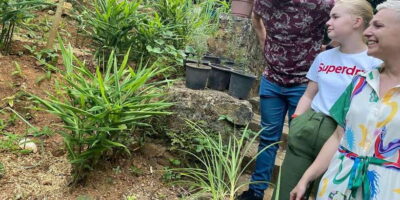
The village setting is a real part of the experience. The kitchen is described as a traditional outdoor cooking space near the family home, with a countryside setting and plenty of greenery around it. Some descriptions refer to a traditional clay house and a kitchen in a forested area.
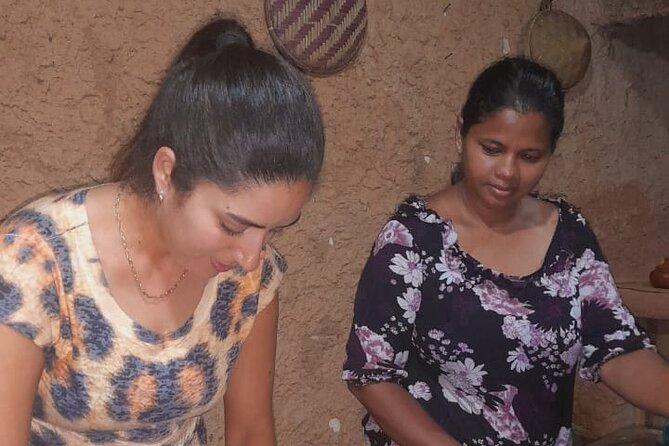
You are not simply watching a demonstration from a seat. The hosts involve you in preparing the food, and the setting gives the class a more personal feel than a city cooking studio. You might find the kitchen more basic than a modern culinary school, but that is also the reason the methods feel connected to home cooking.
Learning Sri Lankan curry from Shyama
Shyama is the main teacher named in the experience, and the lesson is described as clear, friendly, and practical. Her husband and other family members may also help with the welcome and preparation.
The class focuses on traditional Sri Lankan food rather than restaurant-style presentation. You learn how the ingredients are combined and cooked, with attention to spices, vegetables, coconut milk, and the methods used in a home kitchen.
One especially useful element is the preparation of coconut milk from scratch. This helps explain the texture and flavor of many Sri Lankan curries in a way that a packaged ingredient cannot. You also get a better feel for how spices are used across several dishes, rather than treating curry powder as one all-purpose seasoning.
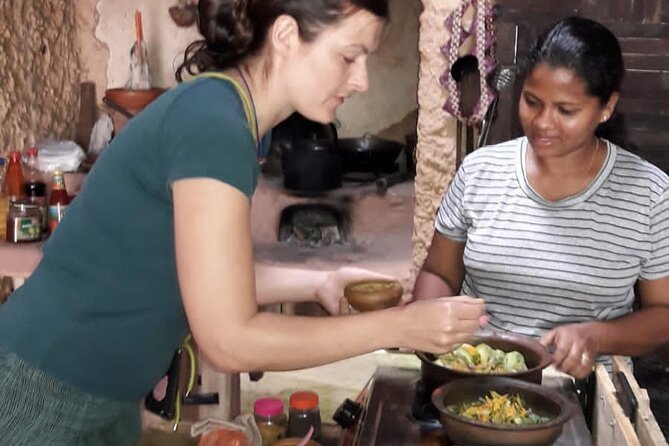
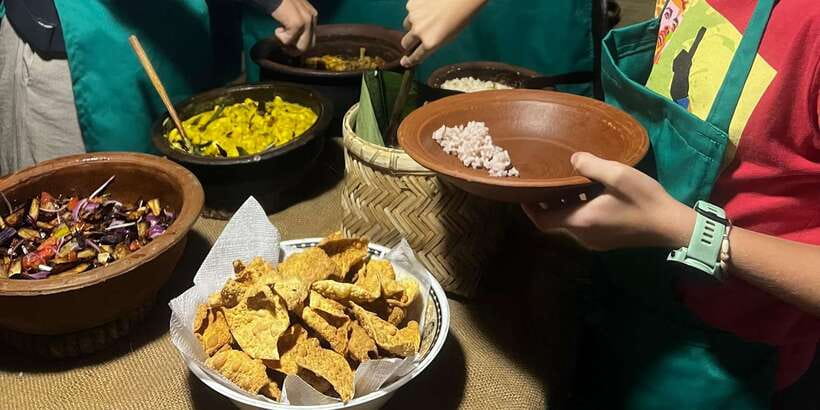
The cooking is hands-on. You may chop, mix, season, stir, and help with several dishes under instruction. The exact menu is not fixed in the information provided, but past meals have included five curries, chicken curry, aubergine curry, sambal, rice, and other vegetable dishes.
Some groups have prepared eight, nine, or even about eleven dishes. That sounds like a lot, and it is. The spread is part of the pleasure, but do not expect a short lesson focused on one signature curry. This is a broad introduction to the way a Sri Lankan meal is assembled.
Why the market choice changes the meal
Choosing the produce gives you some control over the menu. You can select the vegetables and choose either chicken or fish, while the hosts explain how the ingredients fit into the meal.
That choice is useful if you already know what you like. It also makes the class more engaging for families and groups because the menu develops from the shopping trip rather than appearing without explanation.
The class is not described as a fully customizable meal for every dietary need. One person with celiac disease was able to avoid certain ingredients, including soy sauce, mustard, papadam, and pancakes, but the experience did not offer a separate gluten-free menu. If you have an allergy, celiac disease, or another dietary restriction, contact the provider before booking and confirm what can be changed.
The same advice applies to vegetarian or vegan diners. The activity specifically offers a choice of chicken or fish, but the supplied information does not confirm a vegetarian menu or other substitutions.
Same base, a completely different day:
- Kandy Private Guided City Tour by Tuk Tuk
★ 4.9 · 1,307 reviews - From Kandy: Sigiriya Rock & Dambulla Cave Temple Adventure
★ 4.9 · 785 reviews - Kandy to Ella Train Tickets – Reserved Seats
★ 4.5 · 523 reviews - From Kandy: Pinnawala Day Tour
★ 4.8 · 331 reviews
Sitting down to eat the dishes you made
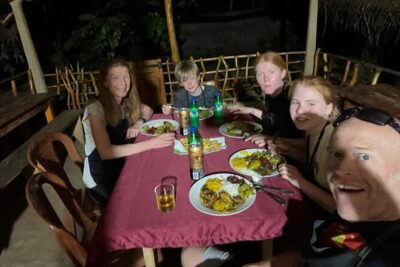
The best reward comes at the end, when you eat the meal prepared during the class. This is not a token tasting. The food is presented as a full traditional meal, and several people have described leaving very full.
You may try a range of textures and flavors in one sitting: rice, several vegetable curries, sambal, chicken or fish, and sweet dishes. Caramel pancakes with coconut have appeared as a final course, though they are not guaranteed for every menu.
The meal also gives you a chance to compare the dishes side by side. A vegetable curry can taste completely different from another one cooked with a different spice mix or amount of coconut milk. That variety is a useful lesson in Sri Lankan food, where a curry meal is often about balance across several small dishes.
You receive recipes according to the experience details and individual accounts, which adds value after the class. The recipes give you a chance to try the dishes at home, although recreating them may require finding Sri Lankan spices or suitable local substitutes.
The extra village visit and Kandy references
The experience includes a brief visit to a nearby village, offering a look at local life beyond the cooking area. This is a modest cultural addition, not a full sightseeing tour.
The itinerary also lists Kandy City Center, Kandy Lake, Kandy View Point, Kandy Lake Club for a cultural dance show, Kandy District, Kandy, and the Temple of the Sacred Tooth Relic. These places help describe the broader Kandy setting, but the core activity is clearly the market visit, village transfer, cooking class, and meal.
Do not book this expecting a guided tour of the Temple of the Sacred Tooth Relic or a complete Kandy city tour. The experience ends back at the meeting point, and the cooking activity itself is the focus. If you want to visit the temple, lake, viewpoint, or cultural show, plan those separately unless the provider confirms they are included in your booking.
Group size, pace, and who will enjoy it
The maximum group size is 15 people. That is large enough to create a social atmosphere, especially for solo visitors, but small enough for a family kitchen to remain workable if the group is managed well.
The class suits couples and solo visitors who want more contact with local life than a standard restaurant meal provides. It also works well for families. A group ranging from children to grandparents has taken part together, and the hands-on format gives different ages something to do.
Large groups should understand that the feel will change as numbers rise. With up to 15 people, not everyone can be at the same cutting board at once. You may work in turns or in small groups. That is a normal tradeoff for a class that welcomes families and larger parties.
The experience is also a good fit if you enjoy food but are not an experienced cook. The teaching is designed around guided preparation, not advanced kitchen skills. You can ask questions as you go and follow the recipes with help from the hosts.
It may be less suitable if you want a quiet, private lesson, a short demonstration, or a tightly timed city activity. The market, transport, village setting, and meal all take time.
Is $25 a fair price?
At $25 per person, this is strong value if the price includes the market visit, ingredients, instruction, and meal as described. You are getting more than a cooking demonstration. The outing combines food shopping, cultural context, practical cooking, and lunch or dinner in a family setting.
The number of dishes also affects the value. Preparing five curries or eight to eleven dishes gives you a broad look at Sri Lankan cooking, and recipes help extend the benefit after you return home.
The main cost question is transport. Pickup is offered, but the available details do not make the return arrangement fully clear. At least one arrangement required participants to pay for their return, and another account noted that the group had to find its own way home. Ask these questions before booking:
- Where exactly is pickup provided?
- Is transport from the market to the village included?
- Is the return to Kandy included?
- If not, how much should you expect to pay?
- Does the class finish at the original meeting point?
A $25 class can remain good value even with a modest return fare, but you should include that extra cost in your budget.
Practical details before you book
Confirmation is provided at booking, and free cancellation is available up to 24 hours before the start time. Cancellations made less than 24 hours before the experience are not refunded, and changes inside that period are not accepted.
Service animals are allowed, and the meeting point is near public transportation. The activity ends back at the meeting point, although the exact transport details should be confirmed because pickup and return arrangements may differ.
Plan for food preparation rather than sightseeing clothes. You will be visiting a market, handling ingredients, and working in a village kitchen. Comfortable clothing and shoes make sense.
If you have dietary restrictions, explain them before the class. The experience can sometimes leave out specific ingredients, but a dedicated gluten-free menu is not promised.
Should you book the Kandy Village Cooking Class?
Book it if you want to understand Sri Lankan food through the people, produce, and methods behind it. The strongest features are the market shopping, the traditional kitchen, Shyama’s hands-on teaching, the chance to prepare many dishes, and the generous meal at the end.
I would especially recommend it to food-minded visitors, families, couples, and solo visitors who want a welcoming village experience rather than a polished city workshop. The 99 percent recommendation rate and 5 out of 5 rating fit the clear strengths of the activity: warm hosting, useful instruction, and food that you actually help prepare.
Think twice if you need a fully private class, strict dietary guarantees, or a confirmed round-trip transfer included in the headline price. Ask about the ride home before paying, and allow plenty of time in your Kandy schedule.
For most visitors, $25 is a sensible spend for a market visit, a substantial cooking lesson, a village setting, and a full Sri Lankan meal. It is the kind of activity that can teach you more about local food in one afternoon than several restaurant meals.
FAQ
Where does the Kandy Village Cooking Class start?
The activity starts at Kandy Municipal Central Market, 144 Central Market, Kandy 20000, Sri Lanka.
How long does the cooking class take?
The experience lasts approximately three hours, not counting any additional time needed for pickup or transport.
Is pickup available?
Yes. Pickup is offered from a designated point for the market visit. Confirm the exact pickup location and transport plan when booking.
How many people can join the class?
The maximum group size is 15 people. Individuals, couples, families, and larger groups can join.
What do I choose at the market?
You select five vegetables from the market and choose either chicken or fish. The host also explains the spices and other ingredients used in the cooking.
Can I cancel for a full refund?
Yes, if you cancel at least 24 hours before the experience start time. Cancellations or changes made less than 24 hours beforehand are not accepted for a refund.
Just added around Kandy
- Authentic Sri Lankan Cooking Class in Kandy by Local Family★ 4.9 · 15 reviews
- Ambuluwawa Tower & Pinnawala & Kandy Day Tour From Negombo★ 5.0 · 4 reviews
- Ambuluwawa Tower & Pinnawala & Kandy Day Tour From Colombo★ 5.0 · 5 reviews
- Ambuluwawa Tour : From Kandy with Tea Factory Visit★ 5.0 · 16 reviews
- 8-Day Sri Lanka Private Round Tour Hotels, Meals, Car, Guide★ 4.3 · 6 reviews
- Kandy: Sigiriya Fortress & Cave Temple Full Day Private Tour★ 4.1 · 29 reviews
- 1 Hour Private White Water Rafting in Kitulgala From Kandy with Hotel Pickup★ 5.0 · 15 reviews
- Private Kandy City Tour: Temple of the Tooth & Lake Highlights★ 5.0 · 27 reviews
Cooking Classes, compared.
Organic cooking class sigiriya (kumara & family)
Read our review →
Sri Lankan Cooking Class with Neranji at Homestay
Read our review →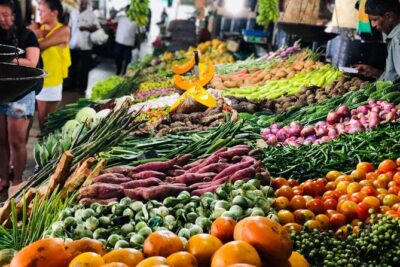

Browse the lists this tour appears in