
Reviewed · COOKING CLASSES
Colombo Cooking Class
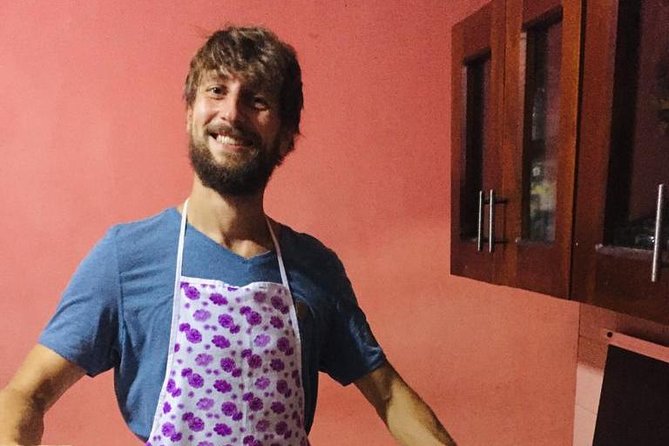
Sri Lankan cooking is best understood at the stove, where one meal can include a spread of curries, hoppers, side dishes, and dessert. This private Colombo class puts you in a local home kitchen, where you prepare at least 10 dishes and then sit down to eat what you made.
I like the hands-on format, especially the chance to adapt the lesson for a vegetarian meal. I also like the personal setting: Piumi, when she leads the class, teaches the food as part of daily Sri Lankan life rather than handing you a stack of impersonal recipes. The main consideration is the location in Angoda, outside Colombo’s central sightseeing area, so you should allow time to reach No. 275/1, B231.
Key points to know before booking
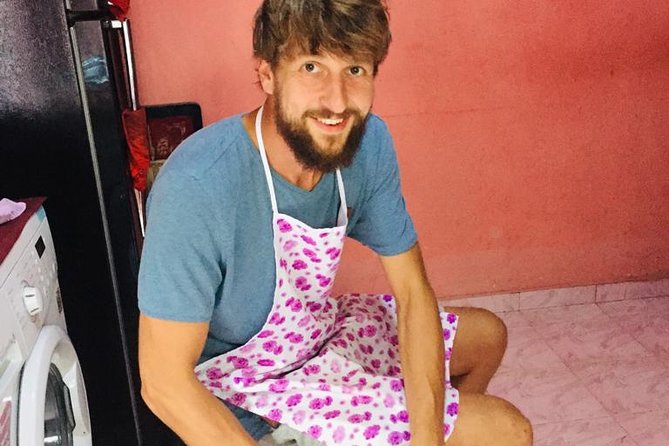
- Ten dishes in about three hours: You prepare a broad Sri Lankan meal, including curries, egg hoppers, and traditional dessert.
- Private home setting: Only your group takes part, giving you direct guidance and room to ask questions.
- Vegetarian-friendly instruction: A vegetarian guest learned to make ten different vegetarian curries, so dietary needs can shape the meal.
- Lunch or dinner timing: Lunch begins at 10am and dinner at 4pm, though the start time can change by agreement.
- Ingredients are included: You do not need to shop for the class or bring cooking supplies.
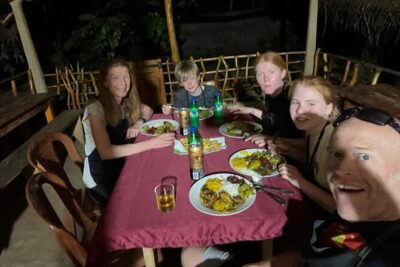
- A meal at the end: You eat the dishes you prepare, making the class both a lesson and a substantial Sri Lankan meal.
A home kitchen instead of a restaurant table
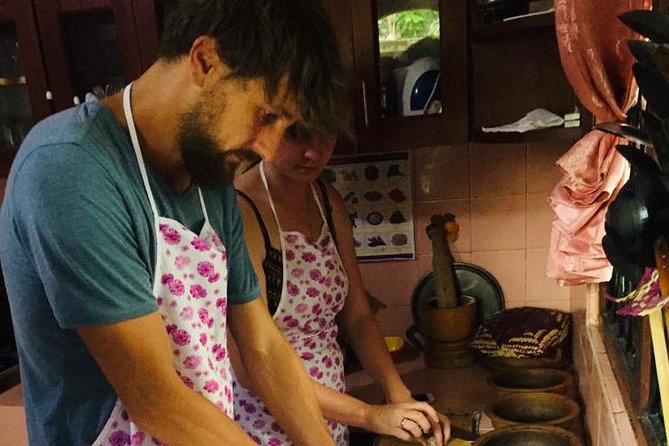
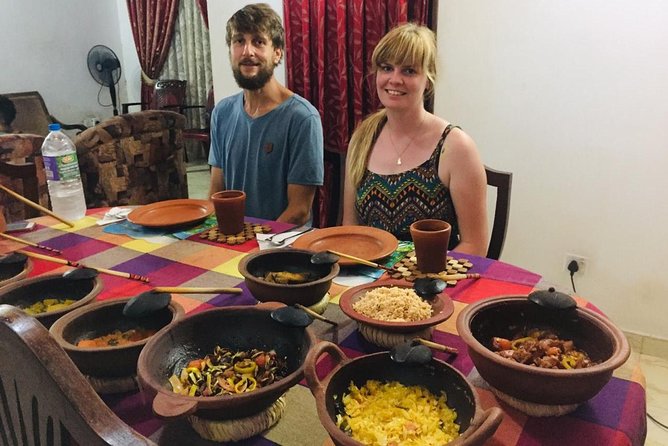
The appeal here is simple: you do not just taste Sri Lankan food, you help make it. The class takes place in a local home in Angoda, Colombo, and the host guides you through the preparation of familiar home cooking.
That setting matters. A restaurant can show you a polished plate, but it rarely explains how several dishes fit together in an ordinary Sri Lankan meal. Here, you work through the components one by one, then see the full spread come together at the table.
The class is private, so you are not trying to keep up with a large group or waiting for a turn at the chopping board. If you have questions about ingredients, cooking methods, or food customs, you can ask as you go. The tone is likely to feel more like being welcomed into someone’s home than attending a formal culinary school.
Piumi receives particular praise as both cook and teacher. If she is leading your session, you can expect clear personal guidance and a strong focus on how food fits into Sri Lankan family life. The host is described as a friendly Sri Lankan family, which adds a social side to the lesson without taking attention away from the cooking.
Other cooking classes around Colombo:
- Market Tour and Hands-On Cooking Class Colombo
★ 5.0 · 140 reviews - Cooking Class Sri Lanka with Locals
★ 5.0 · 101 reviews - Ella: Traditional Sri Lankan Cooking Class
★ 4.9 · 788 reviews
The 10am lunch class and 4pm dinner class
You can choose between a lunch session beginning at 10am and a dinner session beginning at 4pm. The listed duration is about three hours, though the exact start time can change depending on availability for both you and the host.
The lunch option works well if you want a main meal before an afternoon of sightseeing. It also gives you time to reach the class in the morning without rushing through breakfast. The dinner option is a good fit if you prefer a slower morning or want to make the cooking class the main event of your evening.
The class ends back at the meeting point, so plan your onward transport from there. No hotel pickup is listed. You meet at Colombo Cooking Class, No. 275/1, B231, Angoda 10600, Sri Lanka, and you should check the route carefully before setting out from central Colombo.
The location is close to public transportation, but the information provided does not specify a particular bus, train, or travel time. I would treat the address as essential planning information rather than assume the meeting point is near the central hotel district.
Egg hoppers, curries, and the rhythm of a Sri Lankan meal
The menu includes egg hoppers, curries, other local dishes, and traditional desserts. The exact ten dishes are not fixed in the information available, so you should think of the class as a broad introduction to Sri Lankan home cooking rather than a guaranteed menu with every dish named in advance.
Egg hoppers are a useful highlight. These bowl-shaped pancakes are associated with Sri Lankan cooking and require a different technique from ordinary flat crepes. Preparing one yourself helps you understand the texture and shape in a way that simply ordering one at a café does not.
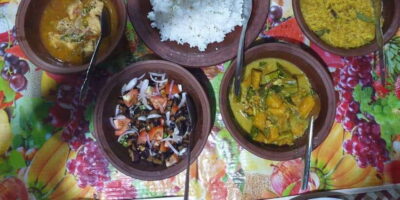
Curries form the heart of the lesson. The class gives you practice preparing several dishes rather than focusing on a single main course. That variety lets you see how a Sri Lankan meal balances different flavors and textures across the table.
The dessert is another welcome touch. Many cooking classes stop once the main dish is ready, but this one includes a traditional sweet as part of the meal. You leave with a better sense of the complete structure of a Sri Lankan lunch or dinner.
I would not expect a short class to turn you into an expert at every dish. The value is in learning the broad approach: preparing several foods, watching how the host handles them, and understanding how a home meal is built from many smaller parts.
Why the vegetarian option deserves special attention
Vegetarian cooking is not an afterthought here. One guest who does not eat meat prepared ten different vegetarian curries, then ate them as lunch. That is unusually useful if you want to explore Sri Lankan food without fish or meat.
You should still explain your dietary needs when arranging the class. The experience is described as adaptable, but the available information does not spell out every possible allergy or restriction. Clear communication before the session is the sensible approach.
A vegetarian menu can also be valuable for anyone who simply wants to learn more about Sri Lankan vegetables, spices, and curry bases. You may discover that the meal is not built around one large serving of food, but around several dishes that work together.
If your group includes both vegetarians and meat eaters, ask in advance how the menu can be arranged. The class is private, so there is more room for discussion than in a shared group lesson, but the final menu should be confirmed with the provider.
Same base, a completely different day:
- Colombo: Private Tuk-Tuk City Tour with All Entry Fees
★ 4.9 · 2,154 reviews - Sri Lanka Personal Tour Driver in private vehicle
★ 5.0 · 747 reviews - Colombo Tuk Tuk City Tour -Sightseeing Entry Fees & Food Included
★ 5.0 · 678 reviews - Udawalawe National Park: Elephant Safari with Expert Guide
★ 4.9 · 641 reviews
What the three hours are likely to feel like
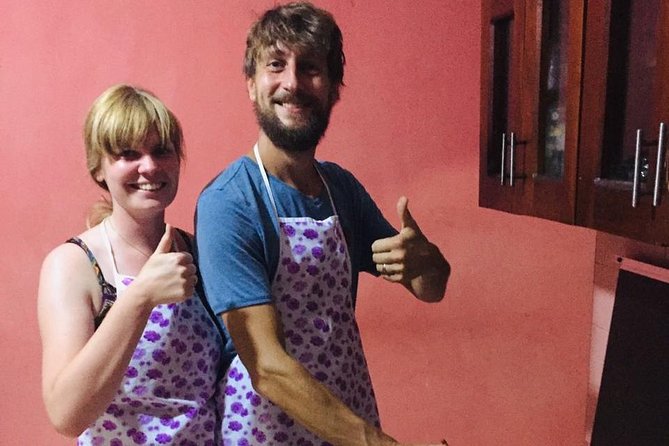
The class begins with hands-on preparation under the host’s direction. You should expect to work through the ingredients and methods for the day’s dishes rather than watch a long demonstration from the side of the room.
Because the goal is at least ten dishes, the pace may be active. You will likely move between several preparations, with the host helping you keep track of what needs attention. This suits you if you enjoy participating, asking questions, and learning by doing.
The private format makes the pace more manageable. If you are new to South Asian cooking, you can ask for an explanation before moving on. If you already cook often, you can focus on technique and compare the host’s methods with your own.
At the end, you sit down to eat the food you helped prepare. This is more than a reward after the work. It lets you taste the balance of the dishes together and understand how each part of the meal belongs on the same table.
The three-hour estimate is long enough for a proper lesson and meal, but not so long that it takes over an entire day. I would still avoid scheduling a tight appointment immediately afterward, since the exact timing can shift by agreement and the meal itself is part of the activity.
The value of $60 per person
At $60 per person, this is not the cheapest way to eat lunch or dinner in Colombo. You are paying for more than the food, however. The price includes ingredients, private instruction, preparation of at least ten dishes, and the meal at the end.
The strongest value comes when you take part fully. If you stand back and treat the class as a demonstration, the cost will feel less attractive. If you chop, mix, cook, ask questions, and pay attention to the methods, you are getting a lesson you can use after returning home.
The private format also changes the value calculation. You are not sharing the session with an unknown group, and the host can spend time on your questions and food preferences. For a couple, family, or small group, that privacy may be worth more than a lower-priced shared class.
The meal itself is another practical part of the price. You are not paying for a small tasting plate. You prepare a wide spread, including curries and dessert, then eat it as lunch or dinner.
I would recommend the class most strongly to people who care about local food culture and want to learn a method, not just collect photographs. If you only want a quick meal, a restaurant will be cheaper and easier.
Getting to Angoda and planning the day
The meeting point is No. 275/1, B231, Angoda 10600, Sri Lanka. Since the activity is in Angoda rather than described as being in central Colombo, check your route before booking your preferred time.
Public transportation is nearby, and the activity is listed as being near public transportation. No transfer service is included in the details provided, so you should arrange your own way to the meeting point and back afterward.
The mobile ticket makes it easy to keep the booking on your phone. Confirmation is provided at the time of booking, which is useful when you are arranging a morning or late-afternoon schedule around the class.
This class is often booked about 18 days ahead. That timing suggests you should not leave it until the last minute if your Colombo dates are fixed, particularly if you need the vegetarian option or prefer one of the two main session times.
Free cancellation is available if you cancel at least 24 hours before the start time. Cancellations or changes made less than 24 hours ahead are not accepted for a refund, and the cut-off uses local time.
Who will enjoy this class most
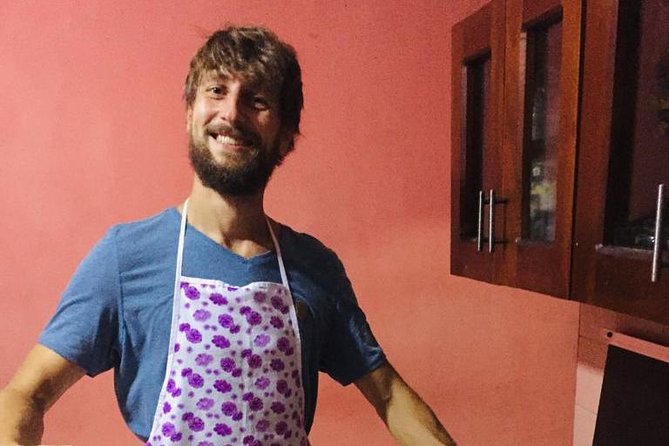
I would choose this class if you want a personal introduction to Sri Lankan food and prefer a home kitchen to a commercial cooking studio. It suits curious eaters, couples, families, and small private groups who enjoy being involved in the preparation.
It is also a strong choice for vegetarians, since the lesson can include ten vegetarian curries. Still, communicate restrictions before the class rather than relying on an assumption about the menu.
The class works for beginners because the instruction is hands-on and personal. It also has enough variety for capable home cooks who want to see how a local cook organizes many dishes for one meal.
You may want to skip it if your schedule is packed, you dislike cooking, or you are unwilling to travel to Angoda. The class is built around participation, and the destination is not presented as a central Colombo hotel activity with pickup.
Service animals are allowed. The activity is private, and only your group participates, which can make the setting more comfortable for families or anyone who prefers a quieter lesson.
How this compares with simply eating Sri Lankan food
A restaurant gives you speed and choice. You can order rice, curry, hoppers, or dessert without spending three hours in a kitchen. It is the better choice if your main goal is to sample food while sightseeing.
This class gives you context that a menu cannot provide. You learn how local dishes are prepared, how several curries become one meal, and why cooking has an important role in daily Sri Lankan life.
The shared meal at the end is especially useful. You taste the result immediately, while the cooking steps are still fresh in your mind. That makes it easier to remember what you did and perhaps try a version at home.
I would not book this expecting a formal lecture on Sri Lankan cuisine or a fixed professional kitchen setup. The appeal is the home-cooked setting, the direct contact with the host, and the chance to prepare many dishes in one session.
Should you book the Colombo Cooking Class?
Book it if you want a private, hands-on food lesson with a local family and the chance to prepare a full Sri Lankan meal. The combination of ten dishes, dessert, included ingredients, and a sit-down meal gives the $60 price reasonable value for anyone who enjoys cooking.
I would give it extra consideration if you are vegetarian, since the class can be shaped around a large selection of vegetarian curries. Choose the lunch or dinner time that best fits your day, confirm any dietary needs ahead of time, and plan your route to Angoda carefully.
Skip it if you only want a quick bite in central Colombo or do not enjoy active cooking. For everyone else, this is a practical way to connect Sri Lankan food with the people and home routines behind it.
FAQ
How long is the Colombo Cooking Class?
The class lasts approximately three hours, including the cooking lesson and the meal at the end.
Where does the class meet?
You meet at Colombo Cooking Class, No. 275/1, B231, Angoda 10600, Sri Lanka. The activity ends back at the meeting point.
What time does the class begin?
The lunch session starts at 10am, and the dinner session starts at 4pm. The time may change according to availability for you and the host.
How many dishes will I prepare?
You will prepare at least ten different Sri Lankan dishes, including traditional desserts. The menu can include egg hoppers and curries.
Is the class private?
Yes. Only your group participates in the activity.
Can I cancel for a full refund?
Yes, if you cancel at least 24 hours before the experience start time. Cancellations or changes made less than 24 hours before the start time are not accepted for a refund.
Just added around Colombo
- 2-Day Whale Watching & Southern Sri Lanka Tour★ 3.8 · 6 reviews
- Colombo Walking Tour with Ajeet De Soyza★ 5.0 · 43 reviews
- Explore Colombo Heritage and Cultural Temples Tour by Tuk Tuk★ 5.0 · 48 reviews
- Day Tour to Elephant Orphanage / spice garden★ 5.0 · 20 reviews
- Muthurajawela Bird Watching Tour From Colombo & Negombo★ 5.0 · 18 reviews
- Exclusive: Muthurajawela Bird Watching Tour with Transfers★ 4.5 · 18 reviews
- Colombo Tuk Tuk City Tour★ 4.5 · 48 reviews
- Private Day trip Kandy & pinnawala with your selected attractions★ 5.0 · 53 reviews
Cooking Classes, compared.
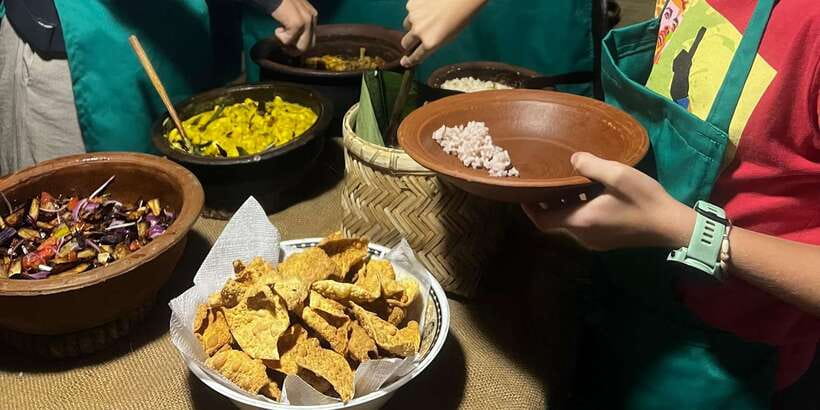
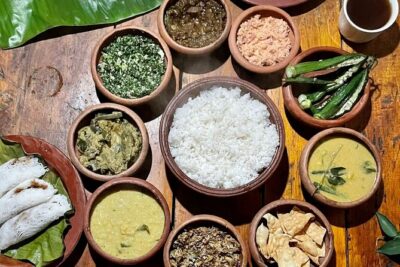
Organic cooking class sigiriya (kumara & family)
Read our review →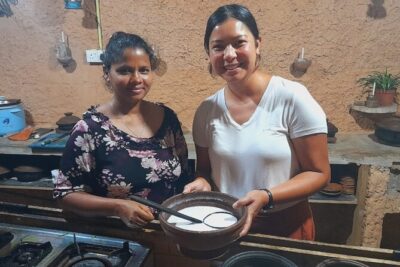
Sri Lankan Cooking Class with Neranji at Homestay
Read our review →
Browse the lists this tour appears in