
Reviewed · ANCIENT CITIES & TEMPLES
Delve Into Ancient Anuradhapura with Optional Visit to Mihintale
Anuradhapura is easiest to appreciate when someone explains what you are looking at. This private tour with Lucky moves from forest monasteries and royal gardens to stupas, sacred trees, bathing pools, and carved guardstones, giving the ruins a human purpose rather than leaving you with a field of old stones.
I like the compact route, which covers a remarkable number of major sites in about six hours. I also like the private format: you can ask questions as they arise, pause for explanation, and focus on the details that interest you most. The main catch is cost clarity. The $30 tour price does not include the separate $30 UNESCO site admission, and private transport is not included.
Key points to know before booking
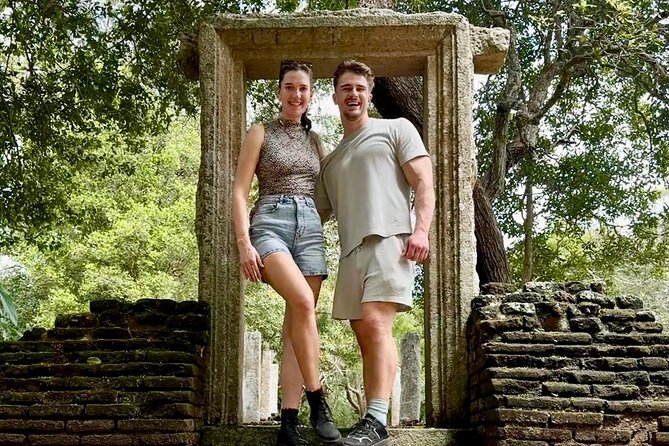
- A private guide named Lucky leads the visit, with a style described as detailed, enthusiastic, and willing to explain more than the standard guidebook account.
- The route covers both famous monuments and less obvious remains, including Vessagiriya, Sakwala Chakraya, ancient bathing facilities, refectories, and carved stonework.
- The Sri Maha Bodhi and Ruwanwelisaya provide the grand religious moments, while the smaller ruins show how monks and royal communities lived.
- The tour is designed for questions, so it suits anyone who wants context about Buddhism, engineering, sculpture, and ancient city life.
- Entry and transportation are extra, making the true cost higher than the advertised $30 per person.
- The experience begins and ends at Pothanagama Junction, with morning operating hours listed from 7:30 AM to 10:30 AM.
Why Anuradhapura works best with a guide
Anuradhapura was both a major Buddhist center and a former capital of Sri Lanka. Its remains are spread across a large area, and the meaning of each site is not always obvious from the stones alone.
A guide helps connect the pieces. A row of granite pillars becomes the base of a former palace. A large trough reveals the scale of monastic life. A carved moonstone becomes more than a decorative doorstep, with each ring carrying symbolic meaning.
That is the real value of this outing. You are not simply moving from monument to monument. You are learning how royal power, Buddhist devotion, water management, medicine, art, and monastic routine fit together.
The private setup should make the experience more flexible than a large group excursion. You can ask Lucky to explain a sculpture again, spend longer at a site that catches your attention, or keep moving when a ruin feels less important to you.
Other ancient cities and temples from Anuradhapura:
- Private City Day Tour in Anuradhapura
★ 5.0 · 383 reviews - Explore & Ride the history of anuradhapura with Vogel Tours
★ 5.0 · 62 reviews - Anuradhapura Private Ancient City Day Tour
★ 5.0 · 39 reviews
Vessagiriya begins the morning among old monastic caves
The first stop is Vessagiriya Forest Monastery, described as one of the island’s two oldest Buddhist monastic dwelling areas. It is a useful opening because it introduces Anuradhapura through monastic life rather than grand royal monuments.
You can expect a quieter setting of rocks, caves, and remains associated with monks. The site helps you picture how early religious communities lived before the tour moves into the larger ceremonial centers.
I like beginning here because it gives the day a clear human scale. The later stupas are enormous and formal. Vessagiriya helps you think about the people who prayed, studied, rested, and worked in this ancient city.
Admission is listed as free for this stop. Comfortable shoes are sensible, since the visit takes place around an old forest monastery rather than on a smooth museum floor.
Sakwala Chakraya and the mystery of the Star Gate
Next comes Sakwala Chakraya, often called the Star Gate. It is located on a rock face at Ran Masu Uyana, the Royal Goldfish Park, between Tissa Wewa and Isurumuniya Rock Temple.
This is one of the more unusual stops on the route. The carved design has attracted plenty of attention because its purpose is not plainly explained by its appearance. Your guide can help place it within the wider setting of the royal garden and surrounding religious sites.
The scheduled visit lasts about 35 minutes, enough time to look closely and ask questions without turning the stop into a long archaeological lecture. Admission is listed as free.
This is also a good example of the tour’s balance. Anuradhapura is not only about the largest stupas. Smaller and less easily understood features can be just as memorable when you have someone to point out what deserves attention.
Sri Maha Bodhi brings the strongest spiritual focus
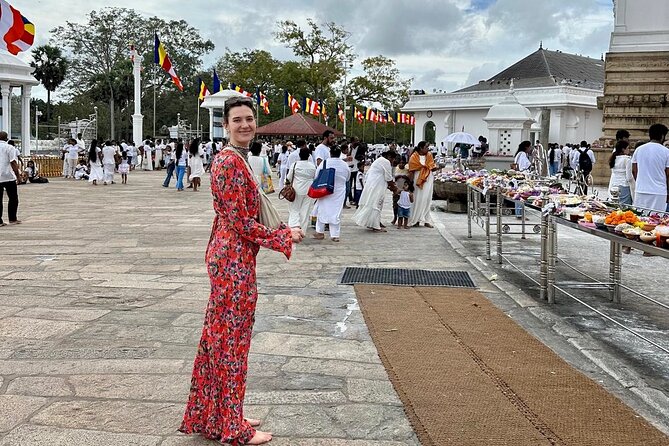
The Sri Maha Bodhi is one of Anuradhapura’s most sacred places. It is a fig tree, scientifically known as Ficus religiosa, and is regarded as the first of the city’s eight sacred places.
The scheduled stop is only 20 minutes, so this is not meant to be a long wandering visit. It is a focused introduction to the tree’s religious importance and its place within Anuradhapura’s Buddhist tradition.
You should dress and behave respectfully at this stop. It is an active sacred place, not simply an archaeological object. That distinction matters. The surrounding ruins may feel like a history site, but the Sri Maha Bodhi remains part of living religious practice.
I would pay close attention to Lucky’s explanation here, since the meaning of the tree is more important than simply seeing its branches. The visit also sets up the next stop, the remains of the Brazen Palace.
Same base, a completely different day:
- Minneriya National Park Elephant Jeep Safari Private Tour
★ 5.0 · 68 reviews - Minneriya National Park | Private Safari
★ 5.0 · 59 reviews - Sigiriya Hike & Minneriya Safari Private Full Day Tour
★ 5.0 · 56 reviews - Sigiriya & Habarana: Sunrise Hot Air Balloon Ride Experience
★ 5.0 · 47 reviews
The Brazen Palace shows the scale of royal ambition
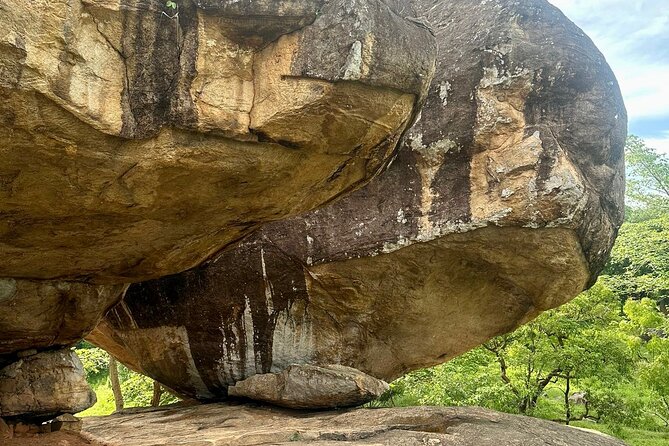
North of the sacred tree are the granite pillars associated with Lovamahapaya, also known as the Brazen Palace. The building is now largely gone, but the surviving pillars suggest the size and planning of the original structure.
The stop lasts about 15 minutes. That is enough for a clear explanation and a close look, but not enough for a long architectural study.
This is a place where a guide earns his fee. Without context, you may see only a large group of upright stones. With an explanation of the former building, the site becomes evidence of the power and resources once concentrated in Anuradhapura.
Ruwanwelisaya is the visual high point
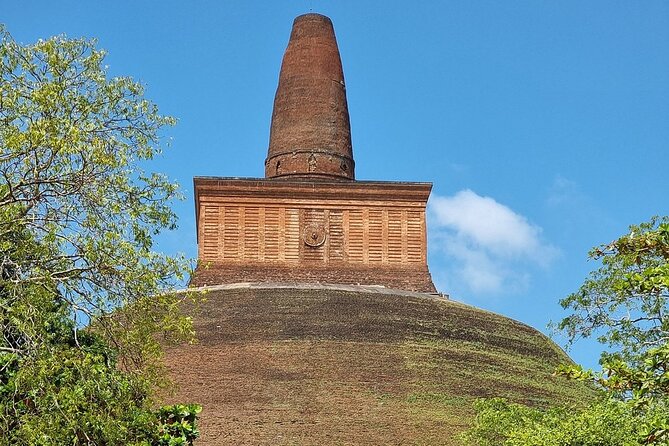
Ruwanwelisaya, also called the Ratnamali or Mahathupa, is one of the major religious monuments in the city. It was built in the second century BC under King Gamini Abhaya.
The scheduled visit lasts about 25 minutes. That gives you time to take in the scale of the stupa, understand its place in Sri Lankan Buddhism, and listen to the stories connected with its construction.
This is likely to be one of the grandest moments of the morning. The monument is easier to appreciate when you know that it is not simply a giant white structure. It represents devotion, royal patronage, and the central role Anuradhapura played in Buddhist life.
As with the Sri Maha Bodhi, treat this as a sacred place as well as a historic monument. The tour moves at a steady pace, so you should not expect a long unstructured break here.
Refectories reveal how large the monasteries became
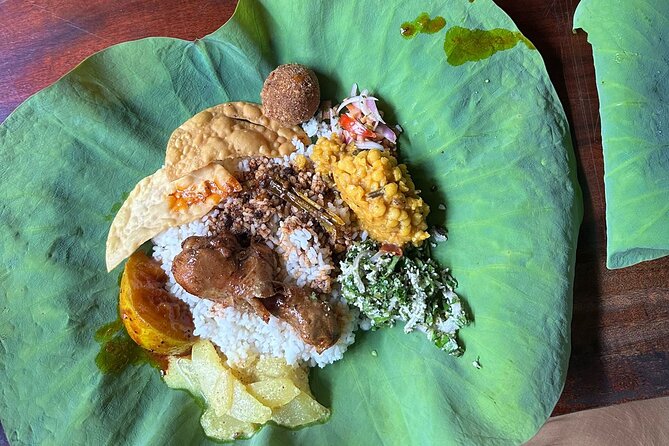
The itinerary then turns toward practical monastic remains. At the Gedige ruins, near the Mahapali Alms Hall, you will see remains of several buildings, including the large Mahapali Refectory.
This stop is valuable because it shifts your attention from worship to feeding people. A refectory serving monks from royal kitchens indicates the size and organization of the religious institutions that once operated here.
The scheduled time is about 25 minutes. I would use it to ask Lucky how these buildings fit into the larger monastery complex and how food provision supported such a large community.
The Main Refectory of Abhayagiri Monastery offers another look at this side of ancient life. A large granite trough, shaped somewhat like a canoe, survives in the refectory area. The Chinese monk Fa-hsien is also connected with accounts of the monastery, adding an international dimension to the site.
You get about 15 minutes here. That is brief, but the physical object makes the explanation easy to grasp. A huge stone serving trough tells you more about the scale of the monastery than a general statement about its importance.
Ancient bathing and medical facilities show practical skill
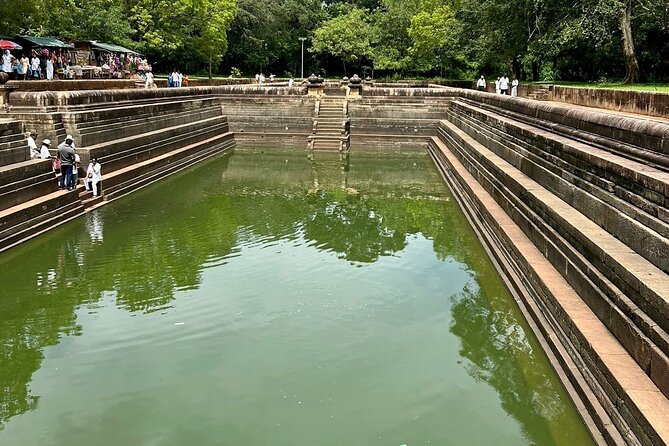
The Twin Baths, or Kuttam Pokuna, are among the most attractive examples of ancient water engineering on the route. The paired pools were built in a low area and show careful planning, stonework, and water control.
The visit lasts about 15 minutes. I would look beyond the pools themselves and notice how the design combines practical use with visual order. These were not simply holes filled with water.
Admission is listed as not included for this and several later stops, so keep the extra site fee in mind when calculating the final price.
The Janthagara, or steam bath building, offers a different angle on health and daily routine. It is described as a facility connected with warm-water bathing and Sinhalese medical practice from the fourth century onward.
You will have about 15 minutes here. The building may not have the immediate visual impact of a stupa, but it helps show that ancient Anuradhapura included organized systems for health and personal care.
Rathna Prasadaya rewards attention to carved stone
Rathna Prasadaya and its guardstone are scheduled for a short 10-minute stop. The site is linked with an eighth-century building and is noted for the quality of its art.
This is where you should slow your eyes down, even if the stop itself is brief. Guardstones can look like minor architectural details when you first see them, yet their carved figures and balanced forms reveal the skill of the craftsmen who created them.
I like that this tour includes such a focused art stop. The largest monuments can dominate your memory, but small carvings often provide the clearest look at ancient design and religious ideas.
Eth Pokuna gives you a sense of monastic scale
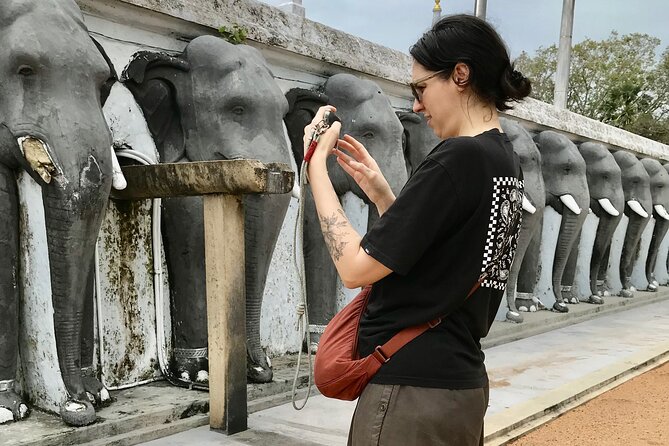
Eth Pokuna, or Elephant Pond, is described as perhaps the largest man-made pond in Asia. It sits southwest of the refectory area and is associated with the Abhayagiri monastery complex.
The visit lasts about 15 minutes. The sheer size is the point. After seeing smaller bathing pools and stone troughs, you can appreciate how much planning and labor went into water systems serving a major institution.
The name is useful to remember because it gives you an immediate sense of scale. This was not a private garden pool. It was part of a large religious and civic system.
The moonstone closes the route with fine detail
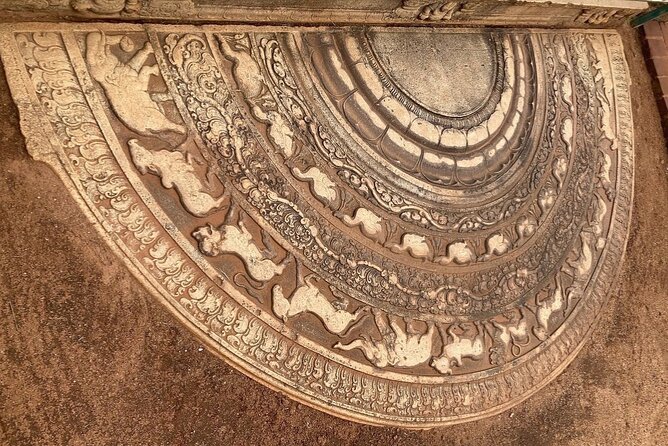
The final stop is a moonstone, or Sandakada pahana, at the foot of steps leading to a Buddhist shrine. It functions as a threshold, but its decoration turns an ordinary entrance into a carefully designed work of art.
You will have about 15 minutes to examine it. The carved rings and figures are worth seeing up close, especially after Lucky explains what the symbols represent.
Ending with the moonstone is a smart choice. The route finishes not with the biggest structure, but with a detail that rewards patience. It leaves you thinking about the craftsmanship built into everyday movement through a sacred space.
What the $30 price really covers
The advertised price is $30 per person, but you should budget for another $30 per person for admission to the UNESCO World Heritage sites. That makes the basic experience $60 per person before any transport costs.
The tour price includes a professional licensed guide, bottled water, and king coconut soda. Those drinks are small but welcome in Sri Lanka’s heat, especially during a morning spent moving among open-air ruins.
Private transportation is not included. Pickup and return are arranged from the stated meeting point at Pothanagama Junction, so you need to organize your own way there and away again.
For a private six-hour guided visit, the price can be fair if you value explanation and personal attention. It is less attractive if you only want quick photo stops or already know the archaeological sites well.
Timing, meeting point, and tour style
The meeting point is Pothanagama Junction on D S Senanayake Mawatha in Anuradhapura. The activity ends back at the same meeting point.
The listed operating window is Monday through Sunday from 7:30 AM to 10:30 AM, while the overall experience is described as approximately six hours. Because those time details do not fully match, confirm the exact start and finish time when booking.
The tour is private, so only your group participates. Most people can take part, and the meeting point is near public transportation.
The tour requires good weather. You can cancel at least 24 hours before the start for a full refund. Cancellations or changes made inside 24 hours are not refunded or accepted, and a weather cancellation offers a different date or a full refund.
Who should book this Anuradhapura tour
I would choose this experience if you want one guide to connect Anuradhapura’s major religious monuments with its less obvious systems of food, water, medicine, art, and monastic life.
It suits first-time visitors who do not want to spend the day guessing which ruins matter. It also suits curious history fans who like to ask questions and go beyond the standard photo stops. Lucky’s strong points, based on the available information, are his detailed explanations, enthusiasm, and willingness to discuss the sites at length.
You may want another option if you need included transport, dislike early starts, or want a very relaxed pace. Twelve stops in about six hours means some visits are short, with several lasting only 10 or 15 minutes.
Should you book it?
Book this tour if the guide matters as much to you as the monuments. Lucky’s explanations, private format, and broad route give you a useful way to understand Anuradhapura beyond its famous stupas.
Before paying, confirm the exact schedule, arrange transport to Pothanagama Junction, and add the separate $30 site admission to your budget. If you are comfortable with those extras, this is a strong choice for a focused morning among Sri Lanka’s most important ancient Buddhist sites.
FAQ
How long does the Anuradhapura tour last?
The experience lasts approximately six hours.
What is the price per person?
The listed tour price is $30 per person. A separate $30 admission fee applies to the UNESCO World Heritage sites.
Is transportation included?
No. Private transportation is not included. The tour starts and ends at Pothanagama Junction.
Is the tour private?
Yes. Only your group participates in this private activity.
Who guides the tour?
The experience is led by Lucky, a professional licensed tour guide.
What is included in the tour price?
The price includes the licensed guide, bottled water, and king coconut soda.
What sites are visited?
The route includes Vessagiriya, Sakwala Chakraya, Sri Maha Bodhi, Lovamahapaya, Ruwanwelisaya, Gedige ruins, the Twin Baths, Janthagara, the Main Refectory of Abhayagiri, Rathna Prasadaya, Eth Pokuna, and a moonstone.
Where does the tour begin and end?
It begins at Pothanagama Junction, 2 Kanuwa Junction, on D S Senanayake Mawatha in Anuradhapura, and ends back at the meeting point.
Can I cancel for a refund?
Yes. You can cancel at least 24 hours before the start time for a full refund. Cancellations and changes within 24 hours are not refunded or accepted.
More temple tours in Anuradhapura
- Anuradhapura Heritage Mountain bike / bicycle Tour
★ 5.0 · 34 reviews - Half day tour – in Sacred city of Anuradhapura Or sacred city of Mihintale.
★ 4.5 · 24 reviews - Anuradhapura: Full-Day Wilpattu All Inclusive Private Safari
★ 4.5 · 24 reviews - One Day Tour – Sacred city of Anuradhapura & Sacred city of Mihintale. (Sunset)
★ 4.5 · 23 reviews
Just added around Anuradhapura
- Yala National Park: 7 hours or 12 hours Leopard Wild Safari★ 4.7 · 11 reviews
- Wilpattu National Park Safari Tour from Kandy★ 5.0 · 3 reviews
- One Day Tour – Sacred city of Anuradhapura & Sacred city of Mihintale. (Sunset)★ 4.5 · 23 reviews
- Wilpattu Half Day Safari From Anuradhapura★ 5.0 · 4 reviews
- Minneriya National Park Half Day Elephant Safari★ 5.0 · 4 reviews
- Adventure safari Experience in Hurulu Eco Park, Sri Lanka★ 5.0 · 18 reviews
- Sunrise or sunset tour pidurangala Rock and Sigiriya Rock★ 5.0 · 4 reviews
- Wild Elephant Safari in Minneriya National Park★ 3.5 · 3 reviews
Ancient Cities & Temples, compared.

Kandy to Sigiriya Day Tour and Dambulla cave temple with private vehicle
Read our review →
Sigiriya Rock Fortress and Cave Temples Day Trip
Read our review →
Paradise Blow Hole, Big Buddha, Rock Temple Tours
Read our review →
Explore & Ride the history of anuradhapura with Vogel Tours
Read our review →
5 Day Sri Lanka Tour : Including Temple of Tooth & Sigiriya Trip
Read our review →Browse the lists this tour appears in