
Reviewed · SURFING
Surf lesson in weligama by surf and stay Srilanka .
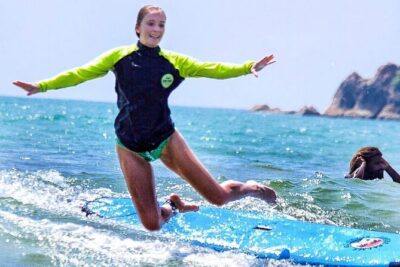
Weligama’s soft, rolling waves make this a sensible place to try surfing, and Surf & Stay keeps the lesson focused on the part you care about most: getting upright on a board. You begin with a 15 to 20-minute safety briefing, then practice the pop-up on sand before heading into the bay.
I like the small, private format, since your group gets direct help rather than a distant lecture from shore. I also like that boards, rash guards, water, and light refreshments are included, so you can arrive with less to organize.
The main thing to check is pickup. Some booking information says pickup is offered, while the detailed inclusions say transport costs extra and give the beachfront camp as the meeting point. Confirm this before you pay, especially if you are staying outside central Weligama.
Key points at a glance
- Gentle Weligama waves: The crescent-shaped bay offers forgiving surf for first-timers and more demanding breaks for people building their skills.
- Land-based safety first: You spend 15 to 20 minutes learning board handling, currents, communication, surf etiquette, and the pop-up before entering the water.
- Personal coaching in the sea: The instructor stays beside you, helping with balance, timing, paddling, and the push into a wave.
- Danny is a named instructor: Feedback specifically praises Danny for clear, helpful teaching.
- Useful gear is included: Boards, rash guards, bottled water, and light refreshments are provided.
- Good value at $20: For a private 90-minute lesson with equipment, the price is attractive, though transport and optional photos cost extra.
Why Weligama is a good place to learn
Weligama is built around a broad, crescent-shaped bay with a reputation for soft, rolling waves. That matters when you are learning. A first lesson is less about speed and more about finding a wave that gives you enough time to balance, stand, and understand what the board is doing.
The setting also gives the lesson room to suit different levels. You can start in the gentler part of the bay, while a more experienced surfer in your group may be ready for stronger breaks later. The supplied information does not promise a particular break or wave size on your date, so conditions will still shape the session.
I like this kind of beach lesson because surfing looks simple from the sand and feels far less simple once you are lying on the board. A coach can correct small errors quickly: where your hands go, how you position your feet, and when to stop paddling and stand. Those corrections are much more useful than simply being handed a board and told to try.
The setting is also practical for a short holiday. You do not need to commit to a full surf camp to find out if the sport suits you. A single session gives you a fair first taste, while longer three-day, five-day, or seven-day packages are available by contacting the operator.
Other surf breaks and lessons around Galle:
- Ride a Wave Surf School Weligama Sri Lanka
★ 5.0 · 161 reviews - PRIVATE Surf Lesson for Beginners
★ 5.0 · 80 reviews - Surf & Stay – Private Surf Lesson Experience in Weligama
★ 4.5 · 29 reviews
Starting at the beachfront camp
The meeting point is Surf and Stay hostel, listed at AH 43 in Weligama. The activity begins and ends there, which makes the plan easy if you are already nearby. The location is close to public transportation, but you should still allow time to find the exact entrance.
Your first task is meeting the instructor and the rest of your group. The activity is described as private, meaning only your own group participates. That is useful for families, couples, or friends who want the lesson paced around their own abilities.
The private format does not necessarily mean one instructor per person for the entire session. The description says the instructor works closely beside you in the water, but it does not specify an exact instructor-to-student ratio. If you are booking for several people, especially a family, ask how the coaching will be shared.
You then receive the necessary surf gear. Boards and rash guards are included, which saves you from renting equipment separately. The rash guard is more than a nice extra: it helps reduce rubbing from the board during repeated attempts.
The 15-minute safety briefing
Before anyone enters the water, the instructor leads a beachside warm-up and safety talk lasting about 15 to 20 minutes. This part may sound less exciting than catching a wave, but it is one of the most important sections of the lesson.
You learn how to identify currents, handle your board, and communicate in the water. You also cover basic surf etiquette, the shared rules that help people avoid collisions and keep the lineup orderly.
The instructor demonstrates the pop-up on land. You practice moving from lying on the board to standing in one quick motion, with your feet placed beneath you. Rehearsing this on the sand gives you a chance to learn the movement before the board is rocking under you.
I especially like that the lesson includes ocean safety rather than treating surfing as a simple photo opportunity. A soft wave can still knock you off balance, and a board can become awkward if you do not know how to control it. Clear instructions at the start help you stay calm when the first attempt goes wrong.
The briefing also helps set realistic expectations. Most beginners will not look polished after one session. Your useful goal is to understand the basic movement, catch a few small waves with help, and leave with enough confidence to keep practicing.
Heading into the water with direct coaching
Once you are ready, the instructor goes into the water with you. The teaching is practical: you paddle, adjust your position, wait for a suitable wave, and receive help with timing.
The coach may give you a gentle push at the right moment so you can concentrate on standing. That is a smart approach for beginners. Paddling hard, judging the wave, keeping the board straight, and completing the pop-up all at once can be too much during a first lesson.
The instructor’s help also changes as you improve. At first, you may need a push and reminders about balance. Later, you may be able to paddle into a wave yourself and focus on your feet. The description promises close guidance, but it does not guarantee that every participant will stand up, since fitness, timing, conditions, and previous experience all matter.
One instructor named in the feedback is Danny, who is praised for being helpful and clear. You cannot assume Danny will lead every booking, so request him if his availability matters to you. The wider teaching team is described as certified, friendly, patient, and experienced in surf instruction.
The water portion is the emotional center of the session. You feel the board accelerate, try to rise, and either glide briefly or tumble into the water. Both outcomes are part of learning. A good coach keeps the mood light while still correcting the mistake that caused the fall.
Same base, a completely different day:
- Whales and Dolphins Watching-Luxury Super Grade Cruiser(Hotel Pick up offered)
★ 5.0 · 1,268 reviews - Galle: Traditional Gems & Jewellery Workshop with Transfers
★ 4.9 · 539 reviews - Sea waves sri lankan cooking class
★ 5.0 · 467 reviews - Galle Fort Walking tour
★ 4.9 · 285 reviews
What the 90 minutes really gives you
The duration is listed as about one hour and 30 minutes, with the included lesson described as one to two hours. The exact water time may vary because the session also includes meeting, gearing up, safety instruction, and the beach warm-up.
That makes this a compact introduction rather than a full day of surfing. You should have enough time to practice repeatedly, but you should not expect a long break, advanced technique work, or a complete course in surf theory.
The session may be particularly good for a first-time visitor who wants a low-risk introduction. You get a board, an instructor, safety guidance, and time in the water without paying for several days before you know if you enjoy the sport.
It can also work well for children. A family booking received strong praise for patient instruction with three children, including the younger two. That does not replace checking each child’s comfort and physical ability, but it suggests the teaching style can be adjusted for mixed ages.
For a progressing surfer, the value depends on the goal. The operator says the area can serve surfers working toward skills such as a better bottom turn, but the detailed lesson plan is built around beginner fundamentals. If you already surf confidently, ask in advance what coaching and break selection are available.
What is included and what costs extra
At $20 per person, the lesson offers good value if you are already near the meeting point. The package includes:
- Surfboard and other surf gear
- Rash guard
- A private lesson lasting about one to two hours
- Surf instructor
- Beachside warm-up and safety briefing
- Bottled water
- Light refreshments
The price is especially reasonable because you do not need to arrange a board rental and beginner instruction separately. You are paying for access to equipment plus direct coaching, not simply a short turn on a rented board.
Transportation is the unclear part. Pickup is shown as an available feature, but transport to and from the surf spot is also listed as excluded and available for an extra fee. Treat pickup as an add-on unless the operator confirms it in writing. The meeting point is the Surf and Stay hostel in Weligama, and the activity returns there.
Photography and video are optional extras. These can be worthwhile if standing on a wave is an important holiday memory, but they are not part of the $20 price. Ask for the added cost before the lesson begins.
Gratuities are optional and not included. There is no need to treat a tip as mandatory, but you can use your judgment if the instructor gives especially thoughtful help.
Families, fitness, and practical comfort
The activity requires a moderate level of physical fitness. You will paddle, push yourself up from the board, balance, and repeatedly climb back onto it after falling. The physical effort is not extreme for everyone, but it is real.
You should be comfortable in the ocean and able to follow safety instructions. The supplied information does not give an age limit, swimming requirement, or specific medical guidance, so ask the operator if any member of your group has a health concern or limited water confidence.
Families may find the private format easier than joining a large class. The instructor can give more attention to children who need encouragement, while stronger members of the group can continue practicing. Still, the exact pacing depends on the group’s size and the instructor’s method.
A couple or solo participant may get the most direct attention, particularly if no one else is sharing the booking. Larger family groups should ask how the time will be divided among participants. The activity is private, but private does not automatically mean every person receives uninterrupted one-on-one coaching.
The camp provides bottled water and light refreshments, which is useful after repeated effort in the sun. You should still plan your clothing and sun protection sensibly, since the lesson takes place on a beachfront and includes time outside the water.
A small but important booking warning
One booking problem involved a guest waiting at accommodation for a pickup that did not arrive. The operator stated that the reservation did not include pickup and that the booking was not received through its normal system.
The practical lesson is simple: do not rely on a general pickup label. Confirm the meeting point, pickup status, and contact details before the day of the lesson. If you are not meeting at Surf and Stay hostel, get a clear answer about the extra transport fee and the exact collection plan.
The operator’s overall score is 4.9 from 96 ratings, with 98 percent recommending the activity. The strongest praise centers on patient instruction, encouraging coaches, and the simple pleasure of getting beginners standing on a board. One participant booked again before leaving Sri Lanka, which suggests the lesson can lead naturally to more practice.
The no-show complaint is still worth taking seriously because it concerns communication, not surf quality. Good products can have poor coordination on an individual booking. A short confirmation message can remove much of that risk.
You may cancel for a full refund up to 24 hours before the local start time. Cancellations or changes made within 24 hours are not refunded or accepted, so check your plans before that deadline.
Who should book this Weligama lesson
I would choose this for a first-time surfer, a couple wanting a hands-on beach activity, or a family that prefers a private lesson to a large class. The gentle bay, safety briefing, included gear, and direct water coaching give beginners a clear starting point.
It also suits someone who is curious about surfing but does not want to spend several days at a surf camp. For $20, you can test the sport with relatively little financial risk, provided you can reach the meeting point without an expensive transfer.
I would be more cautious if you are an advanced surfer seeking technical coaching. The operator mentions progressing surfers and stronger breaks, but the detailed format focuses on basic paddling, wave catching, balance, and the pop-up. Ask for a tailored plan before booking.
I would also check carefully if transport is essential, if your group is large, or if you need a guaranteed named instructor. Danny is specifically praised, but instructor assignment is not guaranteed in the supplied details.
Should you book Surf & Stay?
Book it if you want a short, affordable, beginner-friendly introduction to surfing in Weligama. The best reasons are the forgiving bay, patient coaching style, private group setup, and equipment included in the price.
Before booking, confirm three things: the exact meeting point, whether pickup costs extra, and how coaching will be divided among your group. Once those details are clear, this is a practical way to spend 90 minutes learning a new skill rather than simply watching the waves from the sand.
FAQ
Where does the surf lesson begin and end?
The lesson starts at Surf and Stay hostel at AH 43, Weligama, Sri Lanka. The activity ends back at the same meeting point.
How long does the lesson last?
The experience lasts approximately one hour and 30 minutes. The included lesson is also described as lasting one to two hours.
Is the activity private?
Yes. Only your group participates in this private activity.
What equipment is included?
Surf gear and rash guards are included. Bottled water and light refreshments are also provided.
Is transportation included?
Transportation is not clearly included in the base price. Pickup is offered in some booking information, while the detailed conditions say transport is available on request for an additional fee. Confirm the arrangement before booking.
Can I cancel for a full refund?
Yes. You can cancel at least 24 hours before the local start time for a full refund. Cancellations or changes made less than 24 hours before the start time are not accepted or refunded.
Just added around Galle
- Bentota: All Inclusive Galle Dutch Fort & Madu River Safari★ 4.2 · 6 reviews
- Mirissa/Weligama/Galle/Tangalle: Drop to Ella & Yala Safari★ 4.8 · 27 reviews
- Sinharaja Rainforest Private & Customize Tour★ 4.6 · 38 reviews
- Sinharaja Rainforest Private Half Day Tour with Licensed Guide★ 5.0 · 39 reviews
- GO WILD! Double Safari Day Trip (Yala & Udawalawe) – Private & All Inclusive★ 5.0 · 23 reviews
- Galle : Traditional Jewellery making workshop★ 4.9 · 34 reviews
- Scuba Diving in Mirissa★ 5.0 · 12 reviews
- Bentota River Safari★ 5.0 · 9 reviews
Surfing, compared.

Surf & Stay – Private Surf Lesson Experience in Weligama
Read our review →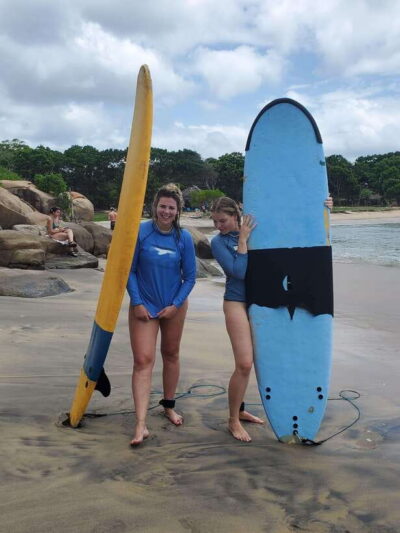
Arugam Bay Surf Lessons : Beginner Surf Experience
Read our review →Browse the lists this tour appears in