
Reviewed · WALKING TOURS
Colombo Walking Tour with Ajeet De Soyza
Colombo reveals itself best at street level, where colonial facades, market lanes, shrines, railway platforms, and seaside promenades all sit within one long city story. Ajeet De Soyza leads this small-group walk through Fort, Pettah, and beyond, adding context about Sri Lanka’s past and its present-day challenges. I like the small maximum of eight people and the chance to ask questions without shouting over a bus group.
I also like the wide mix of sights: the last Kandyan king’s prison cell, the Dutch Hospital, the Red Mosque, Pettah Bazaar, Gangaramaya Temple, and Galle Face. The main thing to consider is the heat. The pace is deliberately easy, and one person found the walk too slow and information-heavy, while another found it tiring by the end of a hot day.
Key points at a glance
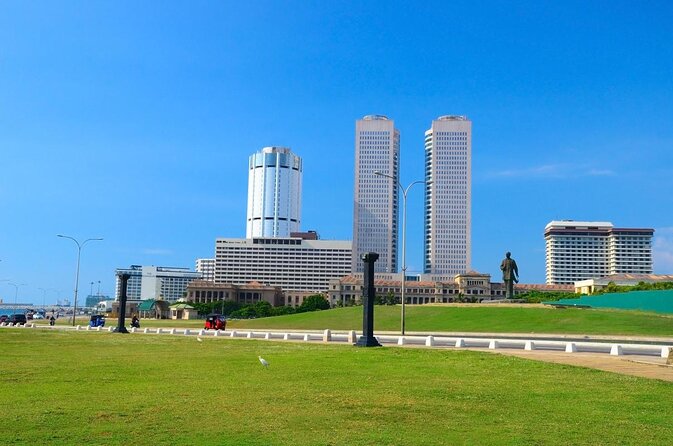
- Ajeet De Soyza leads the walk: Expect plenty of history, cultural context, and time for questions.
- The route crosses several sides of Colombo: Colonial Fort, commercial Pettah, religious landmarks, and the seafront all appear in one outing.
- The group is capped at eight people: This keeps the experience personal and makes conversation easier.
- Private transport can connect walking sections: A review describes an electric tuk-tuk being used between areas, while the tour remains focused on seeing Colombo on foot.
- The $30 price covers useful extras: Bottled water, snacks, government fees, and private transportation are included.
- Plan for the Gangaramaya donation: The temple charges a $2 admission donation per person, which is not included.
Why this Colombo walk works well early in your trip
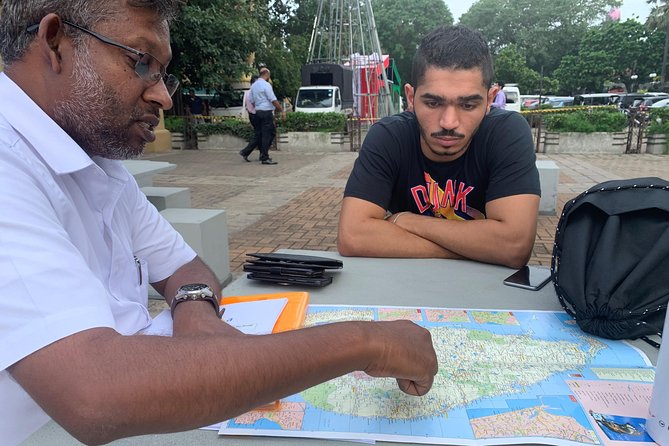
This is not a one-neighborhood stroll. It links Colombo’s old Fort district with Pettah’s working markets, religious sites, and the open space around Galle Face Green. That range gives you a practical first look at how the city fits together.
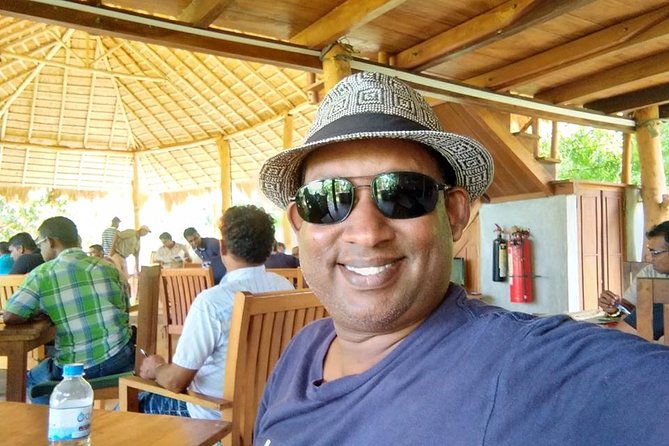
Ajeet’s role is a major part of the experience. The strongest praise centers on his clear explanations, patience, enthusiasm, and ability to answer questions about Sri Lankan culture, colonialism, architecture, politics, and current challenges. That makes this more than a photo stop tour. You get the background needed to understand why Colombo looks and feels the way it does.
I would book it near the start of a Sri Lanka visit. One person who did so found that Ajeet made the tour useful for the rest of the trip, and that is exactly the point of a good city walk. You learn the broad story first, then see later places with better bearings.
The advertised duration is about three to four hours. That is enough time for a substantial introduction, but not enough for long visits at every stop. Several stops last only five or ten minutes, so expect a guided overview rather than a series of full museum visits.
Other guided walks around Colombo:
- Galle Fort Walking tour
★ 4.9 · 285 reviews - Galle Fort Walking Tour with a Resident
★ 5.0 · 88 reviews - Sigiriya: Rock Fortress Private Guided Walking Tour
★ 4.8 · 34 reviews
From the king’s prison cell to Colombo Fort
The walk begins at the Galle Face Hotel and heads toward the historic core. One early stop is the prison cell associated with King Sri Wickrama Rajasinghe, the last king of Sri Lanka. He was captured in 1815 and transferred to Colombo after the fall of the Kandyan Kingdom.
The cell is a small, focused stop, listed at about ten minutes. Its value comes less from the room itself than from the turning point it represents. Ajeet can connect the king’s capture with the end of Kandyan independence and the expanding British role in Ceylon.
Next comes the Old Colombo Dutch Hospital, one of the oldest buildings in the Fort area. The former colonial hospital now houses shops and places to eat, so you see how Colombo reuses historic buildings rather than leaving them frozen in the past.
The walk then passes the Colombo Fort Clock Tower and the central business district. Colonial-era architecture appears alongside modern offices and traffic. The clock tower stop is brief, around five minutes, but it helps you read Fort as a commercial center shaped by several European powers.
Colonial buildings with a commercial past
The Central Bank Currency Museum occupies a grand building begun in 1911. When it opened, it was Colombo’s tallest building. Its Greco-Roman design, with Corinthian columns, offers another reminder that the city’s public buildings were designed to project authority and confidence.
The scheduled stop lasts about ten minutes. You should treat it as a guided exterior and context stop unless Ajeet advises otherwise. The tour information does not promise a full museum visit, so do not book this expecting extended indoor time.
The old Cargills and Millers buildings follow. These are linked to Sri Lanka’s early department-store culture and occupy a site that once held a Dutch building. The five-minute visit is short, but the stop gives you a useful way to connect colonial trade with modern shopping.
The Grand Oriental Hotel receives a longer look, around fifteen minutes. It opened in 1875 with 154 luxury and semi-luxury rooms and was among the earliest grand modern hotels in the East. Its location in Fort reflects Colombo’s role as a port city and colonial administrative center.
I like this sequence because it turns architecture into a story about commerce. You are not just collecting old facades. You are moving from royal power to banking, retail, hospitality, and port trade.
Pettah, the Red Mosque, and the city at work
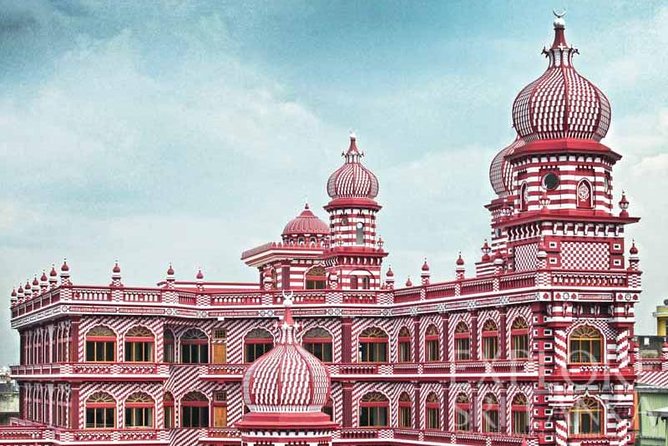
The route then shifts toward Pettah, where the tone changes. The Jami Ul-Alfar Mosque, commonly called the Red Mosque, is a striking religious landmark with distinctive red-and-white design. The visit is listed at about five minutes, so this is mainly a chance to see the building and hear why it matters.
The walk also passes Titus Stores, a family business founded in 1924. It began by selling petrol lamps and later moved into homeware and gifts as electricity spread through Sri Lanka. Small details like this help put ordinary business life alongside the grand colonial buildings.
Old Town Hall is one of the less obvious historic stops. Its Gothic church-like exterior can be easy to pass without noticing, but the building contains a substantial collection of historic material. The stop lasts about fifteen minutes and provides a change from the open street route.
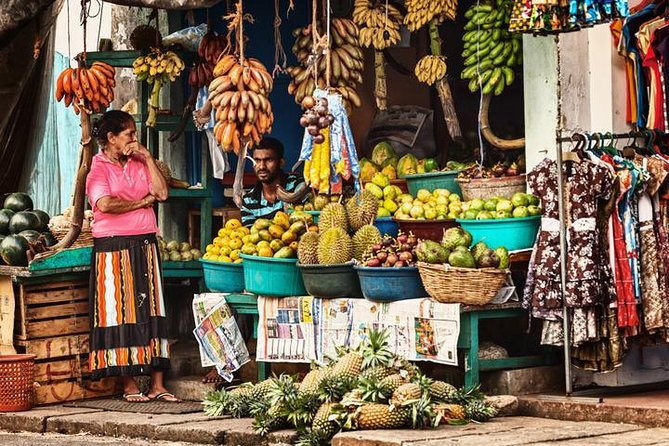
Then comes Pettah Bazaar. This is where the tour feels least like a formal sightseeing circuit. You see a working commercial district rather than a polished heritage quarter. The route lets you experience the noise, movement, shops, and narrow market streets at walking level.
Your comfort matters here. Colombo can be hot, and Pettah demands attention as you move through busy streets. Wear shoes you can walk in for several hours, carry water even though a bottle is supplied, and keep your belongings secure in crowded areas.
Same base, a completely different day:
- Colombo: Private Tuk-Tuk City Tour with All Entry Fees
★ 4.9 · 2,154 reviews - Sri Lanka Personal Tour Driver in private vehicle
★ 5.0 · 747 reviews - Colombo Tuk Tuk City Tour -Sightseeing Entry Fees & Food Included
★ 5.0 · 678 reviews - Udawalawe National Park: Elephant Safari with Expert Guide
★ 4.9 · 641 reviews
Fort Railway Station and the transition to modern Colombo
Colombo Fort Railway Station is another practical landmark. Built by the British, it remains a major city transport hub. The stop lasts about fifteen minutes and adds a useful public-life angle to the grand buildings of Fort.
A railway station tells you something different from a hotel or government building. It is about movement, work, and daily routines. After the quieter architectural stops, this part of the route brings you back to the city as people use it.
The tour may use private transportation between some walking areas. One account describes an electric tuk-tuk connecting sections of the route. That can be welcome in the heat and helps explain how the tour covers several districts without turning the entire three to four hours into a strenuous march.
The experience is still best understood as a walking tour, not a vehicle sightseeing tour. You get out onto the streets and examine places close up, but the transport element can make the route more manageable.
Gangaramaya Temple and the one extra cost
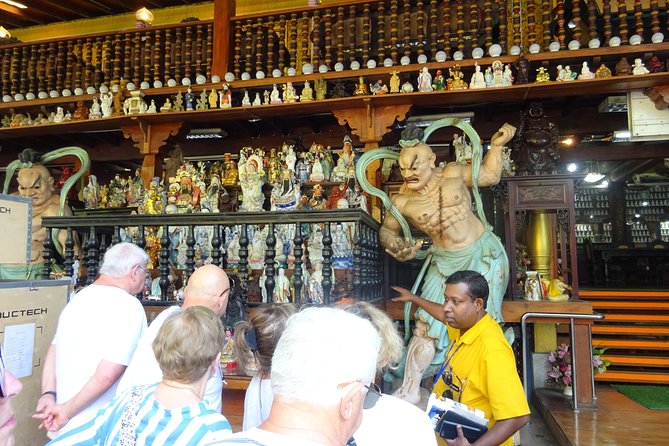
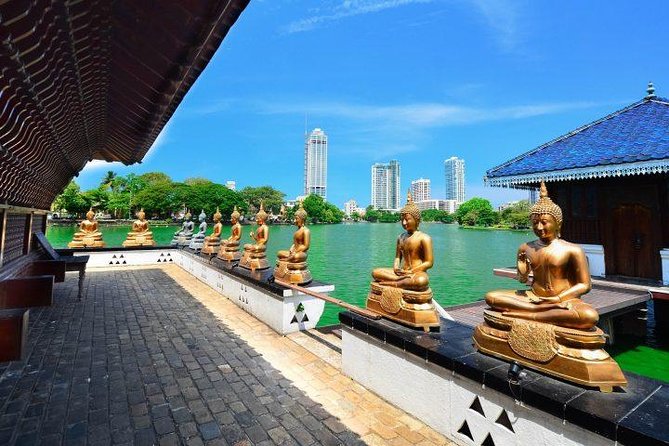
Gangaramaya Buddhist Temple is scheduled for about twenty minutes. It is one of Colombo’s main temples, with architecture influenced by several cultures. That mixture makes it different from the colonial buildings earlier in the day.
The temple donation costs $2 per person and is not included in the $30 price. A ticket is issued by the temple, so keep that small amount ready. This is the only specific admission charge listed outside the included government fees.
Dress and behavior should be respectful at the temple. The supplied information does not spell out a dress code, so follow the usual careful approach for a Buddhist place of worship and listen to Ajeet’s instructions.
The temple is a good point to ask questions. The tour’s strongest feature is the guide’s willingness to explain rather than rush. If you want to understand how religion, architecture, and public life meet in Colombo, this is one of the better places to slow down.
Ending beside Galle Face Green
The tour ends where it starts, at the Galle Face Hotel on Galle Road, in front of Galle Face Green. The hotel opened in the nineteenth century and is one of Colombo’s best-known landmarks. Its long connection with the city’s seafront gives the final stop a fitting sense of place.
The Galle Face Hotel visit is listed at about fifteen minutes. Depending on the time of day, you may also see activity on the Green, with the sea nearby and the city opening out around you.
The route also brings in the Old Parliament building, a Neo-Baroque structure built during British rule for the Legislative Council of Ceylon. Together, the hotel, the Green, and the former parliament show Colombo’s mix of leisure, politics, colonial power, and public space.
Ending at the hotel is convenient if you are staying nearby or want to continue along the seafront. It also makes pickup and drop-off simple. The stated meeting point is easy to identify, and the tour returns to the same location.
What $30 gets you
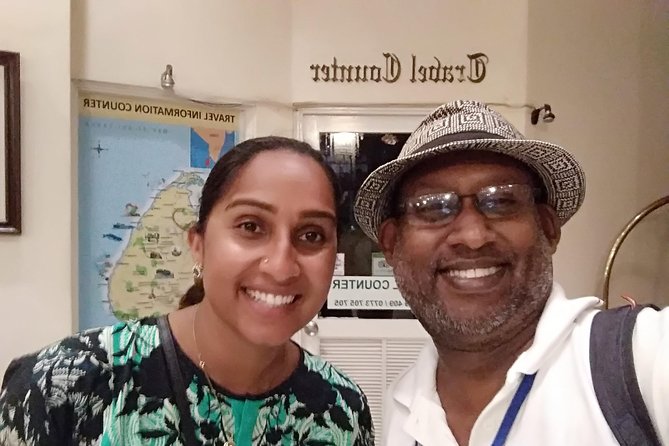
At $30, this tour offers good value if you want a guide-led introduction rather than a bare walking route. The cost includes bottled water, snacks, government fees, and private transportation. The small group limit matters too, since eight people is far more manageable than a large coach party.
The value rests mainly with Ajeet. His explanations cover history, culture, architecture, colonialism, and present-day issues. If you prefer to move quickly from one landmark to another with only short facts, his style may feel too detailed. One low-scoring experience described the walk as slow and overloaded with information.
That criticism is worth taking seriously. Ajeet’s style appears best suited to you if you enjoy questions and context. Several people found his patience and explanations to be the strongest part of the tour, while one solo participant appreciated the personal attention and felt comfortable even while alone.
The $2 temple donation is minor, but remember that it is separate. The tour also requires good weather. If poor weather cancels it, you are offered another date or a full refund. Cancellation is free when made at least 24 hours before the start time, but changes or cancellations inside that window are not accepted.
Who should book this Colombo experience?
I would choose this tour if you want a broad first look at Colombo and prefer local explanation to a fixed audio guide. It suits curious visitors who want to ask why a building matters, how colonial rule shaped the city, and what present-day Colombo is dealing with.
It also works well for cruise passengers or visitors with limited time. The route covers a lot without requiring you to arrange separate transport between Fort, Pettah, the temple, and Galle Face.
I would think twice if you want a fast-paced walk with long visits inside each attraction. The timing is spread across many stops, and Ajeet may spend more time explaining than you expect. A hot day can also make the final stretch tiring, so comfortable shoes, extra water, and light clothing are sensible.
For $30, the combination of a small group, private transport, water, snacks, and a thoughtful guide makes this a strong introduction to Colombo. Book it early in your stay if you want help making sense of the city. Skip it only if you prefer independent wandering or dislike detailed commentary.
FAQ
How long does the Colombo walking tour last?
The tour lasts approximately three to four hours.
Who guides the tour?
Ajeet De Soyza leads the tour.
Where does the tour begin?
The meeting point is the Galle Face Hotel, 2 Galle Road, Colombo 00300, Sri Lanka.
Where does the tour end?
The tour ends at the Galle Face Hotel, in front of Galle Face Green.
How many people can join the tour?
The maximum group size is eight travelers.
Is transportation included?
Yes. Private transportation is included, and the experience remains focused on walking through Colombo’s neighborhoods.
What is included in the price?
The $30 price includes bottled water, snacks, government fees, and private transportation.
Is the Gangaramaya Temple admission included?
No. The temple donation, listed as $2 per person, is not included.
Can I cancel for a full refund?
Yes, if you cancel at least 24 hours before the experience start time. Poor weather or failure to meet the minimum number of participants may also result in an alternate date or a full refund.
Just added around Colombo
- 2-Day Whale Watching & Southern Sri Lanka Tour★ 3.8 · 6 reviews
- Explore Colombo Heritage and Cultural Temples Tour by Tuk Tuk★ 5.0 · 48 reviews
- Day Tour to Elephant Orphanage / spice garden★ 5.0 · 20 reviews
- Muthurajawela Bird Watching Tour From Colombo & Negombo★ 5.0 · 18 reviews
- Exclusive: Muthurajawela Bird Watching Tour with Transfers★ 4.5 · 18 reviews
- Explore Wonders of Sri Lanka 7 Days Private Tour★ 5.0 · 51 reviews
- Colombo/Bentota/Kalutara/Ahungalla: Yala Safari Tour★ 4.6 · 50 reviews
- Private tour in Sri Lanka★ 5.0 · 47 reviews
Walking Tours, compared.
Browse the lists this tour appears in