
Reviewed · SIGIRIYA ROCK FORTRESS
Day tour sigiriya to anuradhapura
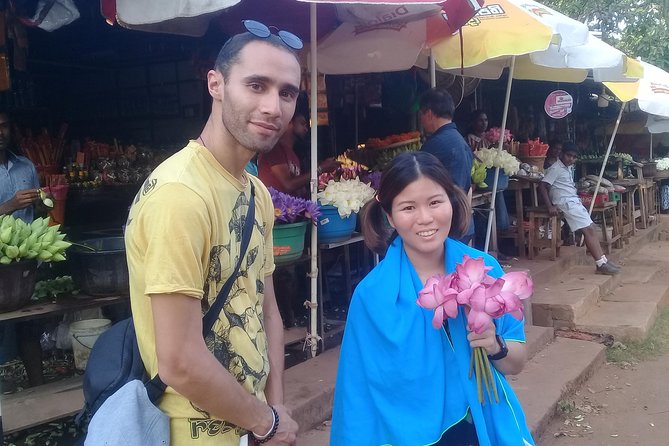
Anuradhapura is the reward for looking beyond Sigiriya’s famous rock. This long day takes you into Sri Lanka’s ancient capital, where giant stupas, sacred trees, and monastic ruins reveal how large and important this early Buddhist center once was.
I like the small maximum of three people, which should make the long drive and sightseeing easier to manage. I also like the range of stops, from Sri Lanka’s first Buddhist temple at Thuparamaya to the carefully built Twin Baths and the sacred Jaya Sri Maha Bodhi. The main drawback is the pace: nine listed stops in 8 to 10 hours can feel tight, especially once you add driving, heat, and ticket stops.
Key points to know before booking
- A full-day ancient-capital tour: Plan on roughly 8 to 10 hours from Sigiriya and back.
- A very small group: The tour accepts no more than three people, useful for a more flexible day.
- Nine important sites: The route includes major stupas, temples, royal-era ruins, bathing pools, and Mihintale.
- Entrance fees are extra: The advertised price does not include admission charges, fees, or taxes.
- Sacred sites require respect: You will visit active Buddhist places, not just silent ruins.
- Sigiriya is the base, not the main stop: The tour begins and ends at your chosen Sigiriya address.
Why Anuradhapura makes a strong second day from Sigiriya
Sigiriya is dramatic and easy to picture: one huge rock, a climb, frescoes, gardens, and wide views. Anuradhapura asks for a different kind of attention. Its sights are spread across a broad archaeological area, and the reward comes from seeing how temples, monasteries, reservoirs, trees, stairways, and bathing pools worked together.
I like pairing the two destinations because they show different sides of ancient Sri Lanka. Sigiriya gives you the royal citadel and its famous climb. Anuradhapura gives you the religious and civic world that shaped the island for centuries.
This is not a quick side trip. From Sigiriya, you need a full day, and the exact driving time is not provided. The advertised duration of 8 to 10 hours includes the return to your Sigiriya address, so your time at each site may be limited. If you want slow photography, long temple visits, or extended time at Mihintale, a private custom itinerary would likely suit you better.
The group limit matters here. With no more than three people, you are not being moved through the ancient capital in a large coach. You can ask questions, spend a little more time at a favorite stop, or adjust your attention to suit the group, although the number of scheduled stops still makes this a busy day.
Other ancient cities and temples from Sigiriya:
- Private Polonnaruwa Sightseeing Day Tour from Sigiriya
★ 5.0 · 31 reviews - Polonnaruwa Sight Seeing Tour and Minneriya Elephant Safari
★ 4.8 · 18 reviews - Private Polonnaruwa Ruins & Minneriya Safari Tour from Sigiriya
★ 5.0 · 18 reviews
Thuparamaya, Sri Lanka’s first Buddhist temple
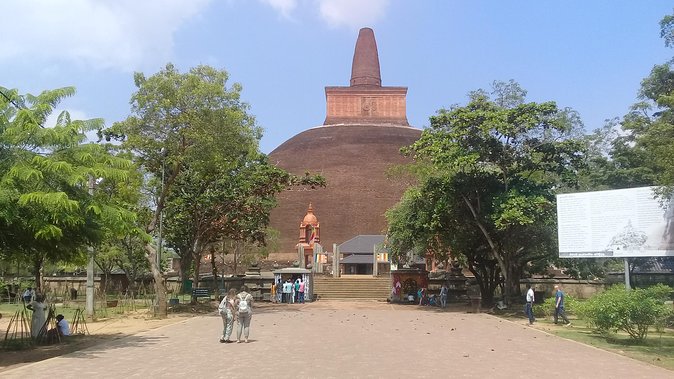
The first stop is Thuparamaya, with about 30 minutes allowed. It sits in the sacred area of Mahamewna Park and is described as the earliest dagoba built in Sri Lanka, dating to the reign of King Devanampiya Tissa.
This is an important place to begin because it gives the day a clear sense of age. You are not simply looking at an old monument. You are seeing a site connected with the early arrival and growth of Buddhism on the island.
Thirty minutes is enough to see the main structure and take in the setting, but not enough for a slow visit. Wear footwear that is easy to remove if required, and remember that this is a sacred place. The tour does not include admission fees, so keep money available for entry charges throughout the day.
Ruwanwelisaya and the scale of royal ambition
The next stop allows about one hour at Ruwanwelisaya, one of Anuradhapura’s great hemispherical stupas. Built by King Dutugemunu around 140 BC, it contains Buddhist relics and remains a sacred destination for many Buddhists.
This is one of the stops where scale does much of the talking. The white stupa is not an intimate ruin. It was built to be seen, honored, and approached with ceremony. You can use the hour to walk around it, observe worshippers, and notice how the monument functions as a living religious site.
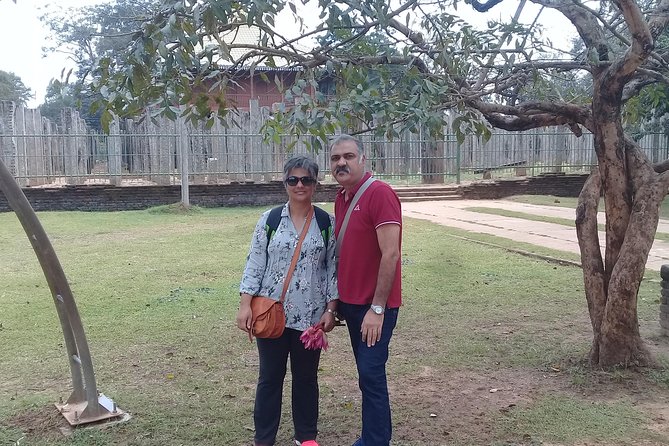
That distinction matters. Anuradhapura is not only an archaeological park. Some of its monuments still hold strong religious meaning. You should dress and behave with that in mind, and you may need to remove your shoes at certain sites.
Jaya Sri Maha Bodhi, a living sacred tree
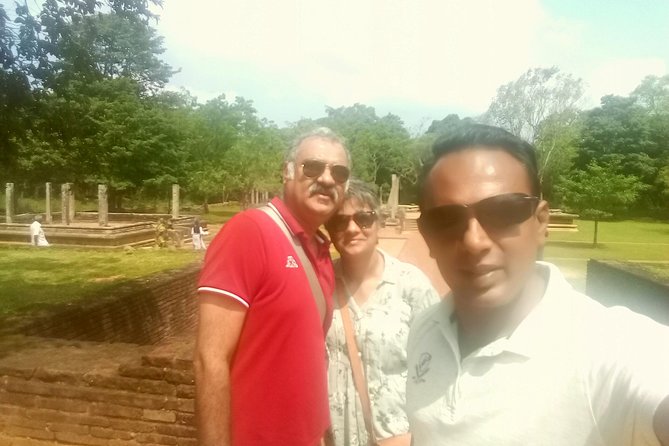
The tour gives one hour to Jaya Sri Maha Bodhi in Mahamewna Gardens. This sacred fig tree is said to have grown from a southern branch of the original Sri Maha Bodhi at Bodh Gaya in India, the place associated with the Buddha’s enlightenment.
The tree changes the mood of the day. Stupas are monumental, but this is a living focus of worship. The surrounding gardens and devotional setting offer a different way to understand Anuradhapura’s importance.
You should not expect this to be a quick photo stop. The area is sacred, and the visit calls for quiet observation rather than rushing in, taking a picture, and leaving. The one-hour allocation is useful here, though the overall schedule may still require you to keep an eye on the clock.
Other trips to the rock from Sigiriya:
- From Colombo: Sigiriya and Dambulla Day Trip with Safari
★ 4.7 · 842 reviews - Organic cooking class sigiriya (kumara & family)
★ 5.0 · 650 reviews - From Sigiriya: Minneriya National Park Private Jeep Safari
★ 4.9 · 415 reviews - From Sigiriya: Minneriya National Park Elephant Safari
★ 4.8 · 365 reviews
Abhayagiri and the enormous monastery ruins
The itinerary includes a 30-minute visit to Abayagiriya Stupa, followed later by an hour at Abhayagiri Dagaba. The descriptions connect the first entry with the enormous Jetavanaramaya stupa, while the later stop focuses on Abhayagiri Vihara, a major monastic complex. Because the names and descriptions overlap, confirm the exact order with the operator before departure.
The important point is that this part of Anuradhapura is about more than one monument. Abhayagiri was a major center associated with Mahayana, Theravada, and Vajrayana Buddhism. Its ruins help show the size and variety of religious life in the ancient capital.
The Jetavanaramaya description refers to a structure that reached about 122 meters, or 400 feet, making it one of the tallest brick structures in the ancient world. That scale is hard to grasp from a short stop, so use your time to look at the brickwork, the open space around the monument, and the way the ruin dominates the area.
The separate one-hour Abhayagiri visit should give you more room to understand the monastery site. Still, the route has many stops, and the real amount of time available may depend on traffic, heat, and how long earlier visits take.
Isurumuniya Temple and the stories attached to it
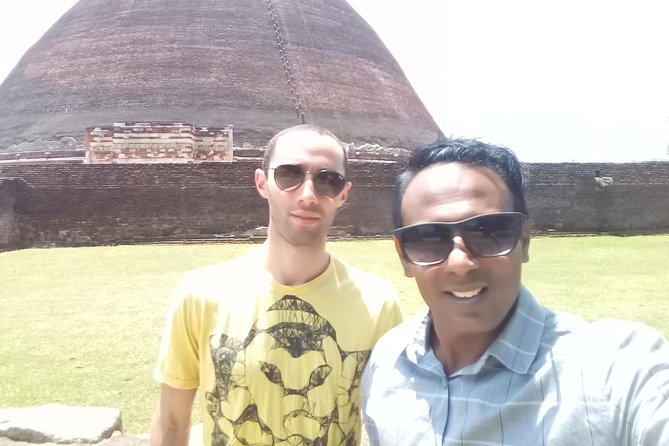
Isurumuniya receives about one hour. The temple is associated with King Devanampiya Tissa and is presented with several traditional stories about figures such as Pulasthi Rishi and King Ravana.
The useful way to approach this stop is to separate tradition from established archaeology. The site carries old stories and local cultural meaning, while its confirmed religious history links it to the early Anuradhapura period. You do not need to accept every legend as fact to appreciate how these stories shape the place.
An hour gives you time to look carefully rather than treating the temple as a drive-by stop. As with the other religious sites, respectful clothing and behavior are important. The tour description does not specify a dress code, so modest clothing is the sensible choice.
The Twin Baths show ancient engineering at close range
Kuttam Pokuna, or the Twin Baths, is scheduled for 30 minutes. These two bathing pools are considered among the finest examples of ancient Sri Lankan bathing tanks.
This is one of my favorite types of stop because it moves the focus away from kings and giant monuments. The pools show practical design, water management, stonework, and daily life within a monastic setting. You can look at the steps, edges, symmetry, and construction details that are easy to miss when you only chase the largest ruins.
Half an hour should work well if you have a guide explaining what you are seeing. It is a short stop, but the site is compact and visual. This is also a good place to slow down for a few minutes after the larger religious centers.
The moonstone and the meaning beneath your feet
The Anuradhapura moonstone, or Sandakada Pahana, is given about 30 minutes. These carved semicircular stones were placed at the bottom of stairways and entrances, and they are a distinctive feature of ancient Sinhalese architecture.
Do not dismiss this as a minor detail. The moonstone is the kind of small feature that can explain how ancient buildings were approached and decorated. Its carvings reward close looking, especially after you have seen the larger stupas and monastery remains.
A guide can add real value here by explaining the symbols and how the moonstone fits into the wider design of a religious complex. The tour is intimate enough that you should be able to ask about details rather than simply following a flag through a crowd.
Mihintale adds a hilltop finish
The final listed stop is Mihintale, about 12.875 kilometers east of Anuradhapura. The site is associated with Missaka Pabbata, a mountain rising roughly 300 meters, and with the traditional arrival of Buddhism in Sri Lanka.
One hour is not a great deal of time for a broad hill site, so ask how much walking and climbing are planned. The listing does not specify the exact route or number of steps. You should be prepared for an active finish rather than assuming this is another roadside monument.
Mihintale gives the day a strong closing theme. After seeing temples and monastic remains in Anuradhapura, you reach a place tied to the spread of Buddhism across the island. It also gives you a change from flat archaeological ground, though the extra distance makes the schedule even more demanding.
Is the $120 price fair?
At $120, the value depends on what you want from the day and whether that price covers one, two, or three people. The supplied details identify the tour price but do not clarify whether it is per person or per booking, so confirm this before paying.
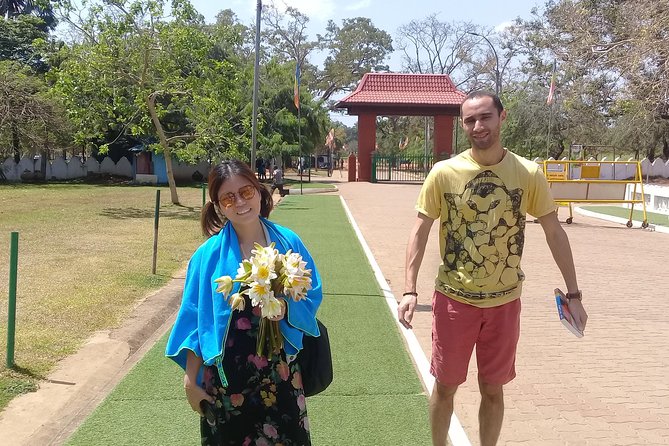
The price includes round-trip transport from your selected Sigiriya address and bottled water, with two bottles provided for travelers. It also buys a very small group, which is useful in a place where the route covers many separate sites.
The important extra cost is admission. All entrance fees, fees, and taxes are excluded. Since the route includes several major religious and archaeological places, you should budget separately rather than treating $120 as the final cost.
For a solo visitor or a small party that values private-style transport and a packed route, the price may be reasonable. If you are traveling on a tight budget, public transport or a simpler transfer could cost less, but it would not offer the same direct door-to-door plan.
Timing, comfort, and what to bring
This is an 8 to 10 hour outing, so start with realistic expectations. You will spend much of the day in transit or moving between sites, and the number of stops means you will not have unlimited time at any one monument.
I would bring:
- Comfortable walking shoes
- Water beyond the two bottles provided
- Sun protection
- Modest clothing for Buddhist temples
- Cash or another accepted payment method for entrance fees
- A phone for the mobile ticket
The tour requires good weather. If poor weather causes cancellation, you are offered another date or a full refund. You can cancel for a full refund up to 24 hours before the start time, but changes or cancellations made inside that window are not accepted.
The tour is near public transportation, though its main advantage is that pickup and return are arranged from Sigiriya. Most people can participate according to the supplied details, but the Mihintale portion may involve more walking or climbing than the shorter temple stops.
How it compares with a Sigiriya-only day
The supplied comments about Sigiriya highlight the rewarding climb, the Lion’s Paws, ancient gardens, frescoes, and wide views. They also point out that the climb can be tiring, that comfortable shoes and water help, and that an early start around 6:30 a.m. can avoid some heat.
Those points are useful if you are combining this tour with Sigiriya Rock Fortress. Sigiriya itself is not included as a stop on this Anuradhapura outing, so do not book this expecting the rock climb. Treat it as the second major heritage day from the Sigiriya area.
A Sigiriya-only day is more focused and physically centered on one site. This Anuradhapura tour gives you greater variety but less time to linger. If your priority is dramatic scenery and one unforgettable climb, Sigiriya may be enough. If you want sacred monuments, ancient city planning, and a broader sense of Sri Lankan history, add Anuradhapura.
Who should book this Anuradhapura day trip?
I would choose this tour if you are staying in Sigiriya, want direct transport, and prefer a small group. It suits you if you would rather see many significant places in one day than spend several days exploring at a slower pace.
It is also a good fit if you are interested in Buddhism, ancient engineering, royal monuments, and living religious sites. The combination of stupas, a sacred tree, a temple, bathing pools, a carved moonstone, and Mihintale gives the day real range.
I would hesitate if you dislike long days, hot outdoor sightseeing, or a fixed schedule. Nine listed stops leave little room for delays. I would also confirm the Abhayagiri and Jetavanaramaya details before booking, since the supplied descriptions use overlapping names.
Should you book it?
Book this tour if you want an efficient, small-group introduction to Anuradhapura from Sigiriya and accept that the day will be busy. The strongest reasons are the maximum of three people, direct round-trip transport, and a route that reaches both major sacred monuments and smaller engineering details such as the Twin Baths and moonstone.
Skip it if you want a slow archaeological visit or if admission costs will stretch your budget. In that case, spend more time at fewer sites, or arrange a custom day with a shorter list.
For most visitors with only one available day, this is a practical way to add Anuradhapura to a Sigiriya itinerary. Just confirm the final price, entrance costs, pickup details, and the exact Abhayagiri stops before you go.
FAQ
Where does the tour start and end?
The tour starts in Sigiriya, with pickup from your chosen Sigiriya address, and ends back at the meeting point.
How long does the tour last?
The activity lasts approximately 8 to 10 hours.
How many people can join the tour?
The maximum group size is three people.
Are entrance fees included?
No. Entrance fees, all fees, and taxes are not included in the advertised price.
What is included in the tour price?
Round-trip transport from Sigiriya and two bottles of bottled water are included.
Which sites are visited?
The listed stops are Thuparamaya, Ruwanwelisaya, Jaya Sri Maha Bodhi, Abayagiriya Stupa, Isurumuniya Temple, the Twin Baths, the Anuradhapura moonstone, Abhayagiri Dagaba, and Mihintale.
Is the tour available with a mobile ticket?
Yes. The experience offers a mobile ticket.
What happens if bad weather cancels the tour?
You will be offered a different date or a full refund if the experience is canceled because of poor weather.
More temple tours in Sigiriya
- From Kandy: Sigiriya Rock & Dambulla Cave Temple Adventure
★ 4.9 · 785 reviews - Private City Day Tour in Anuradhapura
★ 5.0 · 383 reviews - Kandy to Sigiriya Day Tour and Dambulla cave temple with private vehicle
★ 5.0 · 232 reviews - From Colombo: Kandy Temples and Pinnawala Full-Day Tour
★ 4.6 · 144 reviews
Just added around Sigiriya
- A Hidden Gem in Sigiriya: Magical Boat Journey.★ 4.5 · 12 reviews
- Kandy: City Highlights and Ramboda Waterfall Trip★ 5.0 · 4 reviews
- Private Polonnaruwa Sightseeing Day Tour from Sigiriya★ 5.0 · 31 reviews
- Polonnaruwa Sight Seeing Tour and Minneriya Elephant Safari★ 4.8 · 18 reviews
- Sigiriya: Rock Fortress Private Guided Walking Tour★ 4.8 · 34 reviews
- Private Polonnaruwa Ruins & Minneriya Safari Tour from Sigiriya★ 5.0 · 18 reviews
- Sigiriya Lion Rock Hike & Minneriya National Park Safari★ 4.8 · 55 reviews
- Private Jeep Safari at Minneriya National Park – Half Day Tour★ 5.0 · 50 reviews
Sigiriya Rock Fortress, compared.
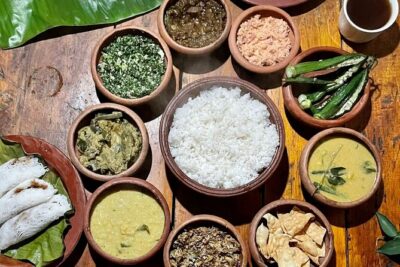
Organic cooking class sigiriya (kumara & family)
Read our review →
Kandy to Sigiriya Day Tour and Dambulla cave temple with private vehicle
Read our review →
Private Day Trip to Sigiriya & Dambulla from Kandy – Aaliya Tours
Read our review →Browse the lists this tour appears in