
Reviewed · GALLE FORT TOURS
Galle Fort Walk with Glamorous Stories
Galle Fort’s best stories are built into its walls. On this walk, you’ll hear how Chinese, Arab, Portuguese, and Dutch traders shaped the harbour, how soldiers reportedly survived a long siege by eating cats and dogs, and why the fort escaped much of the 2004 tsunami’s force. Dilip, your local guide, links grand events to small details such as ballast bricks and coral cooling walls.
I like the walk’s compact size, with a maximum of six people, and its focus on places you might pass without understanding. I also like the way the route mixes architecture with human stories, from a church built after a child’s birth to treaties used to outwit a local king. The main consideration is the weather: this is an outdoor walk with no bottled water, hats, or umbrellas supplied.
Key points to know before booking
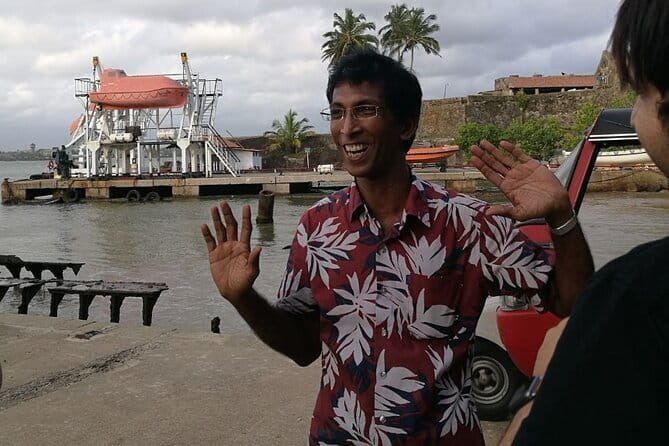
- A small-group walk led by Dilip: The group can be limited to six, though it may not be private if several people book the same time block.
- A 90 to 120 minute route: You begin and finish at Flag Rock Bastion, covering the fort’s major sights on foot.
- Stories beyond colonial dates: Expect tales of cinnamon trade, sieges, secret tunnels, treaties, and the fort’s survival during the 2004 tsunami.
- English-language guiding: The experience includes an in-person English-speaking guide.
- Good value for history fans: At $35 per person, the price pays for a focused local walk rather than transport, meals, or entrance extras.
- Plan for sun or rain: You need to bring your own drinking water, hat, and umbrella if required.
Start at Flag Rock, where Galle’s story opens to the sea
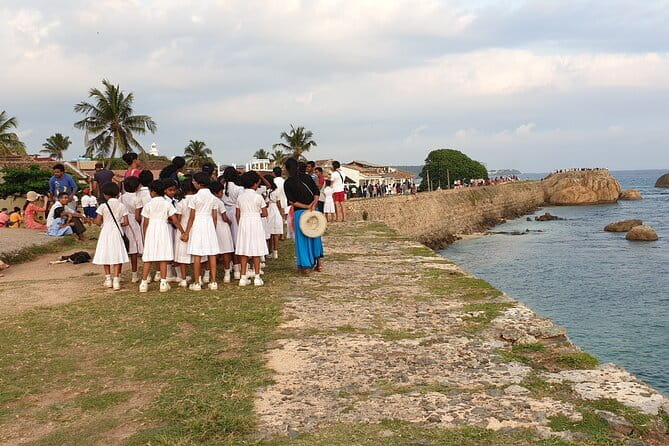
The walk begins at Flag Rock Bastion, marked at 26F8+FXH in Galle. This is a useful starting point because you are already on the fort’s defensive edge, looking toward the harbour and the sea that brought traders, armies, and goods to southern Sri Lanka.
From here, Dilip sets the scene for about four centuries of change. The story reaches back to the old harbour, where Chinese and Arab traders anchored before European powers took control of the trade routes. Cinnamon is an important thread. The ancient trade was strongly connected with Chinese merchants before the Portuguese gained influence and reshaped the port’s fortunes.
You will also hear the proposed story behind the local name Galla. This kind of detail gives the walk a personal feel. Instead of treating Galle Fort as a row of handsome colonial buildings, Dilip connects its name, harbour, trade, and military role.
The starting point is also the finishing point, so you do not need to arrange a pickup at another part of town. You do need to plan your own way back to your hotel or other lodging after the walk.
Other walks inside the old fort from Galle:
- Galle Fort Walking tour
★ 4.9 · 285 reviews - Galle Fort Walking Tour with a Resident
★ 5.0 · 88 reviews - Galle Fort cooking class
★ 5.0 · 60 reviews
The front wall and three bastions show how the fort worked
The front wall, with its three bastions, is one of the clearest places to understand the fort as a military system. You will see more than thick masonry. The walls controlled movement, protected the harbour, and gave defenders positions from which to watch the sea and approaching forces.
The Portuguese first built clay fortifications here. The Dutch later replaced them with stronger stone defenses, creating much of the structure associated with Galle today. The change was not only architectural. It marked a shift in European power and in the way trade was controlled.
Dilip’s stories add some rough edges to the usual colonial account. You may hear how Portuguese soldiers endured a three-month siege while eating cats and dogs. You will also hear how the Dutch replaced the Portuguese and reportedly used two copies of treaties to cheat the local king.
These stories are memorable because they show that empire was not simply a neat sequence of flags. It involved hunger, bargaining, deception, and long periods of uncertainty. If you prefer a strictly academic lecture, the storytelling style may feel informal. If you want history that is easy to remember as you walk, it is a strong part of the experience.
Moon Bastion, Star Bastion, and the fort’s defensive network
Moon and Star are among the bastions included in the route. They help you see how the fort’s defenses were arranged rather than viewing each wall as an isolated monument.
The route also includes the ammunition store and a tunnel. These spaces point to the practical side of colonial rule. Armies needed protected storage, controlled passages, and ways to move through the fort without exposing themselves on open streets.
The tunnel is the sort of feature that can be easy to miss when exploring alone. You might walk past the ammunition store, admire the outer wall, and never understand how the site connected its defensive areas. A guide makes those links clearer.
There is no indication that the tour enters every interior space along the route, so you should think of this as a walking survey of the fort rather than an indoor museum visit. The value comes from seeing the layout while hearing how its parts worked together.
Dutch Reformed Church and the human side of colonial Galle

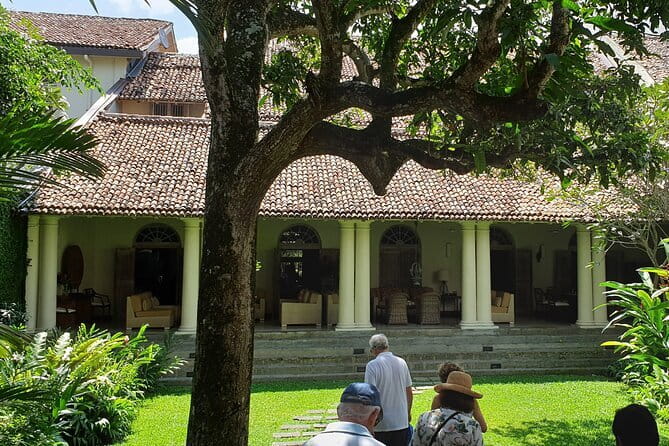
The Dutch Reformed Church, dating to 1755, is one of the tour’s key landmarks. Its story is more personal than a simple construction date. It was built as a vow connected with the birth of a child, giving you a glimpse of private hopes inside an imperial settlement.
That detail matters. Forts and churches can seem remote when you only hear about governors, soldiers, and trade monopolies. A story about childbirth brings the site back to ordinary people and their fears, promises, and family life.
The church also reflects the Dutch period’s lasting mark on Galle. Along with the stone walls and street layout, it helps explain why the fort feels different from the city outside. You will be looking at a place shaped by European military and religious institutions, but one that remains part of present-day Galle.
Dilip has been described as easy to communicate with and able to answer questions about the town’s buildings. That makes this stop particularly useful if you want to ask about architectural details rather than simply follow a set speech.
Same base, a completely different day:
- Whales and Dolphins Watching-Luxury Super Grade Cruiser(Hotel Pick up offered)
★ 5.0 · 1,268 reviews - Galle: Traditional Gems & Jewellery Workshop with Transfers
★ 4.9 · 539 reviews - Sea waves sri lankan cooking class
★ 5.0 · 467 reviews - Snorkeling with Turtles in Mirissa
★ 5.0 · 268 reviews
Streets, coral walls, and bricks carried across the sea

Walking the streets is a major part of the experience. The route does not treat the fort as a collection of isolated stops. You move between bastions, churches, harbour views, and old buildings while learning how the settlement operated as a trading and military center.
Look for the details connected to construction. The tour points out coral used in cooling walls, a practical response to the tropical climate. It also identifies ballast bricks from Dutch ships. Ships needed heavy material for stability when carrying little or no cargo, and those bricks could become building material once the vessel reached port.
These details help you read the fort as a working port rather than a decorative old quarter. Stone, brick, coral, tunnels, and walls all had practical purposes. They also show how materials moved through the same trade system that brought spices and foreign rulers to Galle.
The walk’s pace is described as relaxed. That suits the narrow streets and uneven historic setting, though you should have moderate physical fitness. The tour lasts about an hour and a half to two hours, so it is not a strenuous full-day outing, but you will be on your feet throughout.
Flag Rock and the lighthouse ruins
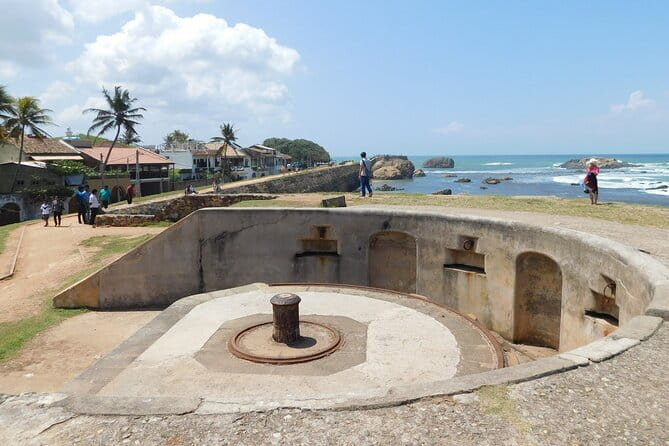
Flag Rock returns the walk to the fort’s seaward edge. The bastion is connected with lighthouse ruins and the old work of guiding or warning ships near the harbour.
This is also one of the places where the military and commercial sides of Galle meet. The fort needed to protect itself, but it also depended on ships arriving safely with goods, soldiers, and news. The sea view helps make that connection plain.
If you choose a late time, the route can finish around the lowering of the fort flag and sunset, as one past itinerary did. That timing is not guaranteed by the tour details, so do not book solely for a sunset ceremony. Still, the possibility makes a later walk appealing if you want the fort at the end of the day rather than in full midday sun.
The tour operates from 8:30 AM to 6:00 PM, Monday through Sunday, during the stated operating period. Confirm your selected time when booking, especially if you want an early start or late finish.
The 2004 tsunami story gives the fort a different weight

One of the most meaningful parts of the walk is learning how Galle Fort’s walls withstood the 2004 tsunami while much of Galle City suffered severe damage.
The story is not presented as a vague claim that old buildings are strong. It shows how the fort’s position and heavy defensive walls affected the force of the waves. You will also hear how the city beyond the walls was hit, giving you a sharper sense of the fort’s relationship with modern Galle.
This stop adds a recent chapter to a site often presented through Portuguese and Dutch history. It reminds you that the fort is not frozen in the colonial past. Its walls still affect the lives and safety of people around it.
Weather can complicate the walk. A sudden thunderstorm once forced part of a tour to stop, and another walk continued in heavy rain with shelter found along the way. Bring your own umbrella or rain protection if the forecast looks uncertain. The guide does not provide umbrellas.
Dutch Hospital, trade, and the fort today

The old Dutch Hospital is now a place for food and drink. It offers a useful contrast to the military sites because you can see how historic buildings are being reused for present-day life.
The tour connects this modern use with the VOC, the Dutch East India Company, and the trading system that helped shape the fort. You will hear about foreign investment and how it is changing the living heritage of Galle.
That is an important part of the walk’s value. You are not only looking backward. You are being asked to notice the tension between preservation, business, and local life. A restored historic building can remain useful, but new investment can also change how a place feels and who it serves.
The Dutch Hospital is a good place to continue your own exploration after the walk, although food and drinks are not included. The guided portion stays focused on history and the fort’s main landmarks rather than becoming a restaurant outing.
What $35 buys you, and what it does not
The price is $35 per person. For that amount, you receive an English-speaking guide and a 90 to 120 minute walk through the main parts of Galle Fort. There is no private transportation, bicycle, bottled water, hat, or umbrella included.
I see the value in the guide rather than in the length. Two hours is enough to give the fort shape and meaning, while still leaving you time to return to a favorite street, church, shop, or café on your own. You are paying for local interpretation and orientation, not a full-day package.
The maximum group size is six, which should make it easier to hear and ask questions. It is not guaranteed to be private, since people booking the same time block may be combined. If you need a private walk, confirm that point before paying.
Group discounts are available, though the exact saving is not stated. Families and small parties should check the final price carefully. With children aged 11 and 13, one family found the pace and subject matter suitable, but every child’s interest in a history walk is different.
Free cancellation is allowed up to 24 hours before the start time for a full refund. Changes or cancellations inside that window are not refunded, and the cut-off uses local time.
Who will get the most from this Galle Fort walk
I would choose this walk if you want the fort explained by someone who has lived in the area all his life. Dilip’s strongest qualities are his local connection, clear English, friendly manner, and ability to answer questions about buildings and events.
It suits first-time visitors who want a useful orientation before exploring alone. It also works for repeat visitors who have seen the main walls but want to understand the trade, military, and family stories behind them.
You should be comfortable walking for up to two hours and managing heat or rain. Wear practical shoes, carry water, and bring sun protection. Since the route covers streets, bastions, and walls, moderate physical fitness is required.
This is less suitable if you want air-conditioned transport, a formal museum tour, or a private vehicle. It is also not the best choice if your schedule cannot allow for weather delays or a full walking route.
Should you book the Galle Fort Walk with Glamorous Stories?
Book it if you want a small, story-led introduction to Galle Fort and value a local guide over transport or luxury extras. The combination of bastions, the 1755 church, the Dutch Hospital, old tunnels, ballast bricks, tsunami history, and siege stories gives you much more than a simple stroll around the walls.
The $35 price is fair for a focused two-hour guide, especially with a group capped at six. Just arrive prepared for the weather, confirm whether your group will be shared, and remember that you arrange your own transport after finishing at Flag Rock Bastion.
FAQ
Where does the Galle Fort walk begin?
The walk begins at Flag Rock Bastion, at 26F8+FXH, Galle 80000, Sri Lanka.
Where does the tour finish?
The tour finishes at Flag Rock Bastion, the same place where it starts. You need to arrange your own transportation back to your lodging.
How long does the experience last?
The walk lasts approximately 1 hour 30 minutes to 2 hours.
Is the tour private?
Not always. The maximum group size is six, but people booked for the same time block may be combined, so the walk may not be private.
What language does the guide speak?
The in-person guide leads the experience in English.
What should I bring?
Bring drinking water, a hat for sunny weather, and an umbrella or other rain protection. These items are not provided.
Is the walk suitable for all fitness levels?
You should have a moderate level of physical fitness because the experience covers Galle Fort on foot and lasts up to two hours.
What is the cancellation policy?
You can cancel up to 24 hours before the experience starts for a full refund. Cancellations or changes made less than 24 hours before the start time are not accepted for a refund.
Just added around Galle
- Udawalawe National Park Safari Tour★ 4.7 · 3 reviews
- Yala National Park Private Safari trip from Galle/Unawatuna/Mirissa★ 5.0 · 12 reviews
- Galle Day Tour with Turtle Hatchery & River Boat Safari★ 5.0 · 4 reviews
- Adam’s Peak Night Hike Experience [One Day & ALL INCLUSIVE]★ 5.0 · 14 reviews
- Yala Safari Drive From Galle, Weligama, Mirissa & Dickwella★ 5.0 · 7 reviews
- Yala National Park Private Safari (All Inclusive) From Mirissa★ 4.5 · 4 reviews
- Whale Watching Experience in Mirissa★ 4.5 · 6 reviews
- Whale Watching Mirissa Ultimate Tour in Sri Lanka with Breakfast★ 4.5 · 6 reviews
Galle Fort Tours, compared.

Galle Fort Heritage Walk by a Certified Heritage Interpreter
Read our review →
Galle Fort and City Cycling Tour – Choice of E-Bike or Manual
Read our review →
From Colombo to Galle Fort and Unawatuna Beach Day Trip
Read our review →
Day Excursions to Galle Fort & Bentota from Colombo
Read our review →
Galle Fort, Boat Safari, Turtles, Amazing Group Tour
Read our review →
Galle Day Tour: Boat Safari, Dutch Fort, Stick Fishing & Turtles
Read our review →Browse the lists this tour appears in