
Reviewed · TOURS IN GALLE
Stilt-Fishing Experience in Ahangama
At Ahangama Beach, fishermen sit high above the water on narrow wooden stilts, casting lines in a tradition linked with the coast around Ahangama and Kathaluwa. You’ll meet four working stilt fishermen, learn how the method works, and have the option to try stilt fishing yourself.
I like the mix of hands-on fishing and village life. You also get a live cooking session, where the catch and fresh local ingredients become lunch. The main consideration is the $140 per-person price for about three hours, so this makes the most sense if you value a private cultural outing rather than a quick beach photo stop.
Key points at a glance
- Four stilt fishermen at Ahangama Beach: See the technique up close before deciding if you want to take a turn.
- A village visit with about 10 local residents: Watch finger weaving and the making of rugs, table mats, chairs, and other household items.
- Fresh fish prepared during a live cooking session: Your catch may be used in the same day’s lunch or dinner.
- An English-speaking guide throughout: The guide connects the beach activity, village visit, and meal.
- Private three-hour format: Only your group takes part, with the tour beginning and ending at Hopper street food in Ahangama.
- Flexible booking protection: You can cancel without charge up to 24 hours before the 10:30 am start.
Why Ahangama’s stilts are the main event
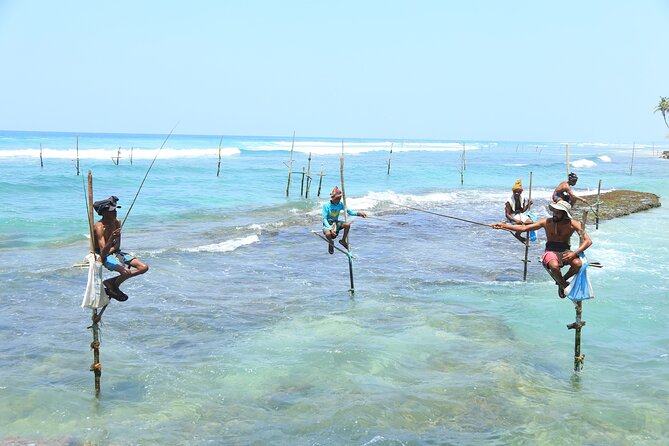
Stilt fishing is not a staged beach game invented for visitors. It is an old fishing method associated with the southern coast, particularly the area around Ahangama and Kathaluwa. A rough estimate in the supplied information places the tradition among about 500 families in the wider Galle area, which gives the activity useful local context.
The sight is striking. A fisherman balances on a crossbar fixed to a tall post in the shallow water, keeping his body still while working a line. The beach setting adds to the appeal, but the real interest is the patience and balance required. You are watching a working skill, not simply posing beside a scenic prop.
The experience begins with four stilt fishermen demonstrating the method. You are shown how the fishermen sit and work from the stilt, then you may try it yourself. The chance to participate is important. Many coastal sightseeing stops give you a few minutes for photographs and little else. Here, you have a chance to understand the awkward position, the height above the water, and the concentration needed to manage the line.
The information does not promise that every participant will catch a fish. It says you may catch several kinds of fish, with the catch used for lunch or dinner that same day. Keep that distinction in mind. The fishing itself is the point, and any catch is a welcome bonus rather than something to count on.
Other fishing trips out of Galle:
- Lagoon Fishing in Bentota
★ 5.0 · 11 reviews - Day out to Galle[Stilt Fishing. Turtle watching.Cinnamon Farm]
★ 4.5 · 9 reviews - Private Galle Day Tour with River Safari, Stilt fishing & Turtles
★ 5.0 · 9 reviews
A 10:30 am start at Hopper street food
You meet at Hopper street food in Ahangama at 10:30 am. The tour returns to this same meeting point, making the three-hour schedule simple to follow. You should allow time to arrive before the start, since the activity does not list hotel pickup or transport from other parts of Galle.
The meeting point also gives the outing a food connection from the beginning. After the beach and village portions, the cooking session becomes the natural finish. Since the activity is private, only your own group participates. That is useful for families, couples, or friends who prefer asking questions and taking their time without joining a large bus group.
The tour runs for about three hours. That is long enough to connect the fishing, village visit, demonstrations, and meal, but it is not an all-day cultural program. If you want a slow morning with plenty of time for photographs, conversation, and food, the actual timing may feel compact.
Meeting the fishermen at Ahangama Beach
The beach portion gives you the clearest sense of place. You see the stilts set in the water and watch experienced fishermen use them before attempting the method yourself. An English-speaking guide explains what is happening throughout the experience, which helps turn an unusual sight into something you can understand.
I especially like the order of the activity. You do not get pushed straight into the water activity without context. First, you watch the fishermen. Then you learn the basic technique. Only after that do you have the option to try. That arrangement suits people who are curious but unsure about balancing on a stilt or handling fishing equipment.
You should also treat the option to participate as exactly that, an option. If you would rather watch, photograph the beach, or leave the practical attempt to others in your group, the tour still includes the demonstration and the village program. The description does not provide details about water depth, safety equipment, changing facilities, or footwear, so ask the operator about those points before booking if they matter to you.
The beach visit is also a good place to remember that traditions can change over time. Stilt fishing is closely associated with Ahangama and nearby Kathaluwa, but the presence of a demonstration does not mean every local fisherman still depends on it as a full-time livelihood. The experience is most valuable when you approach it as a chance to learn about a coastal practice and the people who preserve it.
A village visit with finger weaving and household crafts
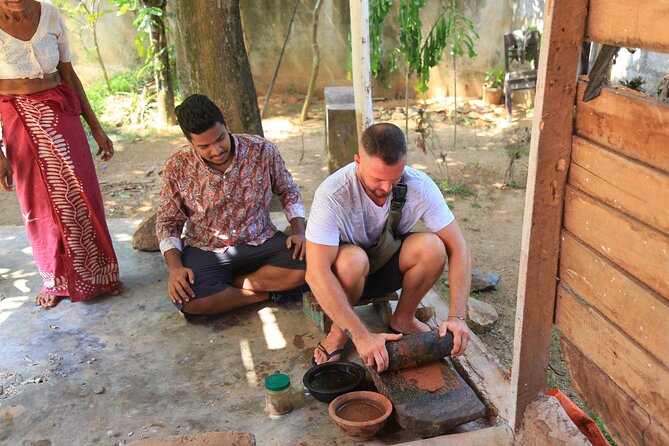
After the beach, you visit a nearby village with a Sri Lankan host. About 10 villagers take part in the cultural portion, showing traditional activities and local skills. The demonstrations include finger weaving and the making of artisan household items such as rugs, table mats, and chairs.
This part keeps the tour from becoming only a fishing excursion. The beach shows one well-known coastal tradition. The village visit adds the quieter work of daily life, where practical objects are made by hand and skills pass between generations. You get to see how local craft is connected to ordinary household use rather than displayed only as decoration.
Finger weaving is particularly suited to a close demonstration because you can watch the movement of the hands and the gradual construction of the material. The description does not say that every visitor makes a finished item, so expect to observe and learn rather than take home a completed craft.
The village section should appeal to you if you enjoy meeting people and seeing how work is done. It may be less satisfying if you are looking only for a fast, photo-focused beach outing. The program asks you to spend time with the hosts, so patience and curiosity matter more here than checking off a long list of sights.
Same base, a completely different day:
- Whales and Dolphins Watching-Luxury Super Grade Cruiser(Hotel Pick up offered)
★ 5.0 · 1,268 reviews - Galle: Traditional Gems & Jewellery Workshop with Transfers
★ 4.9 · 539 reviews - Sea waves sri lankan cooking class
★ 5.0 · 467 reviews - Galle Fort Walking tour
★ 4.9 · 285 reviews
Cooking a Sri Lankan lunch from local ingredients
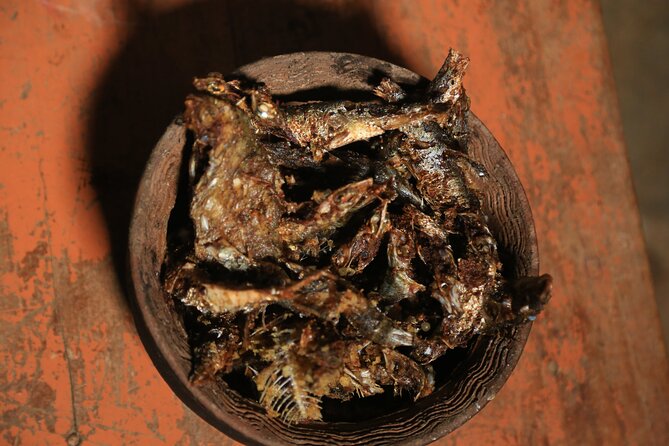
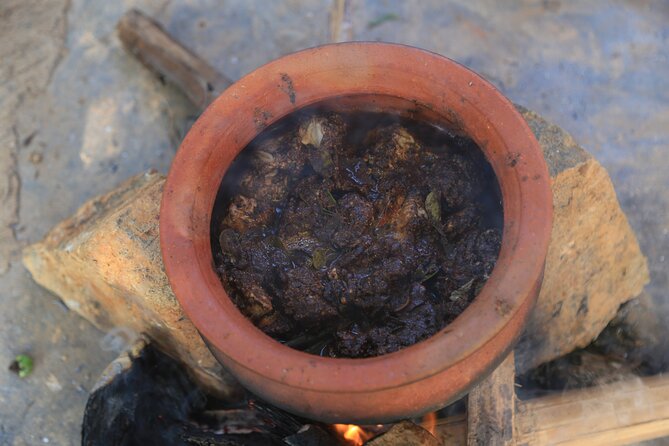
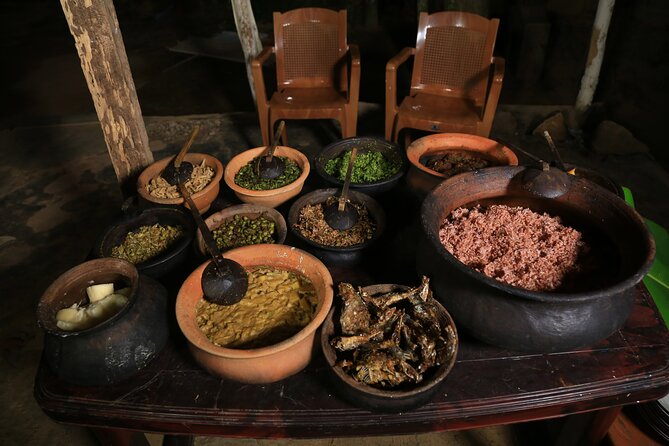
The meal is not simply served at the end. You watch a live cooking session and see a range of Sri Lankan recipes prepared in front of you. The ingredients are described as fresh, heirloom, organic, and locally sourced, with the stilt-fishing catch included when available.
That gives the food real purpose. You have seen the fishermen at work, then the catch becomes part of the same day’s meal. The connection between fishing and cooking is stronger than a standard restaurant lunch because you can follow the food from the water to the plate.
You also receive tea and snacks. The menu is not specified, and the activity does not give a list of dietary substitutions. If you have allergies, follow a special diet, or avoid fish, contact the operator before the day of the tour. The description supports a meal based around Sri Lankan recipes and fish, but it does not promise a particular dish or alternative menu.
I like the live preparation because it gives you a practical look at Sri Lankan food. You can watch how fresh ingredients are handled, ask questions through the English-speaking guide, and see how a home-style meal comes together. Just do not expect a formal cooking school with a printed recipe booklet unless the operator confirms that separately.
The phrase authentic Lankan lunch suggests a local meal rather than a hotel buffet. That is a plus for you if food is one of the main reasons you book cultural activities. It also means the experience may be less predictable than a restaurant meal. The exact dishes can depend on the catch and the ingredients available that day.
What the private format adds
This is a private activity, so only your group takes part. That changes the rhythm of the day. You can ask the English guide to explain the stilt technique again, spend more time watching a craft demonstration, or discuss the ingredients during the cooking session without trying to keep up with a large crowd.
Private does not always mean luxurious. The $140 price per person needs to be judged against what is included: roughly three hours, the guide, the beach demonstration, the chance to try fishing, a village visit, craft demonstrations, tea, snacks, and a cooked meal. You are paying for access to several connected activities and local hosts, not simply for transport to the beach.
The value is strongest for a small group that wants a personal cultural program. A couple or family can share the cost of a private outing and make use of the guide’s attention. For a solo visitor, the per-person cost may feel harder to justify, especially if you are mainly interested in photographing the stilts and do not care much about the cooking or village visit.
Group discounts are available, though the actual discount is not stated. Ask for the current group rate before booking. Since the activity is often booked well in advance, with an average booking lead time of about 87 days, checking early is sensible if you are visiting Ahangama on fixed dates.
Timing, comfort, and practical limits
The 10:30 am start gives you a full morning at the beach and places lunch within the activity window. The tour ends back at Hopper street food after about three hours. There is no separate end point to arrange, which makes planning easier if you are staying or meeting in Ahangama.
The experience is near public transportation, and service animals are allowed. No broader accessibility information is provided. The beach, stilts, village paths, and cooking setting may involve conditions that are not suitable for every mobility level, so ask the provider specific questions before reserving if you need step-free access or other support.
You should also ask what to bring. The details provided do not specify towels, spare clothes, footwear, sunscreen, or protection from the sun. Because you may sit on a fishing stilt in the water, practical beach clothing is a sensible choice, but the operator should confirm the exact arrangements.
The experience is offered in English through the guide. That is helpful during the fishing instruction and the village demonstrations, where small details make the difference between simply watching and understanding what you see.
Who will get the most from this outing
I would choose this for you if you want several local activities tied together by food. The best fit is someone who enjoys meeting craftspeople, asking questions, trying a traditional skill, and eating a meal prepared during the visit.
It also works well for people who have already seen Sri Lanka’s major sights and want a more focused coastal activity. You get a specific view of Ahangama: fishing from the sea, craft work in a nearby village, and local cooking in one short program.
Families may appreciate the variety, though younger children may not be able to try the stilt fishing. The supplied information does not give an age limit, so confirm the rules before booking for children.
This may not suit you if you want a long fishing session, a guaranteed catch, or a full-day tour. It also may not be the right choice if you prefer to explore independently and dislike a hosted schedule. The village and meal are central parts of the experience, not optional filler around a quick photograph.
The activity carries a 4 out of 5 rating from three published ratings. That is a small sample, so I would treat it as a useful signal rather than a firm verdict. The most reliable reasons to book are the clear program, private format, local hosts, and chance to take part in the fishing and cooking.
Cancellation and booking advice
You can cancel for a full refund up to 24 hours before the local start time. Changes or cancellations made less than 24 hours before the 10:30 am start are not accepted for a refund.
Confirmation is sent within 48 hours of booking, subject to availability. Because the experience is frequently reserved well ahead, do not leave it until the last minute if the date matters to you. Check the group discount, transport arrangements, dietary needs, and beach practicalities before you pay.
Should you book the Ahangama stilt-fishing experience?
Book it if you want more than a beach photograph. The strongest part is the link between the four fishermen, your own chance to try the method, the village crafts, and a meal prepared from local ingredients. That combination gives you a clear sense of how fishing, handwork, and food fit together in coastal Sri Lankan life.
Think twice if $140 per person feels high for a three-hour outing, or if you need a guaranteed catch and a detailed schedule for every minute. For the right group, the private format and several local activities make the price easier to defend. For a visitor who wants only to see the stilts, a shorter and cheaper beach stop may be enough.
FAQ
Where does the experience start and end?
It starts at Hopper street food, X9C8+G74, Ahangama, Sri Lanka. The activity ends back at the same meeting point.
What time does the tour begin?
The tour starts at 10:30 am and lasts about three hours.
Is stilt fishing included as a hands-on activity?
You will watch four experienced stilt fishermen and learn how the method works. You then have the option to try stilt fishing yourself.
Is lunch included?
The experience includes a live cooking session with an authentic Sri Lankan lunch, tea, and snacks. The catch from the fishing activity may be used in the same day’s lunch or dinner.
How many people take part?
This is a private tour, so only your group participates. Group discounts are available, but the exact discount is not specified.
Can I cancel for a full refund?
Yes. You can cancel at least 24 hours before the local start time for a full refund. Cancellations or changes made less than 24 hours before the start are not accepted for a refund.
Just added around Galle
- Udawalawe National Park Safari Tour★ 4.7 · 3 reviews
- Yala National Park Private Safari trip from Galle/Unawatuna/Mirissa★ 5.0 · 12 reviews
- Galle Day Tour with Turtle Hatchery & River Boat Safari★ 5.0 · 4 reviews
- Adam’s Peak Night Hike Experience [One Day & ALL INCLUSIVE]★ 5.0 · 14 reviews
- Yala Safari Drive From Galle, Weligama, Mirissa & Dickwella★ 5.0 · 7 reviews
- Yala National Park Private Safari (All Inclusive) From Mirissa★ 4.5 · 4 reviews
- Whale Watching Experience in Mirissa★ 4.5 · 6 reviews
- Whale Watching Mirissa Ultimate Tour in Sri Lanka with Breakfast★ 4.5 · 6 reviews
Tours in Galle, compared.
Whales and Dolphins Watching-Luxury Super Grade Cruiser(Hotel Pick up offered)
Read our review →
Traditional Gems & Jewellery Workshop with Transfers
Read our review →

Galle/Mirissa/Hiriketiya: Drop to Ella & Udawalawa Safari
Read our review →Browse the lists this tour appears in