
Reviewed · COOKING CLASSES
Hands-On Cooking Class in Anuradhapura: Cook Like a Local
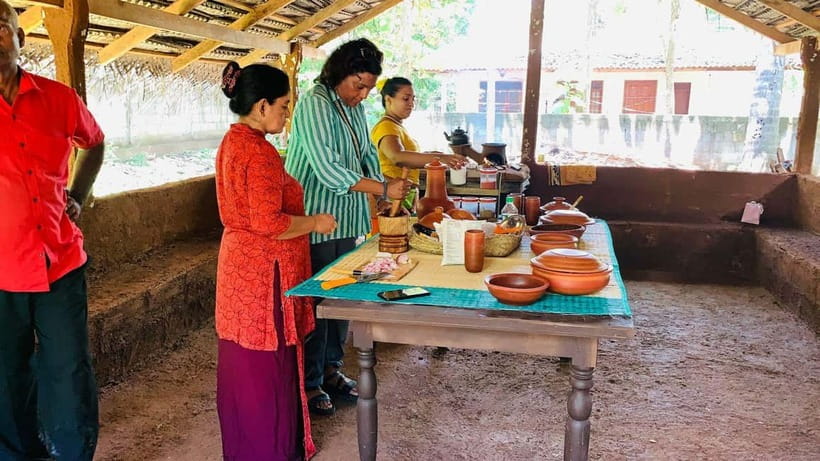
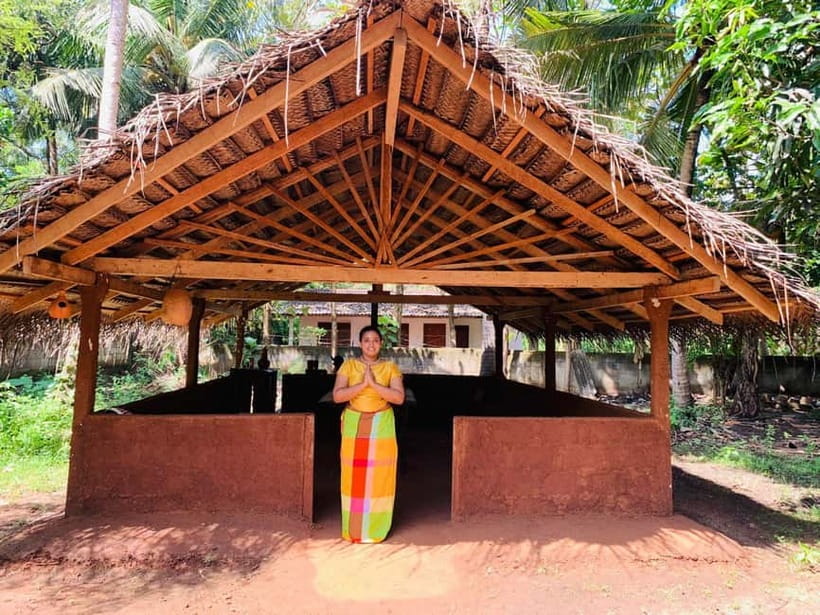
The best part of this Anuradhapura cooking class is that you do not just watch someone stir a curry. You grind spices on a stone, scrape coconut by hand, collect a coconut from the tree, and cook over a wood-fired stove in a small clay kitchen beneath a coconut-leaf roof. It feels tied to village life and the old Rajarata way of cooking.
I like the hands-on tools and methods, since they explain how flavor is built before the food reaches the pot. I also like the menu, especially the ambarella curry, banana blossom dish, lake fish curry, and coconut sambal. The main thing to consider is that a three-hour session in a rustic, open-air kitchen may mean heat, smoke, and mosquitoes, so bring repellent.
Key points at a glance
- Cook in a clay kitchen: The class takes place under a traditional coconut-leaf shelter in a peaceful village setting.
- Use old kitchen tools: Grind spices with a miris gala and scrape coconut with a hiramanaya.
- Make a full Sri Lankan meal: Prepare rice, lake fish curry, ambarella, pumpkin, greens, banana blossom, and sambal.
- Work over firewood: A traditional stove adds smoke, warmth, and a slower cooking rhythm.
- Finish with local sweets: Curd with treacle and ripe fruit round out the meal.
- Private and flexible: The class lasts three hours, is conducted in English, and allows cancellation up to 24 hours before the activity.
A village kitchen near ancient Rajarata
Anuradhapura is famous for its sacred sites and enormous ancient monuments, but its food traditions tell another part of the story. This class connects your meal to Rajarata, the old kingdom centered in Sri Lanka’s North Central Province.
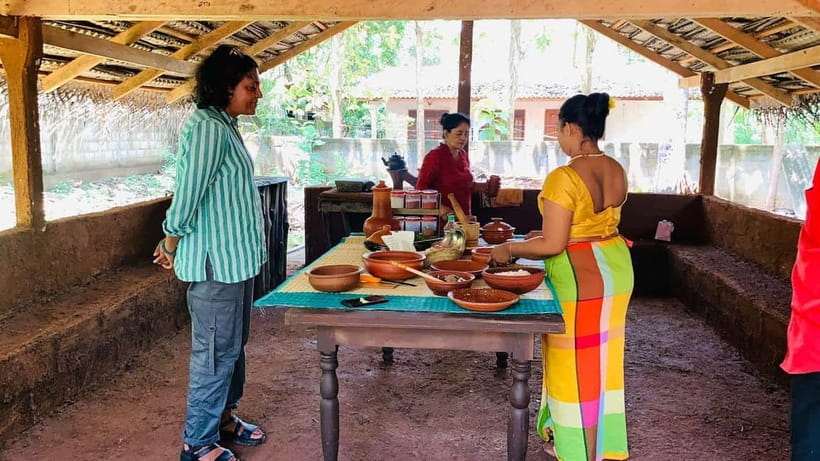
You meet at GK Immersions’ clay house kitchen. The setting has a coconut-leaf roof and a simple village feel, rather than the polished look of a hotel cooking school. That matters. You see the tools, fuel, and ingredients in the setting where they make sense.
The activity is private, which gives you room to ask questions and handle each stage yourself. The instructor speaks English, and the class is designed around doing, not simply observing. If you want a cooking lesson that also gives you a close look at household traditions, this format has a clear advantage.
You receive a refreshing local drink at the start. Then the work begins with the ingredients and tools that shape the meal.
Other ancient cities and temples from Anuradhapura:
- Private City Day Tour in Anuradhapura
★ 5.0 · 383 reviews - Explore & Ride the history of anuradhapura with Vogel Tours
★ 5.0 · 62 reviews - Delve Into Ancient Anuradhapura with Optional Visit to Mihintale
★ 5.0 · 42 reviews
Picking a coconut and preparing the basics
One unusual part of the class is the chance to pick your own coconut straight from the tree. That small task gives you a useful reminder: coconut is not a minor garnish in Sri Lankan food. It appears in sambal, curries, vegetable dishes, coconut milk, and sweet courses.
You then learn to scrape coconut with a hiramanaya, a traditional coconut scraper. It is a practical household skill, and the motion is simple once you get the hang of it. Freshly scraped coconut has a texture and smell that packaged coconut cannot quite match.
The process also slows the class down in a good way. Instead of rushing from recipe to recipe, you see how several common ingredients are prepared before cooking starts. I would expect some mess on your hands, but that is part of the point.
Grinding spices on the miris gala
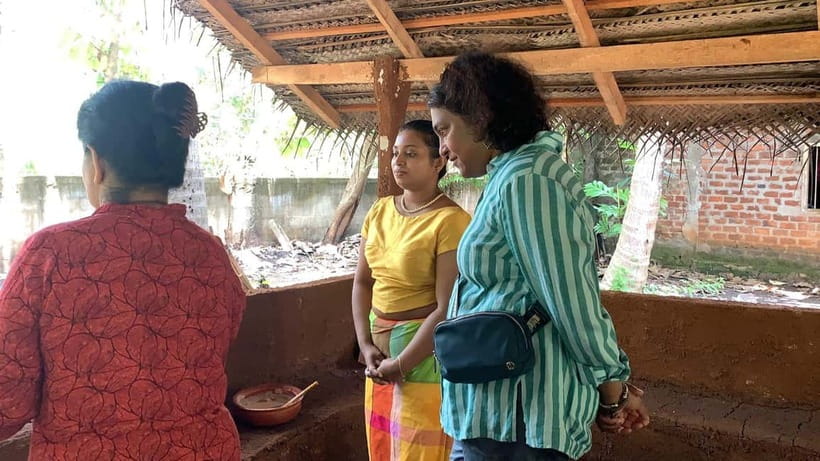
The miris gala is a traditional stone grinder used to crush spices and other ingredients. You get to grind your own mixture and notice the aroma changing as the spices break down.
This is one of the strongest parts of the experience for anyone who wants to understand Sri Lankan cooking rather than simply eat it. Many curries can look similar once they reach the table, but the early work with spices helps explain why their flavors differ.
The class gives you direct instruction on which spices and vegetables to use. That is useful for beginners, since Sri Lankan cooking often combines ingredients in ways that may not be obvious if you are used to Western recipes.
You should not expect a quick shortcut here. Stone grinding takes effort, and the class is built around the traditional method. If you prefer a demonstration with no kitchen work, this may feel slower. If you enjoy learning by touch, smell, and repetition, it is likely to be a highlight.
Cooking over coconut-shell firewood
The main cooking takes place on a wood-fired stove. Coconut shells can serve as fuel, and the dishes are prepared in clay pots.
This changes the pace and feel of the meal. A fire needs attention, and clay pots encourage steady cooking rather than hurried heating. The smoky scent also becomes part of the food, especially in dishes that simmer for a while.
There is a practical side to this. A rustic stove can produce heat and smoke, and the cooking area is not described as an air-conditioned indoor kitchen. Wear light, comfortable clothing and bring mosquito repellent. One useful tip from the experience is especially simple: repellent can make the session more pleasant.
The firewood method is not just decoration. It shows how a family meal was, and in some places still is, made with basic fuel and local materials. You are learning a cooking technique, but you are also seeing the work behind an everyday Sri Lankan meal.
Same base, a completely different day:
- Minneriya National Park Elephant Jeep Safari Private Tour
★ 5.0 · 68 reviews - Minneriya National Park | Private Safari
★ 5.0 · 59 reviews - Sigiriya Hike & Minneriya Safari Private Full Day Tour
★ 5.0 · 56 reviews - Sigiriya & Habarana: Sunrise Hot Air Balloon Ride Experience
★ 5.0 · 47 reviews
The rice and curry menu
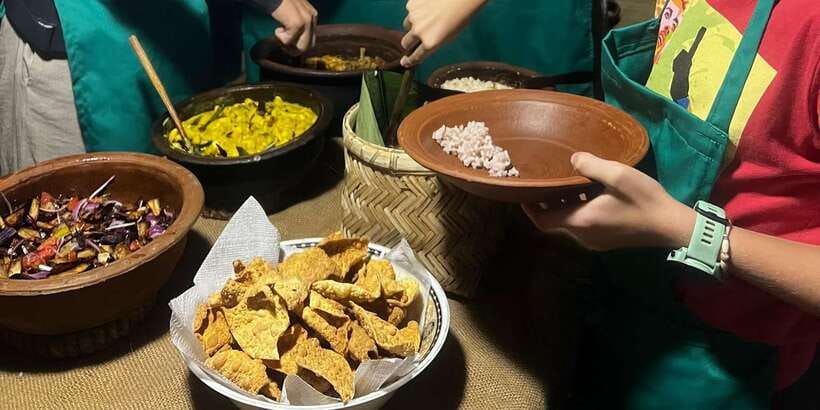
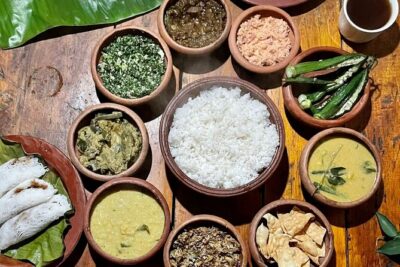
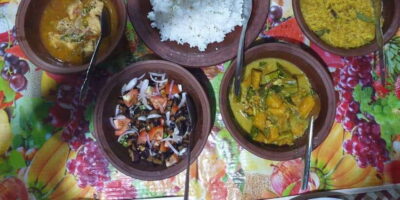
The menu is generous for a three-hour class. You prepare rice, lake fish curry, ambarella curry, kathurumurunga mallum, coconut sambal, pumpkin curry, and banana blossom mallum. The meal ends with curd, treacle, and ripe fruit.
Sri Lankan meals are often built around several small dishes rather than one main plate. This class gives you a clear example of that pattern. Rice provides the base, while curries, greens, sambal, and vegetables bring different levels of heat, sweetness, acidity, creaminess, and texture.
Rice, the center of the plate
You prepare either yellow rice or white rice. White rice is the plain foundation of the meal, while yellow rice brings color and added seasoning.
Rice may sound basic compared with the curries, but it is essential here. It lets you understand how the other dishes are served and balanced. A spoonful of spicy sambal tastes different with rice, while a creamy pumpkin curry softens the heat of stronger dishes.
Ambarella curry
Ambarella is a tropical fruit that can be cooked as a savory dish. Its tangy flavor gives the meal a sharp edge, and it is a good example of Sri Lankan cooks treating fruit as a vegetable.
This is one of the more distinctive dishes on the menu. If you want to try ingredients that are difficult to find in an ordinary cooking class, ambarella gives you that chance.
Banana blossom mallum
Banana blossom becomes a savory dish with an earthy flavor and firm texture. It is another example of making use of the whole plant, not just the fruit.
The banana blossom dish also adds variety to the meal. You are not simply cooking several similar curries. You are working with a flower, a tropical fruit, leafy greens, fish, pumpkin, rice, and coconut.
Lake fish curry
The lake fish curry uses locally caught fish, spices, and coconut milk. It brings a creamy, fragrant element to the plate and connects the meal to the waters around the Rajarata region.
The exact fish is not specified, so you should treat the dish as a local preparation rather than expecting a particular species. If you do not eat fish, check with the provider before booking, since the listed menu includes it as a central dish.
Kathurumurunga mallum
Kathurumurunga is a leafy green mixed with coconut and spices. The result is lighter than a coconut-milk curry and adds a fresh, leafy contrast to the richer dishes.
Mallum is also a useful Sri Lankan term to encounter. It generally refers to finely prepared greens mixed with coconut and seasoning. You get to see how a simple vegetable dish can sit alongside several more strongly flavored preparations.
Coconut sambal and pumpkin curry
Coconut sambal combines freshly grated coconut, red chili, lime, and onion. It is spicy, sharp, and bright, and you can adjust each mouthful by mixing it with rice or a milder curry.
Pumpkin curry provides the soft, gently sweet counterpoint. It is creamy and comforting, with enough spice to keep it firmly within the same meal. Together, the sambal and pumpkin show how a Sri Lankan plate can move from fiery to mild without becoming dull.
Sitting down to the finished meal
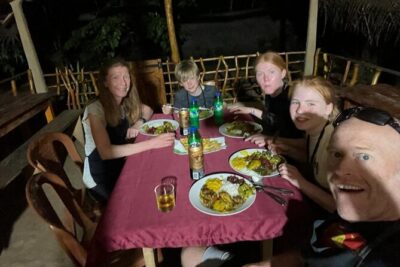
After the cooking, you eat what you have prepared. This is more satisfying than receiving a plate at the start because you understand the work behind each dish.
You have handled the coconut, ground the spices, watched the fire, and prepared ingredients that may be new to you. The finished meal becomes a useful recap of the class. You can taste how the smoky stove, fresh coconut, spice mixture, and slow cooking affected the result.
The sweet finish is fresh curd with treacle and ripe papaya. Curd and treacle are a classic Sri Lankan combination, with cool tangy dairy balanced by dark sweetness. Papaya keeps the ending simple and fresh.
The class has earned a 5 out of 5 rating from five submitted bookings, and the strongest praise centers on the clear instructions, friendly teaching, and the full presentation of village cooking methods. One especially useful point is that the lesson covers the background, tools, ingredients, and preparation, not just the final recipes.
What the three-hour format means
Three hours is enough time to cover the tools, prepare several dishes, cook them, and eat. It is also long enough for the session to feel like an activity rather than a quick tasting stop.
The private format should help if you want to ask about ingredients or repeat a technique. It may also suit couples, families, or small groups who prefer not to work beside strangers.
There is a tradeoff. A menu this broad means you may not spend a long time perfecting every single recipe. The class is best viewed as an introduction to several Sri Lankan dishes and methods, not as an advanced course in one curry.
Starting times depend on availability. Since the session happens in a village kitchen, confirm the meeting details when booking and allow enough time to find GK Immersions, listed on Google Maps as GK Immersions, Best things to do provider in Anuradhapura.
Price, flexibility, and practical value
At $40 per person, the price includes instruction, ingredients, the full meal, a welcome drink, and the use of traditional tools. It also includes an activity that goes beyond food: picking a coconut, grinding spices, scraping coconut, and cooking with firewood.
I consider that fair value if you want a private cultural activity rather than a restaurant meal. You are paying for three hours of guided work and a substantial lunch or dinner, while also getting a closer look at village cooking.
The value is weaker if your main goal is simply to eat Sri Lankan food cheaply. An ordinary local meal will cost less. This class makes sense when you want to understand how the meal is made and take part in the process.
You can reserve now and pay later, which helps if your Anuradhapura schedule is still shifting. Cancellation is free up to 24 hours before the activity for a full refund. The activity is listed as wheelchair accessible, though you may want to confirm the exact kitchen layout and surfaces if that matters for your visit.
Who should book this cooking class
I would choose this class if you enjoy food, local customs, and practical activities. It is especially suitable for:
- First-time visitors who want more than temple sightseeing
- People curious about Sri Lankan spices and coconut-based cooking
- Couples or families who prefer a private activity
- Home cooks who want to learn traditional tools
- Anyone looking for a three-hour cultural activity in Anuradhapura
It may not suit you if you dislike heat, smoke, outdoor conditions, fish, or hands-on kitchen work. The menu is substantial but not presented as a choice of many alternatives, so ask about dietary needs before reserving.
Should you book it?
Book this experience if you want to connect Anuradhapura’s ancient Rajarata setting with the practical food traditions of village life. The stone grinder, coconut scraper, clay pots, firewood stove, and unusual local ingredients give the class more character than a standard demonstration.
I would be less quick to book if you only want a short food tasting or an air-conditioned kitchen. For most people who have three hours free and want to cook rather than watch, the $40 price is reasonable, the private format is useful, and the menu offers a memorable introduction to Sri Lankan home cooking.
FAQ
Where does the cooking class take place?
The activity takes place at a clay house kitchen shaded by a traditional coconut-leaf shelter. It is located in the North Central Province of Sri Lanka, near Anuradhapura.
How long does the cooking class last?
The class lasts three hours. Starting times depend on availability.
How much does the experience cost?
The listed price is $40 per person.
Is the class private?
Yes. The activity is offered as a private group experience.
What language does the instructor speak?
The instructor speaks English.
What cooking tools will I use?
You can grind spices with a miris gala, scrape coconut with a hiramanaya, and cook with a traditional wood-fired stove.
What dishes will I prepare?
The menu includes rice, lake fish curry, ambarella curry, kathurumurunga mallum, coconut sambal, pumpkin curry, and banana blossom mallum.
Is dessert included?
Yes. The meal ends with fresh curd and treacle, plus ripe fruit.
Is a drink included?
Yes. You receive a refreshing local drink when you arrive.
Can I cancel the booking?
You can cancel up to 24 hours in advance for a full refund. You can also reserve now and pay later.
More cooking classes in Anuradhapura
- Ella: Traditional Sri Lankan Cooking Class
★ 4.9 · 788 reviews - Organic cooking class sigiriya (kumara & family)
★ 5.0 · 650 reviews - Kandy Village Cooking Class
★ 5.0 · 536 reviews - Sea waves sri lankan cooking class
★ 5.0 · 467 reviews
Just added around Anuradhapura
- Yala National Park: 7 hours or 12 hours Leopard Wild Safari★ 4.7 · 11 reviews
- Wilpattu National Park Safari Tour from Kandy★ 5.0 · 3 reviews
- One Day Tour – Sacred city of Anuradhapura & Sacred city of Mihintale. (Sunset)★ 4.5 · 23 reviews
- Wilpattu Half Day Safari From Anuradhapura★ 5.0 · 4 reviews
- Minneriya National Park Half Day Elephant Safari★ 5.0 · 4 reviews
- Adventure safari Experience in Hurulu Eco Park, Sri Lanka★ 5.0 · 18 reviews
- Sunrise or sunset tour pidurangala Rock and Sigiriya Rock★ 5.0 · 4 reviews
- Kaudulla National Park Shared Safari★ 5.0 · 7 reviews
Cooking Classes, compared.
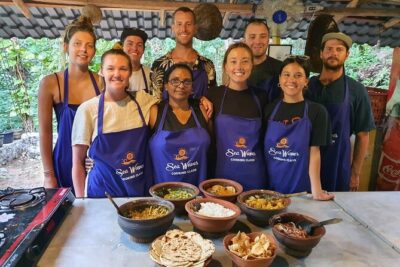
Organic cooking class sigiriya (kumara & family)
Read our review →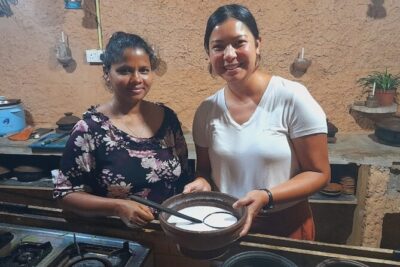
Sri Lankan Cooking Class with Neranji at Homestay
Read our review →
Browse the lists this tour appears in