
Reviewed · TEA PLANTATIONS & FACTORIES
Weligama: Pottery Workshop with Tea and Snacks
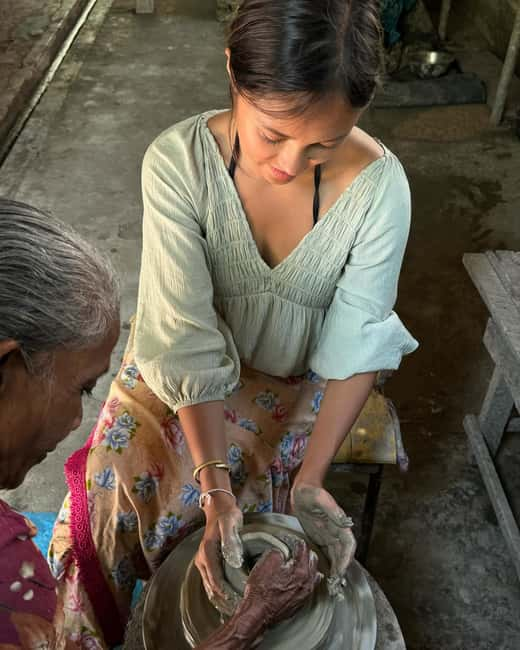
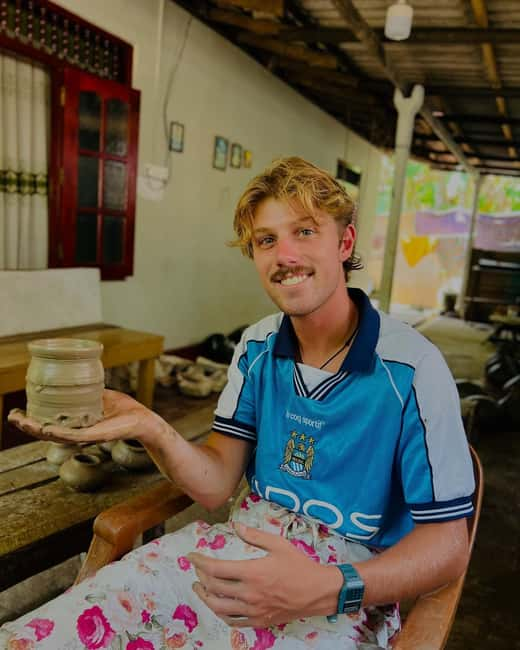
The best part of this Weligama-area experience is its setting: you work in a traditional potter’s home, not a polished craft studio built for tourists. A potter couple, who began learning the trade as teenagers, show you how clay is prepared before you try shaping it on their wheel.
I like the patient, personal teaching and the chance to hear about Sri Lankan pottery from people who still practice it. I also like the tea and local sweetmeats at the end, plus the handmade pottery piece you receive from the master potters. The main consideration is simple: your own piece cannot be glazed or fired instantly, so this is about learning and connection, not taking home a finished object you made.
Key points to know before booking
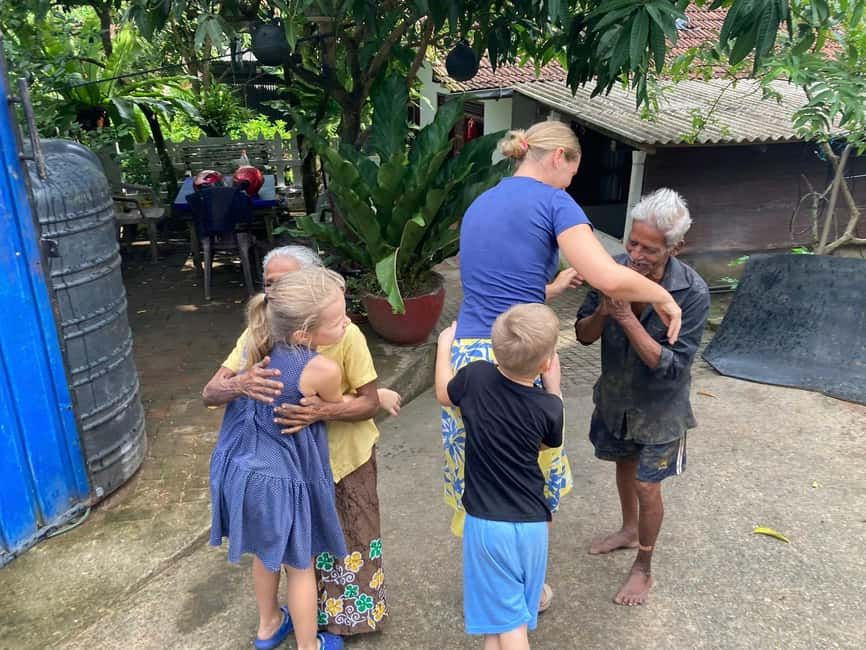
- Traditional family setting: The workshop takes place in a private potter’s home rather than a Western-style studio.
- Hands-on wheel time: You prepare to shape clay on a traditional spinning wheel during the two-hour workshop.
- Strong language support: Instruction is available in English and French.
- Tea with local sweetmeats: The final 30 minutes are set aside for refreshments and conversation.
- A useful family option: Children receive paint to decorate their own mini-pots.
- Private and accessible: The experience is designed for a private group and is wheelchair accessible.
A pottery lesson inside a working family home
This experience gives you something a standard craft class often misses: a look at pottery as a family trade. You are not simply handed a lump of clay and shown a few tricks. The hosts explain how pottery fits into local life, how the tradition has been passed through generations, and why supporting a small family business matters.
The hosts have worked with pottery since their teenage years. That detail changes the tone of the visit. You are learning from people who grew up with the craft, not from an instructor who picked it up as a recent hobby.
The family setting also means you should adjust your expectations. This is not a spotless Western studio with rows of identical wheels, shelves of finished products, and instant kiln access. The home may feel more informal and practical. That is part of the point, but it may not suit you if you want a polished class with professional studio facilities.
The experience is offered as a private group, so you can expect a more personal pace than in a large class. The supplied information does not state the maximum group size, so check availability if your party is large.
Other tea estates and factories from Sri Lanka:
- Nuwara Eliya Tuk-Tuk Tour Tea Picking,Tasting &Ramboda Falls
★ 4.9 · 207 reviews - Nuwara Eliya: Tea Factory and Pickle Waterfalls Tuk Tuk Tour
★ 4.7 · 113 reviews - From Colombo: Kandy, Pinnawala and Tea Factory Full-Day Trip
★ 4.4 · 99 reviews
Starting at Kumbalgama Railway Station
Your meeting point is Kumbalgama Railway Station, where a representative of the host meets you. This gives you a clear place to begin, though you should confirm the exact meeting instructions and timing when you book.
The published schedule allows 2.5 hours in total. Two hours are devoted to the workshop, followed by 30 minutes of tea and snacks. You return to Kumbalgama Railway Station after the visit.
No separate sightseeing stops are included. That is useful to know when planning your day. Think of this as a focused local encounter rather than a broad tour of Weligama or Kotapola. You will spend your time with the potters and their family, not moving between several attractions.
The location information uses both Weligama and Kotapola, while the meeting point is Kumbalgama Railway Station. For that reason, I would use the station as your practical reference point and confirm the final address with the host before setting out.
From prepared clay to the spinning wheel
The class begins with the basic work that makes pottery possible. You learn how clay is prepared for the wheel and how it is handled before kilning. This is a valuable part of the experience because the spinning wheel is only one stage in a longer process.
A finished pot can look effortless, but the early steps matter. Clay must be workable enough to shape and consistent enough to hold together. The hosts explain these stages before asking you to make your own piece.
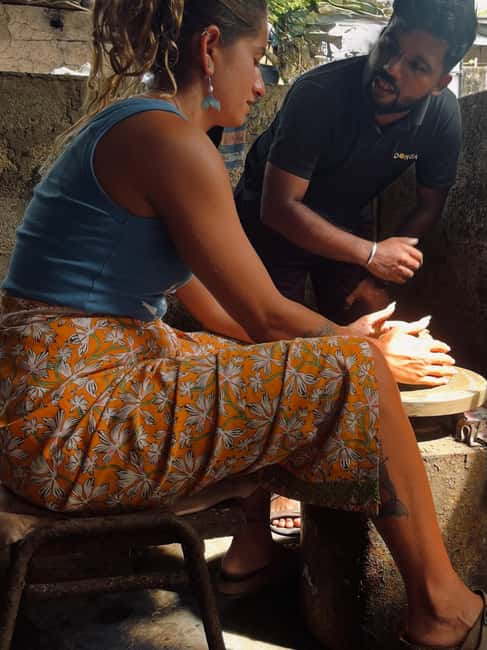
Then comes the hands-on part. You sit at the traditional potter’s wheel and work with the clay under guidance. You may need time to find the right pressure and rhythm. The wheel can make even a simple vessel feel surprisingly tricky, which is why the unhurried pace matters.
The available information does not promise a particular shape or number of pieces. One person had enough time to create several vessels, but your result will depend on your pace and the amount of help you need. You should treat the finished shape as a personal attempt, not a guaranteed professional-looking pot.
That is also where the workshop earns its keep. You do not merely watch the master potters work. You try the same basic process yourself and gain a better sense of the skill behind everyday pottery.
What happens to the piece you make
Here is the important practical catch: glazing and instant kilning are not available. Your own piece will not be transformed into a finished, fired souvenir during the visit.
This does not make the class pointless. In fact, it sets an honest expectation. You are paying for access to the process, instruction, and time at the wheel. The finished object is less important than understanding how much work goes into making one.
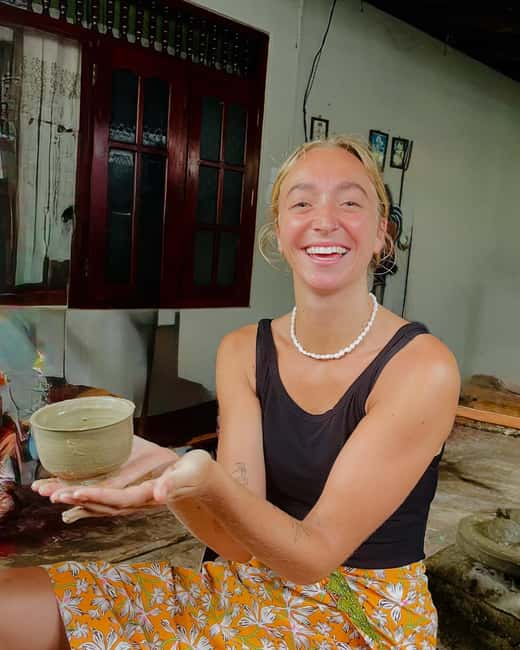
To make sure you leave with a lasting souvenir, the master potters provide a piece of pottery made by them. This is separate from the item you shape yourself. It gives you something finished to take home, even though your own piece cannot be glazed or fired on the spot.
Personal purchases of additional pottery are not included. If you want to buy more pieces, set aside extra money for that. The experience includes the handmade souvenir specified by the host, but not any extra items you may see or choose to purchase.
Other hands-on workshops around Sri Lanka:
- Galle: Traditional Gems & Jewellery Workshop with Transfers
★ 4.9 · 539 reviews - Kandy: Interactive Batik Workshop
★ 5.0 · 51 reviews - Galle : Traditional Jewellery making workshop
★ 4.9 · 34 reviews - Ahangama: Traditional Jewellery Making Workshop
★ 4.9 · 23 reviews
Tea, sweetmeats, and a chance to talk
After the wheel work, you sit down for tea and local sweetmeats. The final 30 minutes are not filler. They give you time to recover from concentrating on the clay and to talk with the organiser and family.
The tea provides a relaxed ending, and the sweetmeats add a small taste of local food without turning the visit into a full meal. You should not book this as a food tour. The refreshments are a light part of the pottery visit, not the main event.
The conversation can be one of the most useful parts of the afternoon. The English-speaking guide can explain the pottery tradition and discuss Sri Lankan life in a way that adds context to the practical lesson. French instruction is also available.
If you enjoy asking questions, this is a good place to do it. You can talk about the family’s work, how the craft was learned, and what it means to keep the tradition going. The hosts also hope the activity will support a better income and encourage their grandchildren to continue the family trade.
A good choice for families with children
Children are welcome, with one clear age restriction: babies under one year are not suitable for the activity. Kids receive paint to decorate their own mini-pots, giving them a simpler creative task alongside the adult wheel work.
That arrangement is helpful because young children may not have the patience or reach for the full wheel session. Painting a mini-pot lets them take part without needing to master the same technique as an adult.
The supplied details do not give a minimum age for using the wheel, so ask the host if you are booking for older children or a mixed-age group. The private format should make it easier to adapt the pace, but the host will know what is practical.
The activity is wheelchair accessible, though the information does not describe the exact layout of the home or wheel area. If you need a particular arrangement, contact the host in advance and explain your needs.
What the $40 price really buys you
At $40 per person, this is not the cheapest way to spend two and a half hours in Sri Lanka. You are not paying only for clay and tea. The price covers a private, hands-on lesson, the hosts’ time, an explanation of pottery preparation and tradition, wheel access, tea and sweetmeats, and a pottery piece made by the master potters.
The strongest value comes if you care about direct support for a local craft family. Your booking contributes to the potters’ income and helps keep their work visible to the next generation. That makes the price easier to justify than a short demonstration with no personal contact.
The value is weaker if you mainly want a finished object made by you. Since instant glazing and firing are unavailable, you cannot compare this with a studio class where you collect a completed bowl before leaving.
I would also factor in the private format. A small, personal visit usually gives you more time to ask questions and try again when the clay collapses. The available comments describe enough time to practice without feeling rushed, which is exactly what a beginner needs at the wheel.
The atmosphere: personal rather than polished

The most important choice is deciding what kind of experience you want. If you want an authentic look at daily life and a family-run craft, this format should suit you well. You will meet the people behind the work and see pottery in a domestic setting.
If you expect a modern workshop with clean display shelves, instant firing, and a set menu of finished projects, choose something else. The host is clear that this is not a Western-standard pottery studio.
That warning is useful, not negative. It prevents disappointment and helps the right people book. The informal setting may be the reason the visit feels personal. You get a closer look at how a traditional skill is practiced at home, rather than a carefully staged activity built around quick results.
The language support is another strength. The guide speaks English well enough to discuss the pottery tradition and Sri Lankan history, and French is available too. Clear communication matters when someone is trying to guide your hands on a spinning wheel.
Who should book this workshop
I would recommend it to:
- Couples or solo visitors who want a slower, personal activity
- Families with children who would enjoy painting mini-pots
- Anyone interested in traditional crafts and local family businesses
- Beginners who want to try a wheel without pressure
- Visitors who value conversation as much as the activity itself
- People looking for a private group experience near Weligama
I would hesitate if you need to leave with your own finished pot. I would also hesitate if your main goal is to shop for ceramics, since extra pottery purchases are not part of the stated price.
The workshop suits an open-minded schedule. Give yourself enough time to reach the meeting point, enjoy the two-hour lesson, and stay for the full tea session. Rushing away after the wheel would cut out part of the social side of the visit.
Booking details that matter
The experience costs $40 per person and lasts 2.5 hours. It is available as a private group, with English and French instruction, and it is wheelchair accessible.
You can reserve now and pay later, which helps if your Sri Lankan plans may change. Cancellation is free up to 24 hours before the start time for a full refund.
The activity does not allow weapons, sharp objects, alcohol, drugs, intoxication, fireworks, explosives, nudity, or see-through clothing. These are standard conduct rules, but it is still worth knowing them before you arrive.
Starting times depend on availability. Since the exact address is not given in the supplied details, confirm the meeting instructions at Kumbalgama Railway Station with the host. The representative will meet you there.
Should you book the Weligama pottery workshop?
Book it if you want to spend an afternoon with a Sri Lankan potter family, try a traditional wheel, hear about the craft, and finish with tea and sweetmeats. The strongest reasons to go are the genuine home setting, patient instruction, and direct support for a local family business.
Skip it if you want a polished studio, instant glazing, or a fired version of your own work. At $40, the value is in the people, process, and personal contact, not in the material cost of the clay.
For the right visitor, this is a memorable way to slow down near Weligama. You may not leave with the perfect pot you imagined, but you will leave with a better sense of how much skill sits behind a simple clay vessel, plus a handmade piece from the family who taught you.
FAQ
Where does the pottery workshop begin?
The meeting point is Kumbalgama Railway Station, where a representative of the host will meet you.
How long does the activity last?
The full experience lasts 2.5 hours. The pottery workshop takes two hours, followed by 30 minutes of local snacks and tea.
Is the workshop held in a professional pottery studio?
No. It takes place in a traditional potter’s home and is not a Western-standard pottery studio.
Can I take home the piece I make?
Glazing and instant kilning are not available, so your own piece cannot be finished during the workshop. You do receive a piece of pottery made by the master potters.
Are tea and snacks included?
Yes. Tea and local sweetmeats are included at the end of the experience.
Can children take part?
Children can receive paint to decorate their own mini-pots. Babies under one year are not suitable for the activity.
What languages are available, and is the activity wheelchair accessible?
Instruction is available in English and French. The activity is wheelchair accessible.
Just added around Sri Lanka
- Yala Safari: High-Luxury PRIVATE Tours with Entry Tickets★ 4.7 · 15 reviews
- Yala Village Tour: Pottery Class, Lake and Temple Visits★ 5.0 · 5 reviews
- Zip Lining in Ella★ 4.5 · 16 reviews
- Yala Safari : 7 hour & 12 hour Tours★ 3.8 · 6 reviews
- Yala Private Safari: Half-Day or Full-Day with Picnic Lunch★ 4.3 · 8 reviews
- Yala Safari All-Inclusive Package with Convenient Pick Up★ 4.4 · 3 reviews
- YALA BLOCK 5 & 6 (Weheragala & Lunugamwehera) Safari Tour★ 4.8 · 30 reviews
- Yala National Park Sharing Safari (5 Hours)★ 4.0 · 3 reviews
Tea Plantations & Factories, compared.

Nuwara Eliya Tuk-Tuk Tour Tea Picking,Tasting &Ramboda Falls
Read our review →

Tea Factory, Train, and Nine Arch Day Tour with Pickup
Read our review →

Ella Private Day Trip with Train Ride & Tea Factory-All Inclusive
Read our review →
Tuk-Tuk Safari Liptons seat,Tea Fields Hike,TeaFactory Tour
Read our review →
Nuwaraeliya Tea Factory and WaterFall Tour’s With DMJ Tours
Read our review →Browse the lists this tour appears in