
Reviewed · COOKING CLASSES
Ella: Traditional Sri Lankan Cooking Class
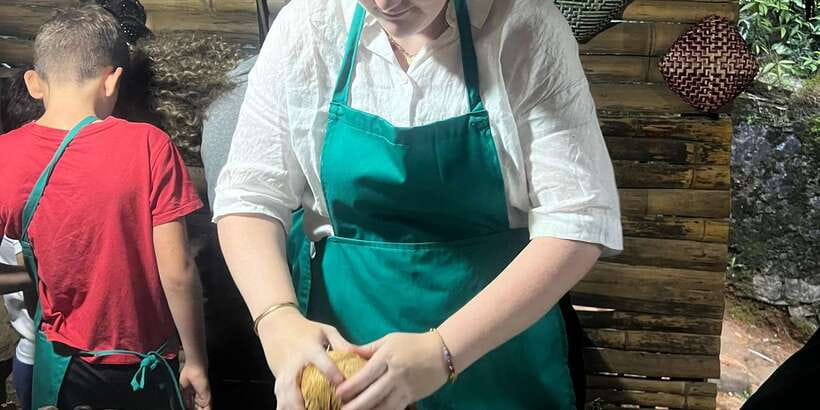
Ella’s best food lesson is not about standing alone at a polished cooking station. It is about gathering around one open-air kitchen with Ranjani, learning how Sri Lankan home cooking works, and sitting down to a generous meal on a banana leaf. You may grate coconut, stir dhal, mix sambol, prepare curry, or help with another part of the feast.
I especially like the traditional methods and the clear explanations of spices and their everyday uses. I also like that the food is prepared together, then shared as a full meal rather than tasted in tiny samples. The main consideration is that this is a group class with shared cooking, not a private lesson where you personally make every dish from start to finish.
Key points at a glance
- Traditional open-air kitchen: Cook with fresh ingredients in a simple setting surrounded by greenery.
- Ranjani’s food lessons: Learn how spices, herbs, coconut, and vegetables are used in Sri Lankan home cooking.
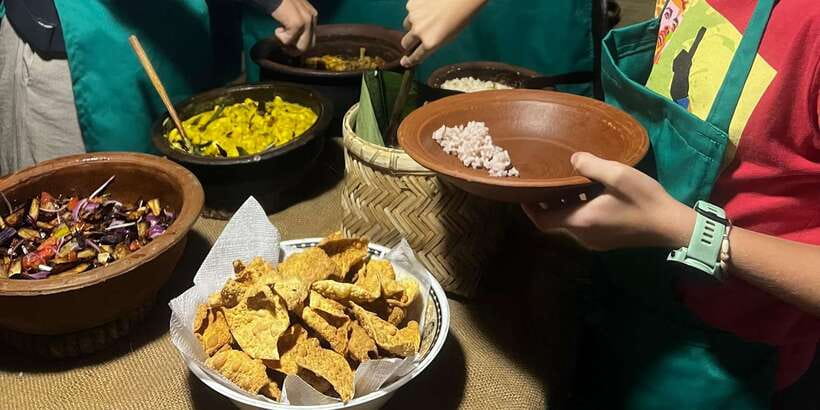
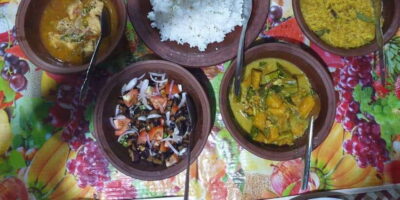
- A full shared feast: Possible dishes include dhal, chicken curry, aubergine salad, coconut sambol, papadam, hoppers, string hoppers, and honey roti.
- Banana-leaf dining: Eat the finished food in a local style, with no pile of plates waiting afterward.
- Useful recipes afterward: Recipes are sent digitally through WhatsApp, so you can try the dishes at home.
- Good value at $19: The fee includes the class, ingredients, instructor, bottled water, and the meal.
What the two-hour Ella class is really like
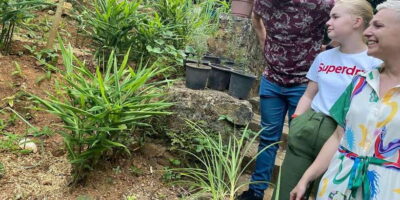
The class begins when you check in with staff at Chamathka Cooking Class. The setting is an open-air kitchen, which gives you a better view of the surrounding greenery and keeps air moving while pots simmer and spices hit the heat.
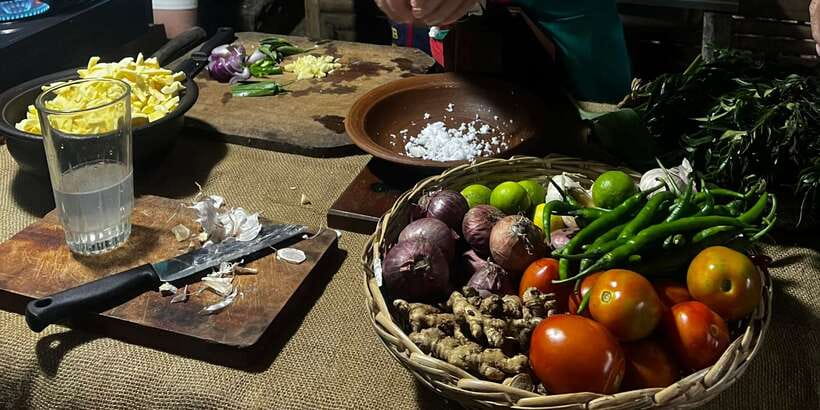
You start with an introduction to the ingredients. This is more useful than it sounds. Sri Lankan cooking relies on a wide range of spices, coconut, vegetables, lentils, and fresh produce, and the class explains how they fit together rather than simply handing you a recipe card.
Ranjani, also called Ranji in some booking details, leads the session in English and Singhalese. Her teaching style centers on step-by-step guidance, practical cooking advice, and explanations of the health benefits associated with the ingredients. You are not simply watching a demonstration from the corner of the room. You take turns chopping, mixing, seasoning, and helping with the cooking.
The exact menu can vary. The advertised possibilities include hoppers, rice and curry, string hoppers, and honey roti. Other dishes prepared in the class have included dhal curry, chicken curry, aubergine salad, coconut sambol, and papadam.
That variety is one of the strongest parts of the experience. A Sri Lankan meal is not just one curry ladled over rice. It is a collection of contrasting dishes, with creamy dhal, sharp sambol, vegetables, coconut, crisp accompaniments, and fragrant curry working together.
Other cooking classes around Ella:
- Ella: Sri Lankan Cooking Class with Neranji at Homestay
★ 5.0 · 276 reviews - Ella : Cooking class with amazing Spice Garden Tour
★ 5.0 · 239 reviews - Ella Sri Lanka : Mom’s Kitchen Cooking class
★ 5.0 · 113 reviews
A shared kitchen, not an individual workstation
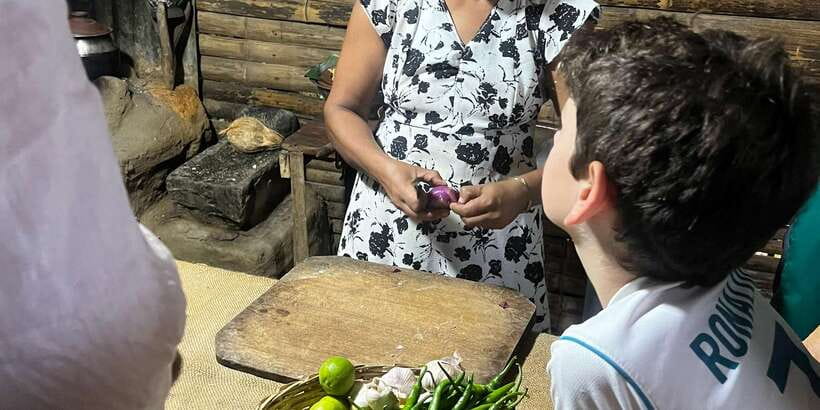
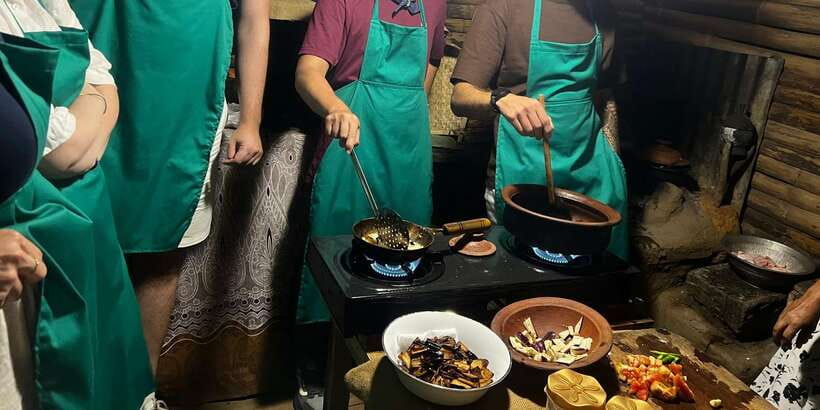
You should understand the format before booking. The cooking takes place at one main workstation, with Ranjani demonstrating the more complicated techniques and inviting people to help with different jobs.
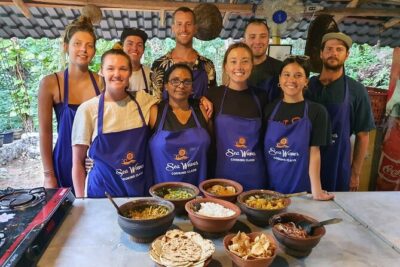
That arrangement has two sides. The good side is social. You can meet people from several countries, share tasks, and watch a full Sri Lankan meal come together in one place. It feels closer to helping in a family kitchen than attending a formal culinary school.
The limitation is personal hands-on time. You may not prepare every dish yourself, and you do not get an individual cooking station. If your main goal is to practice each recipe independently, this may feel less intensive than expected.
If you like learning by watching a skilled cook, asking questions, and taking part when your turn comes, the format works well. The class is advertised as a small group limited to eight participants, which should help keep the session manageable. It is still worth confirming the current group arrangement when booking if hands-on time matters greatly to you.
Why the ingredient explanations matter
Sri Lankan cooking can seem complicated when you first encounter a long list of spices and unfamiliar techniques. This class makes the food easier to understand by connecting each ingredient with a purpose.
Ranjani explains how spices are used in cooking and discusses their traditional health benefits. You learn not only what goes into a dish, but why it is there and how the cooking method changes the final flavor.
Coconut is a good example. The class can include grating coconut and making coconut milk, two basic steps that are easy to overlook when eating in a restaurant. Seeing them done in a traditional way gives you a better sense of how much work goes into a Sri Lankan curry.
The same applies to dhal and rice. You may learn techniques that differ from your normal method at home, including how to cook the lentils and rice properly and how seasoning affects the finished dish.
This is especially helpful if you want to recreate the food later. The recipes are sent through WhatsApp after class, and the dishes are chosen with home cooking in mind. You may not find every Sri Lankan ingredient easily, but the class aims to show methods you can use beyond Ella.
The dishes you may prepare
The menu is not fixed in the information provided, so you should treat the following as likely examples rather than a guaranteed list. That said, the range gives you a clear idea of the meal.
Dhal curry is often a central part of a Sri Lankan spread. Lentils become soft and creamy, taking on the flavor of coconut and spices. It is a useful dish to learn because it is filling, adaptable, and practical for a meat-free meal.
Chicken curry may appear as the main non-vegetarian dish. The value here is learning how seasoning, coconut, and cooking time build flavor, rather than relying on a ready-made curry paste.
Coconut sambol brings a fresh, sharp contrast to the warmer curries. Its coconut base and strong seasoning show why Sri Lankan meals are served with several side dishes rather than one uniform sauce.
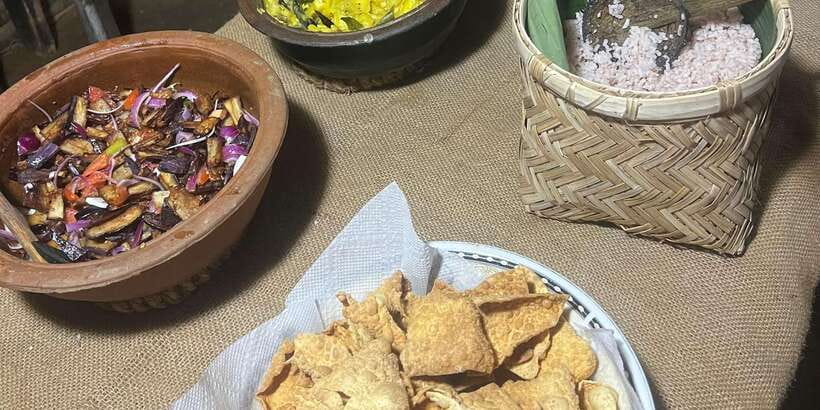
Aubergine salad adds another texture and a sweeter, softer vegetable note. Along with papadam, it helps turn the meal into a collection of small tastes instead of a single main course.
You may also make hoppers, bowl-shaped pancakes cooked in a curved pan. String hoppers and honey roti offer different lessons in shaping, cooking, and handling dough.
Do not expect to choose every dish yourself. The menu is set by the instructor, and that lets Ranjani plan a balanced meal and manage the cooking within the two-hour schedule. The tradeoff is less menu control.
Same base, a completely different day:
- Ella: Drop to Tangalle/Hiriketiya/Mirissa/Galle & Yala Tour
★ 4.9 · 518 reviews - Ella: Little Adam’s Peak, Nine Arches Bridge & Waterfalls
★ 4.9 · 402 reviews - ELLA: Drop to Tangalle/Hiriketiya/Mirissa/Galle & Yala Tour
★ 4.1 · 336 reviews - From Ella: Drop to Tangalle/Hiriketiya/Mirissa & Yala Safari
★ 4.8 · 296 reviews
Eating from a banana leaf in Ella

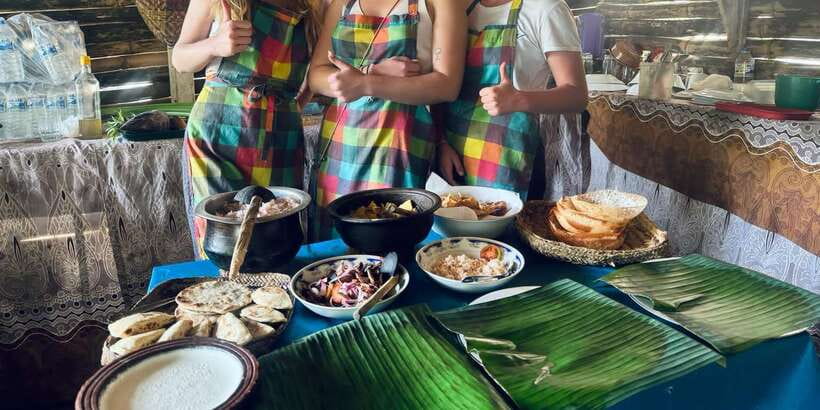
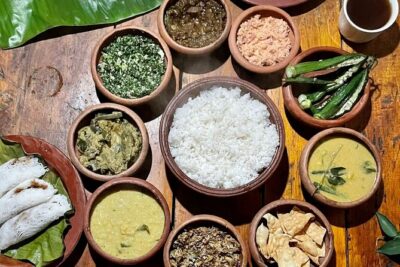
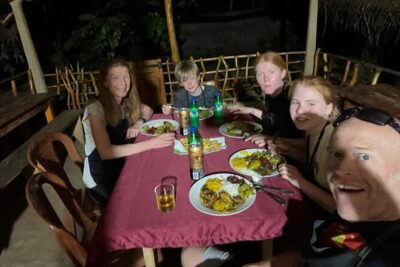
Once the cooking is finished, you sit down to eat what the group has prepared. The meal is served on banana leaves, a simple touch that makes the experience feel connected to local dining customs.
There is no need to treat this as a formal etiquette test. The point is to enjoy the food in a traditional way and avoid unnecessary washing up and waste. Rice, curry, dhal, sambol, vegetables, and other sides can be combined in different bites, letting you see how the dishes are meant to work together.
The portions appear generous. The menu can produce enough food for a proper dinner, not just a small post-class tasting. If you attend in the evening, this can serve as both your activity and your main meal.
Bottled water is included. Some sessions may also begin with tea and biscuits, but that is not listed as a guaranteed inclusion, so I would treat it as a pleasant extra rather than plan around it.
Is $19 good value?
At $19 per person, this is strong value if you want more than a restaurant meal. The price includes the instructor, fresh ingredients, the cooking lesson, bottled water, and the meal you prepare.
A cooking class always needs to be judged by what you take home, not only by how much food you eat. Here, you receive practical techniques, ingredient guidance, a cultural experience, and digital recipes through WhatsApp. That gives the class value after your time in Sri Lanka ends.
The quantity of food also matters. Several dishes are prepared for the group, and you may have enough for a very substantial meal. You are effectively paying for dinner plus instruction, rather than paying $19 for a short demonstration.
The price does not include transport to the meeting point. You need to arrange your own way to Chamathka Cooking Class. Since the scheduled sessions normally begin at 11:00 AM and 5:00 PM, check your route and allow enough time to arrive before the cooking starts.
Timing, pace, and practical planning
The listed duration is two hours. That is a reasonable estimate for the cooking and meal, but I would avoid booking a tight onward connection immediately afterward.
A class with several dishes involves washing, chopping, preparing coconut, cooking, serving, and eating. The actual pace can depend on the number of people, the menu, and how much everyone takes part. If you have a car or a pickup arranged, allow some flexibility after the two-hour mark.
The usual starting times are 11:00 AM and 5:00 PM. The provider may be able to adjust the time if you contact them in advance, but do not assume a change is automatic.
The evening session is a natural fit if you want a social dinner activity. The daytime class may work better if you have plans later or want to avoid cooking after a long day of sightseeing. Ella’s weather can also be unpredictable, and the class has been used as a rainy-day activity, though the kitchen is open-air.
English and Singhalese are the listed teaching languages. Recipes are sent digitally through WhatsApp, so make sure the provider has the correct contact details for you.
Who will enjoy this cooking class most?
I would recommend it most strongly to you if you meet one or more of these descriptions:
- You want to learn how Sri Lankan food is made, not just eat it.
- You enjoy social activities with a small group.
- You like traditional cooking methods and do not need modern equipment.
- You want recipes that can be attempted at home.
- You eat vegetarian or vegan food and want to discuss adjustments in advance.
- You are looking for a relaxed evening activity in Ella.
- You want a meal with several dishes rather than one standard curry.
The class also suits couples, solo visitors, and families who enjoy working together. The shared format gives solo visitors an easy way to meet people, while couples should be ready to share the cooking rather than staying at a private station.
People with dietary restrictions should contact the provider before attending. The cooking can accommodate different diets in some cases, but the menu is not fully customizable, and the information does not promise that every dietary requirement can be met.
Who may want a different experience?
This is not the best choice if you want a private chef lesson, a fixed menu chosen by you, or full control over every dish.
You may also find the shared arrangement less satisfying if you have traveled specifically to practice advanced technique. Ranjani demonstrates and teaches, but participants take turns, so your own hands-on time depends partly on the group.
The open-air kitchen is part of the traditional feel, but it is not the same as a fully equipped indoor cooking studio. Weather and comfort may affect the pace. The food preparation itself is the main attraction, so you should be happy with a simple setting.
The take-home value of Ranjani’s recipes
The best souvenir from this class is not a spice packet. It is the ability to make a Sri Lankan meal without treating every step as a mystery.
The digital recipes give you a starting point, while the class supplies the missing context: how ingredients should look, how mixtures should feel, when to season, and how several dishes fit together on one plate.
You also learn which parts of the cooking are traditional and which might be simplified at home. Coconut preparation, curry seasoning, sambol, dhal, and rice are all building blocks you can use separately. Even if you never recreate the entire feast, one successful dhal or sambol can bring the trip back to your kitchen.
Should you book the Chamathka Cooking Class?
Book it if you want an affordable, friendly introduction to Sri Lankan home cooking and you are happy to work as part of a group. The combination of traditional methods, fresh ingredients, a filling meal, banana-leaf dining, and recipes sent afterward gives you more than a simple dinner out.
I would be cautious only if you need a private workstation or want to select every dish. For everyone else, this is a practical way to spend two hours in Ella, especially on a rainy day or on an evening when you want something more memorable than another restaurant meal.
The class has a published price of $19, normally runs at 11:00 AM and 5:00 PM, and allows cancellation up to 24 hours before the activity for a full refund. Reserve now and pay later is available, which is useful if your Sri Lanka schedule is still shifting.
FAQ
Where does the cooking class take place?
You check in with staff at Chamathka Cooking Class in Ella, Sri Lanka. The lesson takes place in an open-air kitchen.
How long does the cooking class last?
The stated duration is two hours. You may want to allow extra time afterward if you have transport or another appointment.
What time does the class usually start?
Classes normally begin at 11:00 AM or 5:00 PM. The provider may be flexible if you contact them in advance.
What food might I learn to cook?
Possible dishes include hoppers, rice and curry, string hoppers, and honey roti. Other dishes prepared in the class can include dhal curry, chicken curry, aubergine salad, coconut sambol, and papadam.
Is the meal included?
Yes. The price includes the meal prepared during the class, along with fresh ingredients, bottled water, the instructor, and the cooking lesson.
Are recipes provided after the class?
Yes. Recipes are sent digitally through WhatsApp after the class.
Is transportation included?
No. You are responsible for getting to the meeting point at Chamathka Cooking Class.
Can I cancel my booking?
You can cancel up to 24 hours in advance for a full refund. Reserve now and pay later is also available.
More cooking classes in Ella
- Ella Cook With Sadamali
★ 5.0 · 70 reviews - Ella: Sri Lankan Authentic Cooking expirience
★ 5.0 · 59 reviews - Organic cooking class sigiriya (kumara & family)
★ 5.0 · 650 reviews - Kandy Village Cooking Class
★ 5.0 · 536 reviews
Just added around Ella
- Bentota/Kalutara/Hikkaduwa/Galle/Mirissa: Day Trip to Ella★ 4.7 · 14 reviews
- All Inclusive Ella From/To Kandy Scenic Train Journey★ 3.4 · 11 reviews
- Ella Day Tour from Kandy with tea factory★ 5.0 · 15 reviews
- From Ella: Tea Adventure in Haputale with Village Lunch★ 4.8 · 13 reviews
- Ella: 9 Arches Bridge, Little Adam’s Peak, Tea Factory★ 4.3 · 41 reviews
- Ella, Sri Lanka Cycle Zone Bike Tour★ 4.7 · 8 reviews
- Ella: Little Adam’s Peak and Nine Arch Bridge Half-Day Tour★ 4.8 · 55 reviews
- Ella: Private Ella Rock Sunrise Hike – All Inclusive★ 4.8 · 56 reviews
Cooking Classes, compared.
Organic cooking class sigiriya (kumara & family)
Read our review →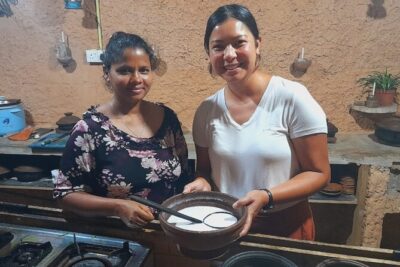
Sri Lankan Cooking Class with Neranji at Homestay
Read our review →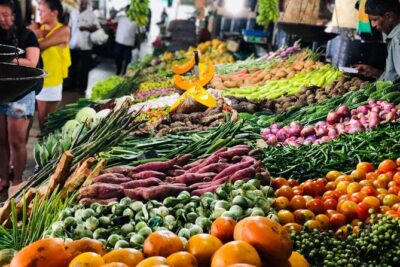
Browse the lists this tour appears in