
Reviewed · COOKING CLASSES
Nilaveli: Sri Lankan Cooking Class with a Local Family
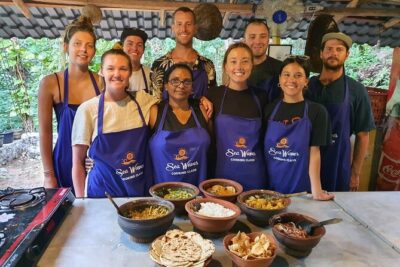
Sri Lankan food makes the most sense when you help prepare it. In Nilaveli, Nimali Dinushika and her family show you how spices, coconut, rice, and firewood come together in a traditional home setting. I like the hands-on cooking and the chance to learn family methods rather than simply eating a finished plate.
I also like that you can discuss what to cook, with vegetarian, fish, or meat choices available. The five-hour length gives you time to work at a sensible pace and enjoy the meal afterward. The main consideration is that chicken or fish costs an extra 2,000 LKR per person, while seafood is priced according to your request.
Key points
- Cook with Nimali Dinushika and her family: This is a personal home-based class, not a restaurant demonstration.
- Use traditional wood stoves: Expect cooking methods that take more time and attention than a modern kitchen.
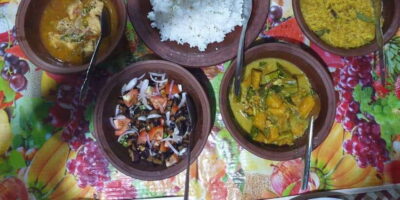
- Make a full spread: Dishes can include rice and curry, hoppers, string hoppers, pittu, rotti, milk rice, sambols, sweets, and curry powder.
- Allow five hours: Past sessions have included about four hours of cooking and one hour for the meal.
- Plan your protein: Vegetarian food is included, while chicken and fish cost an additional 2,000 LKR per person. Seafood costs extra based on your request.
- Meet at Pigeon Island Tours: The meeting point is at The Rice and Curry Seafood and Dive Shop, where you will ask for the cooking experience with Nimali.
A Sri Lankan kitchen outside Nilaveli
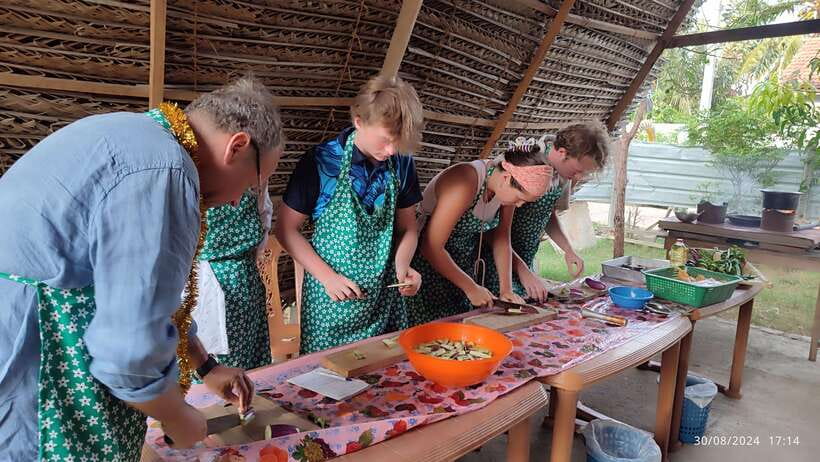
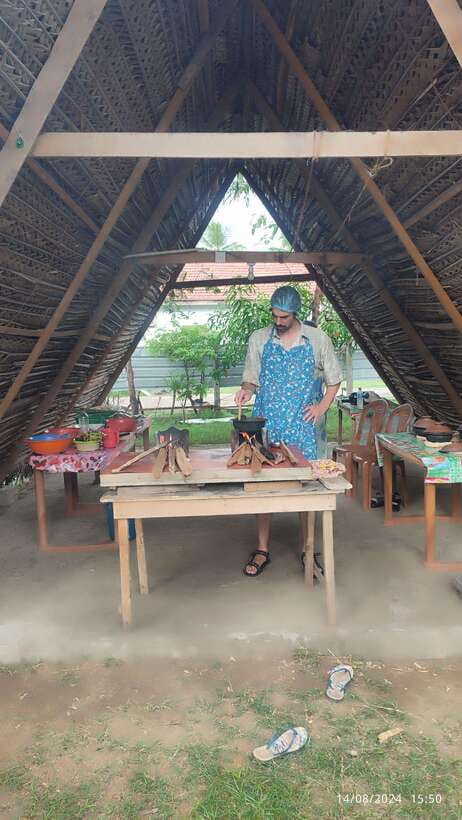
This class gives you more than a recipe sheet. You spend time with a local family, learn about the food they cook, and take part in the preparation from start to finish. The setting is a traditional Sri Lankan home, with some sessions held beside the house in the garden.
That setting matters. Sri Lankan cooking often involves several separate dishes, each with its own chopping, grinding, mixing, and cooking time. You get to see how a meal is built piece by piece rather than treating curry as one dish made in isolation.
Nimali leads the class in English and Sinhala. Her husband may also cook alongside you, which adds to the family atmosphere. The pace can feel relaxed and social, especially if other people join the same session.
You should not expect a polished cooking studio with numbered workstations. The appeal is the opposite. You are working with personal cooking equipment, local ingredients, and traditional methods in a family setting.
Other cooking classes around Trincomalee:
- Ella: Traditional Sri Lankan Cooking Class
★ 4.9 · 788 reviews - Organic cooking class sigiriya (kumara & family)
★ 5.0 · 650 reviews - Kandy Village Cooking Class
★ 5.0 · 536 reviews
The five-hour rhythm
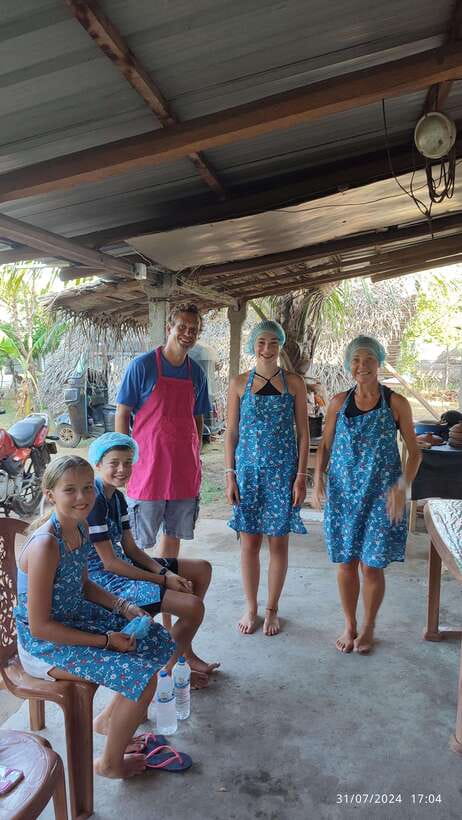
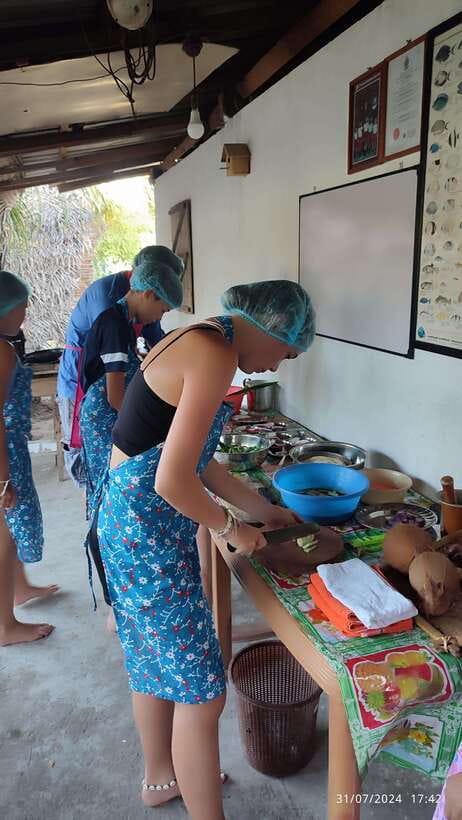
Plan for about five hours from start to finish. A useful guide is roughly four hours of preparation and cooking, followed by about one hour to eat. The exact sequence can change depending on the dishes chosen and the size of the group.
The class usually begins with an introduction to the family, the ingredients, and the spices. You can ask about the food as you go, which is helpful if you want to understand how Sri Lankan curry differs from the curry served in restaurants abroad.
The preparation may include several dishes at once. While one item cooks, you might prepare sambol, shape dough, work with coconut, or help with another curry. This makes the class active rather than a single demonstration followed by a quick tasting.
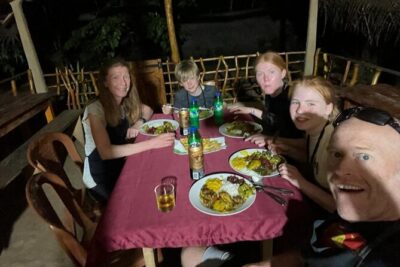
The final hour is the payoff. You sit down with the food you helped make, including rice, curries, breads, or sweets selected for the session. Water and a refreshment are included, as is the meal itself.
Five hours is a good length if you want real participation. It is not the right choice if you only want a short cooking demonstration between beach stops. Wear comfortable clothes and expect to spend much of the time standing or working near the cooking area.
What you may cook
The menu has a broad range, and the exact combination can reflect your preferences. Possible dishes include:
- Rice and curry
- String hoppers
- Hoppers
- Pittu
- Rotti
- Milk rice
- Sambols
- Sri Lankan sweets
- Curry powder
This variety lets you see several parts of Sri Lankan food culture in one class. Rice and curry introduces the familiar central meal, but the breads and steamed dishes show how much the cooking changes from one preparation to another.
String hoppers are delicate nests of rice flour noodles. They are often served with curry or coconut-based accompaniments. Making them by hand gives you a better sense of the care involved than simply ordering a plate.
Hoppers are bowl-shaped pancakes, often associated with breakfast or light meals. Their crisp edges and soft centers depend on batter and heat, so they can be a fun dish to practice.
Pittu uses steamed flour and coconut, while rotti gives you a simpler, flatter bread to shape and cook. Milk rice offers a different texture and is tied to everyday Sri Lankan cooking and special occasions.
Sambol gives the menu a sharp, fresh side. One session included two sambols made with coconut from a freshly fallen coconut, along with the chance to drink the coconut water. That sort of moment depends on timing, but the class does include an introduction to coconut and its many uses.
The sweets can be a highlight. Halapa, a traditional sweet made with coconut and flour, was especially well received in one session and was served with tea. You may also learn how Sri Lankan sweets and curry powder are prepared, depending on the menu.
Cooking over firewood
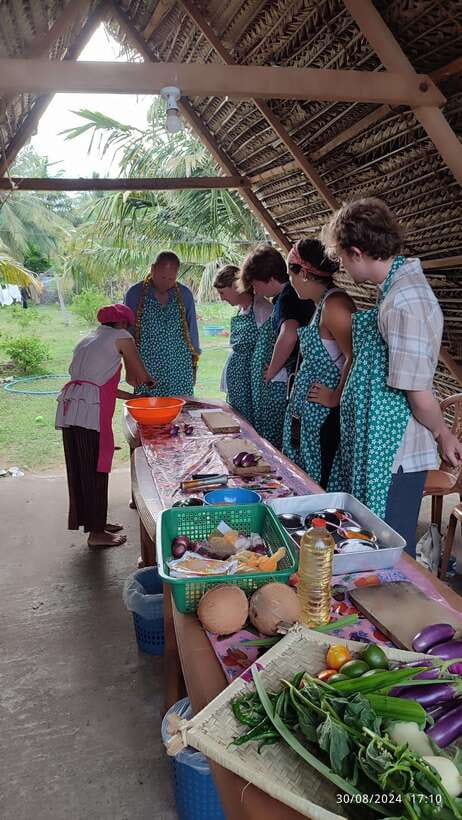
The use of firewood and wood stoves is one of the most distinctive parts of this activity. It shows you how heat, timing, and fuel affect home cooking in Sri Lanka.
A wood stove does not offer the instant control of a modern gas or electric hob. You may need to watch the heat more closely and allow extra time for food to cook. That can make the class feel less predictable, but it also makes the cooking process more real.
This is useful if you want to understand why Sri Lankan home cooking takes time. Several dishes may be simmering or steaming at once, and the cook has to manage them by sight, smell, and experience. You are not just following a printed recipe. You are learning how to judge the food.
The traditional equipment may also be less comfortable for some people. If you have difficulty standing, bending, or working around a low cooking area, ask about the setup before booking. The activity is listed as wheelchair accessible, but the home setting and cooking equipment can still affect how comfortable the experience feels.
Same base, a completely different day:
- Trincomalee: Whales Watching and Navy Island Snorkeling Tour
★ 4.4 · 81 reviews - From Uppuveli Beach: Pigeon Island Snorkeling Tour
★ 4.5 · 58 reviews - Trincomalee: Whale & Dolphin Safari Tour with Expert Guides
★ 4.2 · 53 reviews - Trincomalee: Dolphin & Whale Watching Boat Tour
★ 4.2 · 37 reviews
Choosing vegetarian, fish, or meat dishes
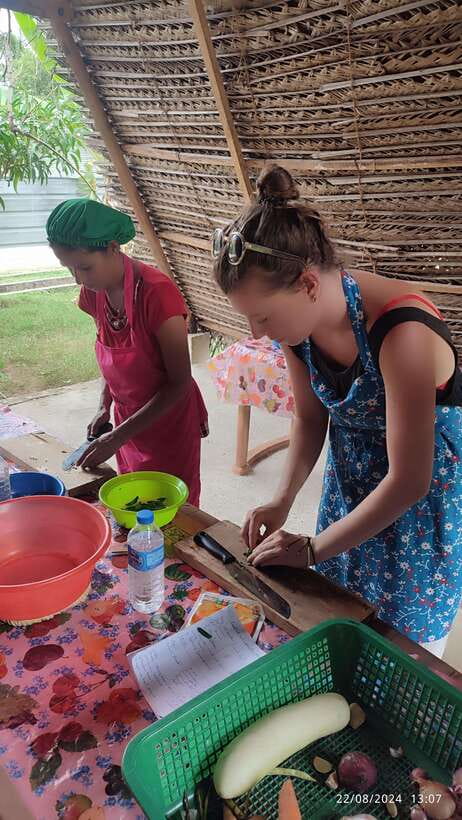
You can discuss your food preferences in advance. Vegetarian cooking is a clear option, and the menu can include vegetables, jackfruit, rice, coconut, sambols, and several curries.
Chicken or fish curry requires an extra payment of 2,000 LKR per person. Seafood is also available at an additional price based on what you request. This is important when comparing the advertised price with your likely total cost.
At $22 per person, the base price is good value for a five-hour class that includes ingredients, equipment, recipes, refreshments, and dining. The value is strongest if you want to cook several dishes and eat a full meal afterward. It is less of a bargain if you want only a quick lesson or if you plan to add several costly seafood dishes.
Tell Nimali about dietary restrictions before the class. The activity is not considered suitable for people with food allergies, so serious allergies should be treated as a reason to choose another experience. A food preference is easier to manage than an allergy in a traditional home kitchen.
Meeting at Pigeon Island Tours
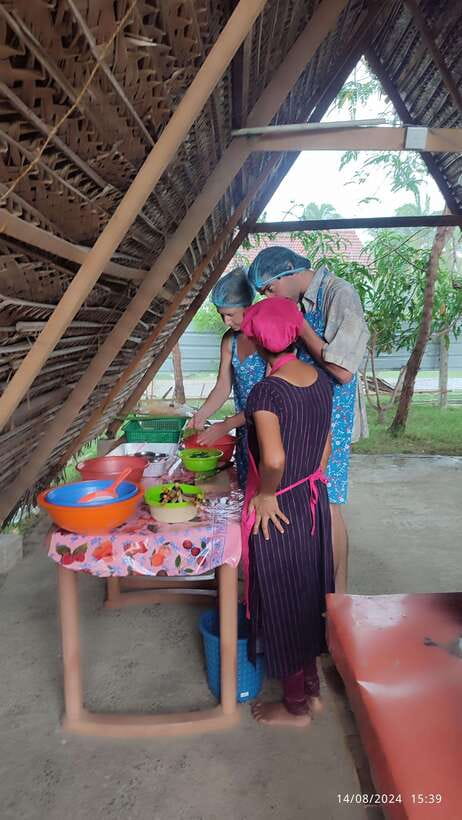
The meeting point is Pigeon Island Tours, at The Rice and Curry Seafood and Dive Shop. These businesses share the same location, so look for that combined meeting point and ask for the cooking experience with Nimali.
Hotel pickup and drop-off are not included. You need to arrange your own way to the meeting point in Nilaveli. The activity also does not include a shopping tour, so do not book it expecting a market visit or a separate ingredient-buying excursion.
The meeting instructions are worth checking carefully before you leave your accommodation. The cooking takes place in a traditional home setting, while the listed meeting point is at the tour and restaurant location.
A personal class for families and food lovers
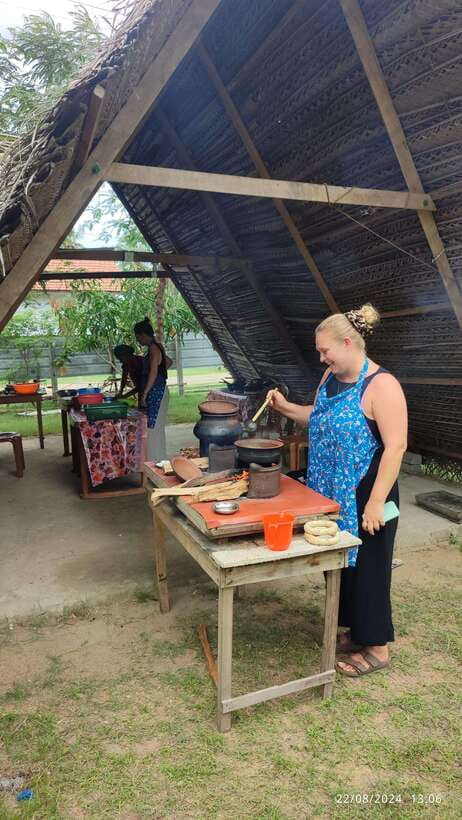
The class suits adults who want to work with local ingredients and ask questions as they cook. It also suits families with older children who can take part safely. One family with children aged four and six joined in successfully, but children under two are not accepted.
This is not a formal children’s cooking workshop. Young children may enjoy simple tasks, but the use of firewood, sharp tools, and hot cookware means parents need to stay involved.
The experience also suits couples and small groups who want a social activity away from the beach. The class can be shared with other people, giving it a friendly group feel without taking away the family setting.
I would be cautious about booking if you dislike long meals, hands-on work, or flexible timing. Five hours is a sizeable block of a Nilaveli day. You will get more from it if you are curious about how food is made, not just interested in eating it.
What to bring and what to expect
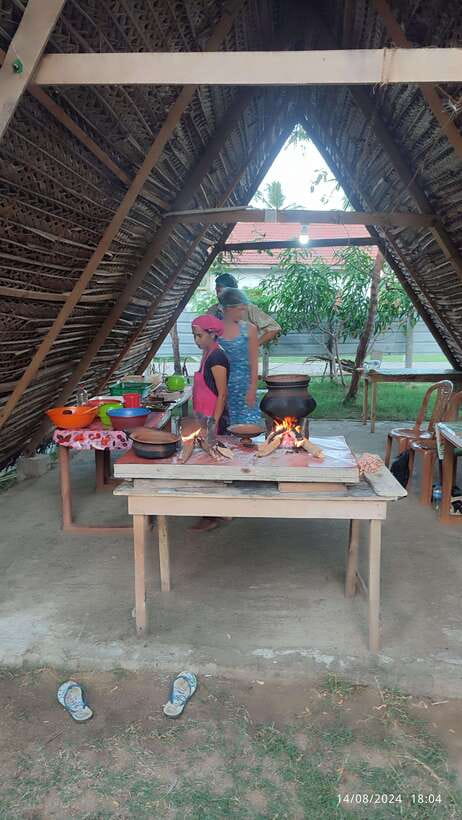
Bring a hat, sunscreen, and comfortable clothes. The class takes place around a home and cooking area, so casual clothing that you do not mind getting stained is a sensible choice.
Smoking, alcohol, drugs, and pets are not allowed. Water and a refreshment are included, but hotel transport is not.
The class is conducted in English and Sinhala. If you have specific dishes in mind, raise the subject before cooking begins. The food can be shaped around your wishes, but meat, fish, and seafood may add to the cost.
Free cancellation is available up to 24 hours in advance for a full refund, and you can reserve now and pay later. Check the available start time when booking, since the activity lasts five hours.
How the experience compares with a restaurant meal
A restaurant can introduce you to Sri Lankan flavors quickly, but it will not show you how the meal is made. Here, you learn why coconut appears in so many forms, how sambol changes a dish, and how rice, curry, breads, and sweets fit together.
You also get a clearer sense of the work behind a traditional spread. A plate of rice and several curries may look simple when it arrives, but preparing each part takes planning. The class helps you notice those details when you eat in Sri Lanka afterward.
The tradeoff is comfort and speed. A restaurant gives you air-conditioning, a fixed menu, and no washing or preparation. This class gives you personal contact and practical skills, but it asks you to spend several hours cooking in a home environment.
Is this Nilaveli cooking class worth booking?
Book it if you want a personal food experience, enjoy learning by doing, and have five hours to give it. The combination of Nimali’s family, wood-stove cooking, a broad menu, and a meal at the end offers more substance than a short demonstration.
It is especially good for food-focused visitors, couples, families with older children, and anyone staying in Nilaveli who wants a break from beach activities. The $22 base price is fair for the time and inclusions, though you should budget extra for fish, chicken, or seafood.
Skip it if you have serious food allergies, need hotel transport, or want a brief activity with little standing. For everyone else, this is a warm and practical way to understand Sri Lankan food through the people who cook it at home.
FAQ
How long does the Sri Lankan cooking class last?
The activity lasts five hours. This can include about four hours of cooking and one hour sitting down to enjoy the meal.
Where does the activity meet?
You meet at Pigeon Island Tours, at The Rice and Curry Seafood and Dive Shop. Ask for the cooking experience with Nimali.
Who leads the cooking class?
The host is Nimali Dinushika, and you meet her family during the experience. Her husband may also cook alongside you.
What language is used during the class?
The activity is conducted in English and Sinhala.
What dishes can I learn to prepare?
Possible dishes include rice and curry, string hoppers, hoppers, pittu, rotti, milk rice, sambols, Sri Lankan sweets, and curry powder.
Is the meal included?
Yes. Dining, cooking ingredients, water, and a refreshment are included.
Does chicken or fish cost extra?
Yes. Chicken or fish curry costs an additional 2,000 LKR per person. Seafood has an extra price based on what you request.
Is hotel pickup included?
No. Hotel pickup and drop-off are not included.
What should I bring?
Bring a hat, sunscreen, and comfortable clothing suitable for cooking. Inform the host about dietary restrictions in advance, although the activity is not suitable for people with food allergies.
Just added around Trincomalee
- Trincomalee : Whale & dolphin watching +pigeon island tour★ 4.5 · 3 reviews
- Trincomalee: Tuk-Tuk city tour with a guide★ 5.0 · 4 reviews
- From Trincomalee: Village Tour & Minneriya Elephant Safari★ 5.0 · 8 reviews
- Trincomalee : pigeon island tour + snorkeling★ 3.5 · 4 reviews
- Trincomalee: Guided scooter City Tour★ 5.0 · 3 reviews
- Trincomalee: City Tour with Koneswarm and Crocodile lake★ 4.5 · 13 reviews
- Snorkeling in Trincomalee★ 5.0 · 4 reviews
- Snorkeling Trip To Angel Rock★ 5.0 · 4 reviews
Cooking Classes, compared.
Organic cooking class sigiriya (kumara & family)
Read our review →
Sri Lankan Cooking Class with Neranji at Homestay
Read our review →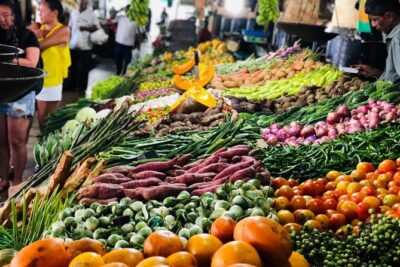
Browse the lists this tour appears in