
Reviewed · COOKING CLASSES
Authentic Sri Lankan Cooking Class in Mirissa
The best part of this class is the way it turns a meal into a family kitchen visit. You begin by choosing fresh ingredients, then cook several Sri Lankan dishes with Nona, Indra, or Prabodi in a relaxed home setting. The cooking is hands-on, but you do not need advanced skills.
I like the freedom to choose four dishes from a long list, rather than being handed a fixed menu. I also like the small group limit of six, which gives the hosts room to explain what you are doing and adjust the session to your interests. The main consideration is that the class requires at least two people, so solo bookers cannot join on their own.
Key points at a glance
- Shop before you cook: You learn about fresh ingredients, their flavors, and where they fit into Sri Lankan food.
- Choose your own four dishes: Options include chicken or fish curry, dhal, pumpkin, aubergine, beans, okra, potatoes, mushrooms, greens, and coconut sambol.
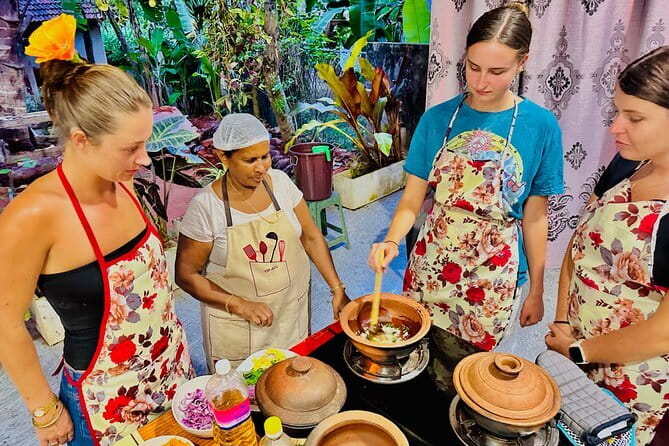
- Cook in a garden setting: The outdoor cooking space gives the class a calm, informal feel rather than a formal schoolroom atmosphere.
- Eat what you prepare: Rice and crispy papadams accompany the curries and vegetable dishes.
- Small-group attention: The maximum group size is six people, useful if you want to ask questions or need help at the stove.
- A 4:00 pm start: The timing works well as an early evening activity, with the cooked meal serving as dinner.
Starting at Indra Restaurant in Mirissa
The class begins at Indra Restaurant, at map reference WFX5+XMF in Mirissa, Sri Lanka. The listing gives Galle as the general location, but the actual meeting point and end point are in Mirissa, so check your map carefully before setting out.
The start time is 4:00 pm, and the session lasts about three hours. That gives you enough time for the ingredient shopping, food preparation, cooking, and meal at the end without making the class feel rushed.
You receive confirmation when you book, and the activity uses a mobile ticket. The meeting point is near public transportation, which is useful if you are staying in or around Mirissa. Service animals are allowed.
This is not a large commercial cooking school. The small size and family-run setting shape the whole afternoon. You are likely to spend more time talking with the hosts and less time waiting for an instructor to get around a crowded room.
Other cooking classes around Galle:
- Sea waves sri lankan cooking class
★ 5.0 · 467 reviews - Cook with Wasantha
★ 5.0 · 248 reviews - Galle Unawatuna Cooking Class
★ 5.0 · 142 reviews
Shopping for fresh ingredients
The first stage is shopping for the ingredients used in the meal. This is more useful than simply receiving a bowl of premeasured spices. You get to see the vegetables before they reach the cooking pot and hear about their flavors and origins.
The available choices depend partly on what is fresh that day. That matters in Sri Lankan cooking, where vegetables are often treated as individual dishes rather than filler beside a main course. A pumpkin curry, dry okra curry, or green bean curry can each have a different texture and spice balance.
Some sessions have included a trip to a local vegetable stand with the hosts, including transport by tuk-tuk. The exact shopping arrangements can vary, but the central idea is consistent: you help select the produce instead of simply arriving to find everything prepared.
I like this part because it gives you a better way to remember the meal later. At home, you can look for the same vegetables and understand why one is suited to a wet curry while another works better as a dry stir-fry.
It also helps you make a sensible choice from the menu. If one ingredient looks particularly good that day, you can build your cooking around it. The class is not locked into a single printed menu.
Choosing four Sri Lankan dishes
You can choose four dishes from the available list, or select another vegetable that is available that day. The options cover both meat and vegetable cooking:
- Chicken or fish curry
- Dhal, or lentils curry
- Pumpkin curry
- Green beans curry
- Aubergine fry
- Green leaf salad or stir-fry
- Dry mushroom curry
- Potato curry
- Dry okra, also called lady fingers, curry
- Coconut sambol
This is a good menu for people who want more than one familiar curry. You can combine a richer dish with milder vegetables, then add dhal and coconut sambol for contrast.
If you eat meat, chicken or fish curry gives you a chance to learn the main protein dish. If you prefer vegetables, the list offers enough variety for a full meal without needing meat. The hosts can also work with vegetables available that day, which is helpful if you have a preference or want to avoid a particular ingredient.
The advertised format is four dishes. One past session included five curries and rice, so the exact amount may vary with the group and the hosts. I would treat four dishes as the dependable expectation and any extra preparation as a pleasant bonus, not something to count on.
You should mention dietary needs or strong dislikes when booking or at the start. The supplied information does not promise a specific allergy-free menu, so the class is best for people who can discuss their requirements clearly with the hosts.
Cooking with Nona, Indra, and Prabodi

Nona and Indra are the hosts named in the main description, while Prabodi also leads some sessions with her mother. The atmosphere is presented as family-run and informal, with cooking explained, shown, and practiced together.
You should expect to take part rather than watch a demonstration from the side. The hosts guide you through the ingredients and techniques, then let you help with the cooking. The format suits beginners because the emphasis is on clear instruction and participation, not on testing your professional kitchen skills.
The class also focuses on rice, a part of the meal that is easy to overlook. Learning how to prepare rice properly is useful because it provides the base for nearly every curry meal you may want to recreate later.
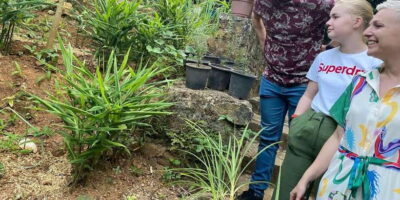
The cooking takes place in a kitchen and garden area, with an outdoor cooking space described as peaceful and pleasant. That setting gives the afternoon a more personal feel. You are not just moving between workstations under bright classroom lights. You are spending time in a household environment where conversation, laughter, and food are part of the same activity.
The hosts have also been described as encouraging dancing and joking during the cooking. That will appeal to you if you want a social activity, though it may be less suitable if you prefer a quiet, highly structured lesson.
Same base, a completely different day:
- Whales and Dolphins Watching-Luxury Super Grade Cruiser(Hotel Pick up offered)
★ 5.0 · 1,268 reviews - Galle: Traditional Gems & Jewellery Workshop with Transfers
★ 4.9 · 539 reviews - Galle Fort Walking tour
★ 4.9 · 285 reviews - Snorkeling with Turtles in Mirissa
★ 5.0 · 268 reviews
What the meal is like at the end
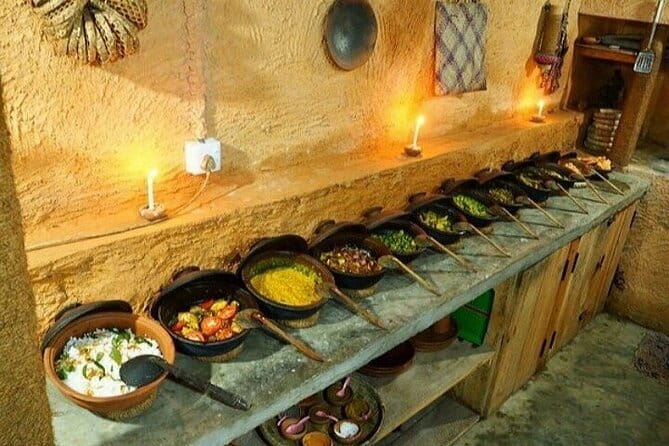
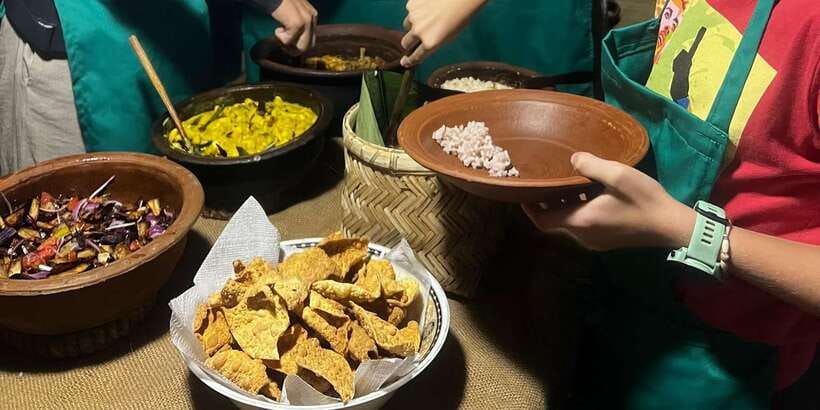
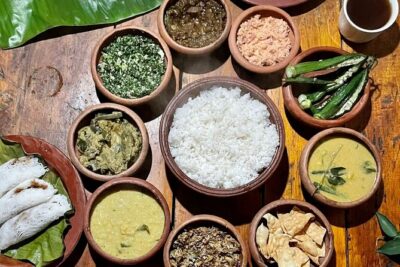
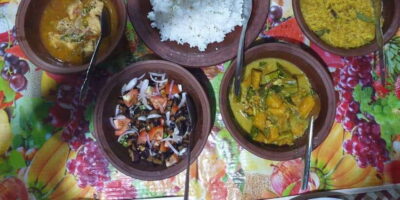
After the cooking, the dishes are served with a generous portion of rice and crispy papadams. The meal is the reward for the work, but it is also where you can compare the different cooking methods side by side.
A good Sri Lankan meal is built around contrast. You might have a soft lentil curry beside a dry vegetable dish, a sharper coconut sambol beside a rich chicken or fish curry, and papadams for crunch. Preparing several dishes makes that balance easier to understand than eating one curry in a restaurant.
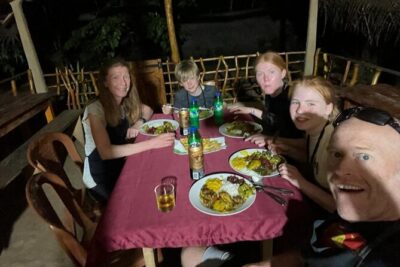
The generous portions also make this a practical dinner activity. You should arrive hungry, since the food forms a substantial part of the session. The class does not simply give you a small tasting plate and send you on your way.
I would not book this mainly for a polished restaurant-style presentation. The appeal is the cooking process, the family setting, and the chance to eat what you helped prepare. The meal may be simple in appearance, but the variety of dishes gives it plenty of interest.
Why the small group matters
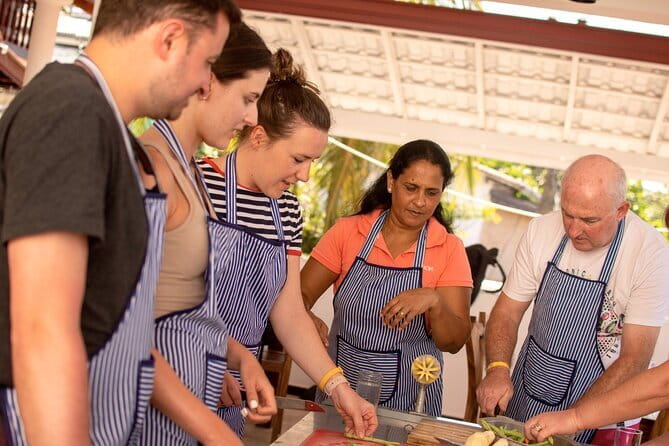
The maximum group size is six people. That is a useful limit for a hands-on class, especially when several dishes cook at once.
With a small group, you have a better chance to ask why a spice is added at a certain point, how a curry should look before serving, or how to change a dish for your own kitchen. You also avoid spending most of the class standing behind other people.
The class has been especially well received for its relaxed, personal mood. It can feel more like being welcomed into someone’s home than attending a formal lesson. That is a strength if you value contact with local hosts and ordinary food traditions.
The tradeoff is that a family kitchen is less predictable than a professional cooking studio. The available vegetables may change, the exact number of dishes may vary, and the class can feel informal. If you want strict timing, printed recipes, or a carefully staged demonstration, this may not be the right choice.
Price and overall value at $30
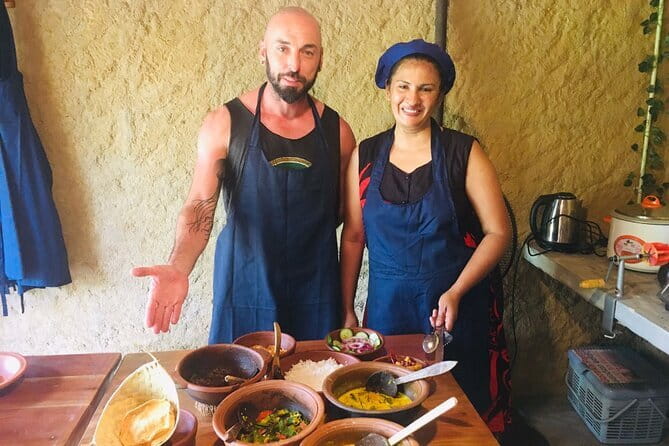
At $30 per person, this is good value if you want both an activity and dinner. You are paying for about three hours of guided time, the ingredient-shopping element, hands-on cooking, and a full meal with rice and papadams.
The price looks even better for people who would otherwise book a separate food tour and restaurant dinner. Here, the meal is tied to something you have helped create, and the cooking knowledge can continue to be useful after you leave Sri Lanka.
The value depends on what you want from a class. If you are looking for a detailed professional course with written recipes, specialist equipment, and formal instruction, the information provided does not promise those features. If you want a friendly introduction to everyday Sri Lankan cooking, the format gives you more personal contact for your money.
It is also a sensible choice for couples and friends. The minimum booking is two people, and the six-person maximum keeps the group from becoming unwieldy. The price is per person, so check the total cost for your party when booking.
Who should book this class
I would recommend this class to you if you enjoy learning through food, want a local family setting, or like having some say in what you cook. It is a particularly good fit for first-time visitors to Sri Lanka who want to understand more than the names of the curries on a restaurant menu.
It also suits couples, families, and small groups of friends. Beginners should feel comfortable because the cooking is guided and does not demand advanced technique. The social side may be a highlight if you enjoy chatting, laughing, and sharing a meal with your hosts.
Vegetarians have plenty of choices, including dhal, pumpkin, beans, aubergine, greens, mushrooms, potatoes, okra, and coconut sambol. Meat eaters can add chicken or fish curry.
I would pause before booking if you are traveling alone, since solo bookings are not accepted. I would also think twice if you dislike flexible plans or need strict control over every ingredient. The menu depends partly on what is available that day.
Booking and cancellation details
The activity has received a five-star rating from 22 published ratings, with 100 percent recommending it, and it had more than 10 bookings in the previous month. Those figures suggest steady interest, but the more useful point is what the format offers: a small class, a family kitchen, fresh shopping, and a cooked meal.
Free cancellation is available if you cancel at least 24 hours before the 4:00 pm start time. Cancellations made less than 24 hours before the start are not refunded, and changes inside that period are not accepted. The cut-off follows local time in Sri Lanka.
Should you book the Mirissa cooking class?
Book it if you want an easygoing, personal introduction to Sri Lankan food rather than a formal culinary course. The choice of four dishes, the ingredient shopping, the garden kitchen, and the meal at the end give the afternoon a clear sense of purpose.
The strongest reason to book is the chance to cook with Nona, Indra, or Prabodi in a setting that feels close to everyday family life. The main reasons to skip it are the two-person minimum, the flexible menu, and the lack of any stated promise of professional-grade facilities or printed recipes.
For most couples and small groups staying near Mirissa, $30 buys a useful and enjoyable evening activity, plus a dinner you helped make yourself.
FAQ
Where does the cooking class start?
It starts at Indra Restaurant, WFX5+XMF, in Mirissa, Sri Lanka. The activity ends back at the same meeting point.
What time does the class begin?
The start time is 4:00 pm local time.
How long does the activity last?
The class lasts approximately three hours.
How many people can join?
The maximum group size is six people.
Can I book if I am traveling alone?
No. The experience requires a minimum booking of two people and does not accept solo bookings.
Which dishes can I prepare?
You can choose four dishes from options including chicken or fish curry, dhal, pumpkin, green beans, aubergine, greens, mushrooms, potatoes, okra, and coconut sambol. Another vegetable may be possible if it is available that day.
Is food included in the class?
Yes. The dishes you prepare are served with a generous portion of rice and crispy papadams.
Can I cancel for a full refund?
Yes, if you cancel at least 24 hours before the experience start time. Cancellations made less than 24 hours in advance are not refunded, and late changes are not accepted.
Just added around Galle
- Udawalawe National Park Safari Tour★ 4.7 · 3 reviews
- Yala National Park Private Safari trip from Galle/Unawatuna/Mirissa★ 5.0 · 12 reviews
- Galle Day Tour with Turtle Hatchery & River Boat Safari★ 5.0 · 4 reviews
- Adam’s Peak Night Hike Experience [One Day & ALL INCLUSIVE]★ 5.0 · 14 reviews
- Yala Safari Drive From Galle, Weligama, Mirissa & Dickwella★ 5.0 · 7 reviews
- Yala National Park Private Safari (All Inclusive) From Mirissa★ 4.5 · 4 reviews
- Whale Watching Experience in Mirissa★ 4.5 · 6 reviews
- Whale Watching Mirissa Ultimate Tour in Sri Lanka with Breakfast★ 4.5 · 6 reviews
Cooking Classes, compared.
Organic cooking class sigiriya (kumara & family)
Read our review →
Sri Lankan Cooking Class with Neranji at Homestay
Read our review →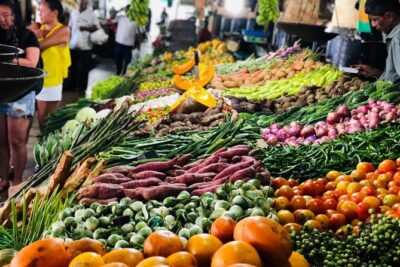
Browse the lists this tour appears in